

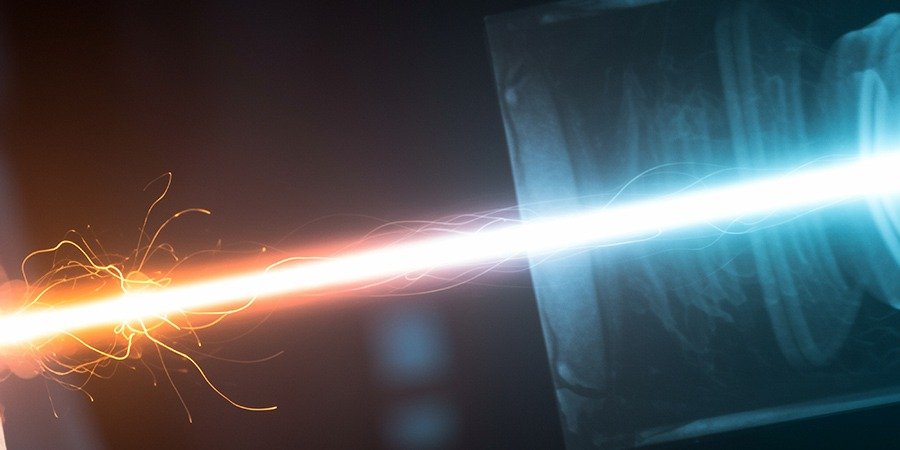
Quantum systems depend on precise control of electrons, whether in superconducting qubits, quantum dots, or exotic materials used for next-generation processors. Until now, scientists could only infer the behavior of the electrons. However, with SLAC’s X-ray lasers, researchers can directly visualize electron motion, coherence, and entanglement as they happen.
These X-ray free-electron lasers (XFELs) generate ultra-short, extremely intense pulses that can capture electron dynamics in real time at femtosecond and even attosecond scales.
To put it simply, imagine you’re trying to photograph a hummingbird’s wings with a normal camera; but, as the movement is so fast, all you get is a blur. Now, imagine a camera that can take a trillion photos per second and suddenly, you can see each wing positioned clearly. That’s what SLAC’s X-ray lasers do, but instead of hummingbird wings, they’re capturing electrons moving inside materials.
By understanding electron movement like never before, scientists can identify sources of quantum noise, decoherence, and energy loss—key barriers to building stable, scalable quantum computers. The insights gained at SLAC will help design better quantum materials, optimize qubit architectures, and push quantum computing from fragile laboratory experiments toward reliable, real-world machines.


