
• Business
  • Markets
  • Politics
  • Crypto
  • Finance
  • Intelligence
    • Policy Intelligence
    • Security Intelligence
    • Economic Intelligence
    • Fashion Intelligence
  • Energy
  • Technology
  • Taxes
  • Creator Economy
  • Wealth Management
  • LBNN Blueprints
  • Business
  • Markets
  • Politics
  • Crypto
  • Finance
  • Intelligence
    • Policy Intelligence
    • Security Intelligence
    • Economic Intelligence
    • Fashion Intelligence
  • Energy
  • Technology
  • Taxes
  • Creator Economy
  • Wealth Management
  • LBNN Blueprints

Physical neural networks exploit light to train more efficiently

Simon Osuji by Simon Osuji
September 9, 2025
in Artificial Intelligence
0
Physical neural networks exploit light to train more efficiently
0
SHARES
2
VIEWS
Share on FacebookShare on Twitter


Physical neural networks, the new frontier for sustainable artificial intelligence
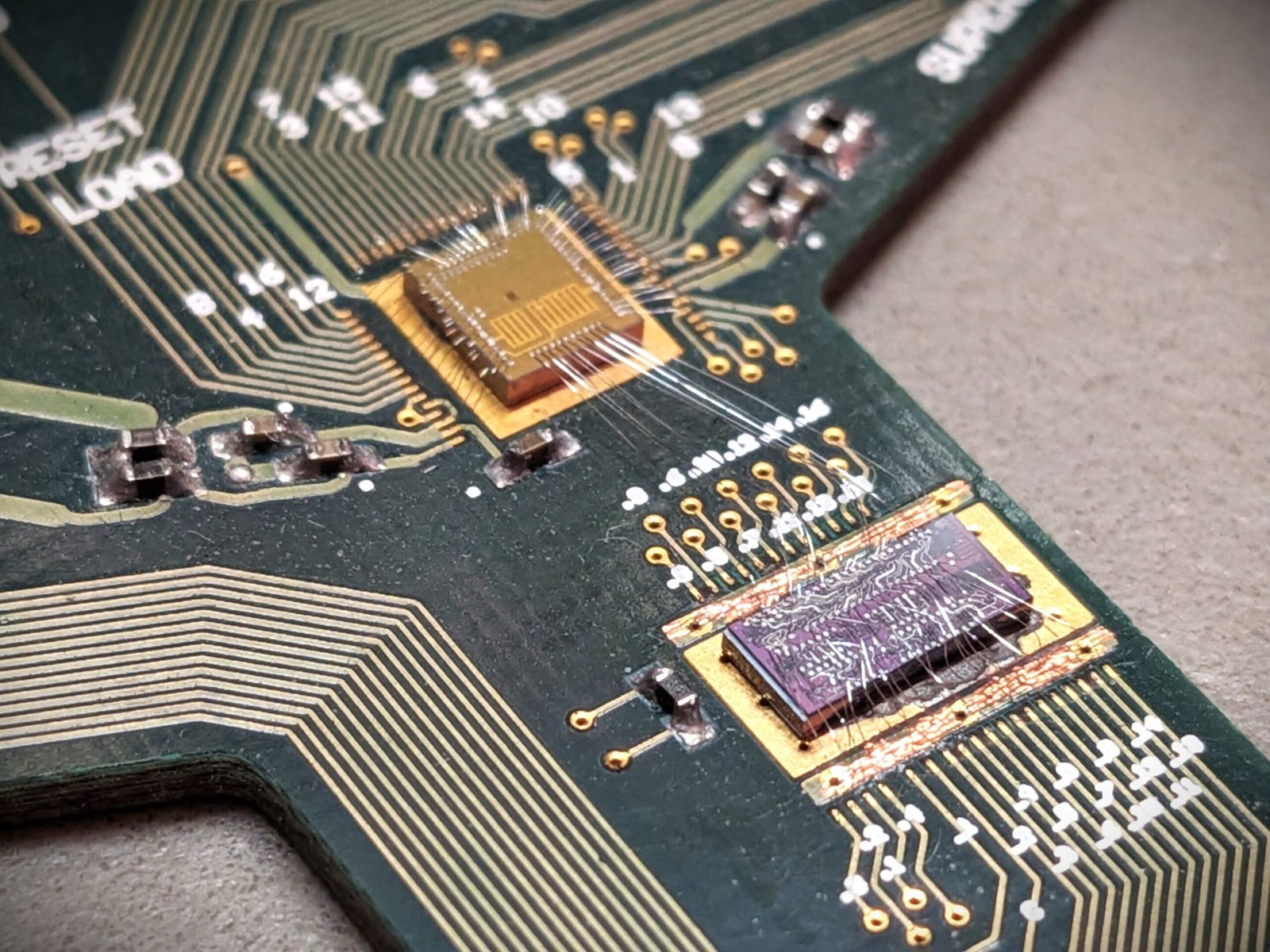
The photonic microchip (below) developed for the study on physical neural networks, along with the electronic chip (above, the yellow one) of control. Credit: Politecnico di Milano, DEIB—Department of Electronics, Information and Bioengineering

Artificial intelligence is now part of our daily lives, with the subsequent pressing need for larger, more complex models. However, the demand for ever-increasing power and computing capacity is rising faster than the performance traditional computers can provide.

Related posts

Agentic AI drives finance ROI in accounts payable automation

Agentic AI drives finance ROI in accounts payable automation

February 13, 2026
LGBTQ+ Athletes Are Front and Center at the 2026 Winter Olympic Games

LGBTQ+ Athletes Are Front and Center at the 2026 Winter Olympic Games

February 13, 2026

To overcome these limitations, research is moving towards innovative technologies such as physical neural networks, analog circuits that directly exploit the laws of physics (properties of light beams, quantum phenomena) to process information. Their potential is at the heart of the study published in the journal Nature. It is the outcome of collaboration between several international institutes, including the Politecnico di Milano, the École Polytechnique Fédérale in Lausanne, Stanford University, the University of Cambridge, and the Max Planck Institute.

The article entitled “Training of Physical Neural Networks” discusses the steps of research on training physical neural networks, carried out with the collaboration of Francesco Morichetti, professor at DEIB—Department of Electronics, Information and Bioengineering, and head of the university’s Photonic Devices Lab.

Politecnico di Milano contributed to this study by developing photonic chips for the creation of neural networks, exploiting integrated photonic technologies. Mathematical operations, such as sums and multiplications, can now be performed through light interference mechanisms on silicon microchips barely a few square millimeters in size.

Physical neural networks, the new frontier for sustainable artificial intelligence
Francesco Morichetti, professor at DEIB—Department of Electronics, Information and Bioengineering of the Politecnico di Milano, and head of the university’s Photonic Devices Lab, inside his lab. Professor Morichetti contributed to the paper about the training of physical neural networks, along with an international team of colleagues. Credit: Politecnico di Milano

“By eliminating the operations required for the digitization of information, our photonic chips allow calculations to be carried out with a significant reduction in both energy consumption and processing time,” says Morichetti. A step forward to make artificial intelligence (which relies on extremely energy-intensive data centers) more sustainable.

The study addresses the theme of training, precisely the phase in which the network learns to perform certain tasks. “With our research within the Department of Electronics, Information and Bioengineering, we have helped develop an ‘in-situ’ training technique for photonic neural networks, i.e. without going through digital models. The procedure is carried out entirely using light signals. Hence, network training will not only be faster, but also more robust and efficient,” adds Morichetti.

The use of photonic chips will allow the development of more sophisticated models for artificial intelligence, or devices capable of processing real-time data directly on site—such as autonomous cars or intelligent sensors integrated into portable devices—without requiring remote processing.

More information:
Ali Momeni et al, Training of physical neural networks, Nature (2025). DOI: 10.1038/s41586-025-09384-2

Provided by
Polytechnic University of Milan

Citation:
Sustainable AI: Physical neural networks exploit light to train more efficiently (2025, September 9)
retrieved 9 September 2025
from https://techxplore.com/news/2025-09-sustainable-ai-physical-neural-networks.html

This document is subject to copyright. Apart from any fair dealing for the purpose of private study or research, no
part may be reproduced without the written permission. The content is provided for information purposes only.




Source link

Previous Post

Apple’s creator-centric iPhone 17 Pro will make the vlogging camera obsolete

Next Post

100 Private School Owners Equipped with Growth and Digital Tools

Next Post
100 Private School Owners Equipped with Growth and Digital Tools

100 Private School Owners Equipped with Growth and Digital Tools

Leave a Reply Cancel reply

Your email address will not be published. Required fields are marked *

RECOMMENDED NEWS

Ghana Receives Two Defender Patrol Boats to Address Maritime Threats

Ghana Receives Two Defender Patrol Boats to Address Maritime Threats

1 year ago
Here’s Proof the AI Boom Is Real: More People Are Tapping ChatGPT at Work

Here’s Proof the AI Boom Is Real: More People Are Tapping ChatGPT at Work

2 years ago
Pfizer to acquire Metsera and its next-generation obesity portfolio

Pfizer to acquire Metsera and its next-generation obesity portfolio

5 months ago
NTRA and NTI Renew Pact to Monitor Cell Tower Radiation Levels

NTRA and NTI Renew Pact to Monitor Cell Tower Radiation Levels

1 year ago

POPULAR NEWS

  • Ghana to build three oil refineries, five petrochemical plants in energy sector overhaul

    Ghana to build three oil refineries, five petrochemical plants in energy sector overhaul

    0 shares
    Share 0 Tweet 0
  • The world’s top 10 most valuable car brands in 2025

    0 shares
    Share 0 Tweet 0
  • Top 10 African countries with the highest GDP per capita in 2025

    0 shares
    Share 0 Tweet 0
  • Global ranking of Top 5 smartphone brands in Q3, 2024

    0 shares
    Share 0 Tweet 0
  • When Will SHIB Reach $1? Here’s What ChatGPT Says

    0 shares
    Share 0 Tweet 0

Get strategic intelligence you won’t find anywhere else. Subscribe to the Limitless Beliefs Newsletter for monthly insights on overlooked business opportunities across Africa.

Subscription Form

© 2026 LBNN – All rights reserved.

Privacy Policy | About Us | Contact

Tiktok Youtube Telegram Instagram Linkedin X-twitter
No Result
View All Result
  • Home
  • Business
  • Politics
  • Markets
  • Crypto
  • Economics
    • Manufacturing
    • Real Estate
    • Infrastructure
  • Finance
  • Energy
  • Creator Economy
  • Wealth Management
  • Taxes
  • Telecoms
  • Military & Defense
  • Careers
  • Technology
  • Artificial Intelligence
  • Investigative journalism
  • Art & Culture
  • LBNN Blueprints
  • Quizzes
    • Enneagram quiz
  • Fashion Intelligence

© 2023 LBNN - All rights reserved.