

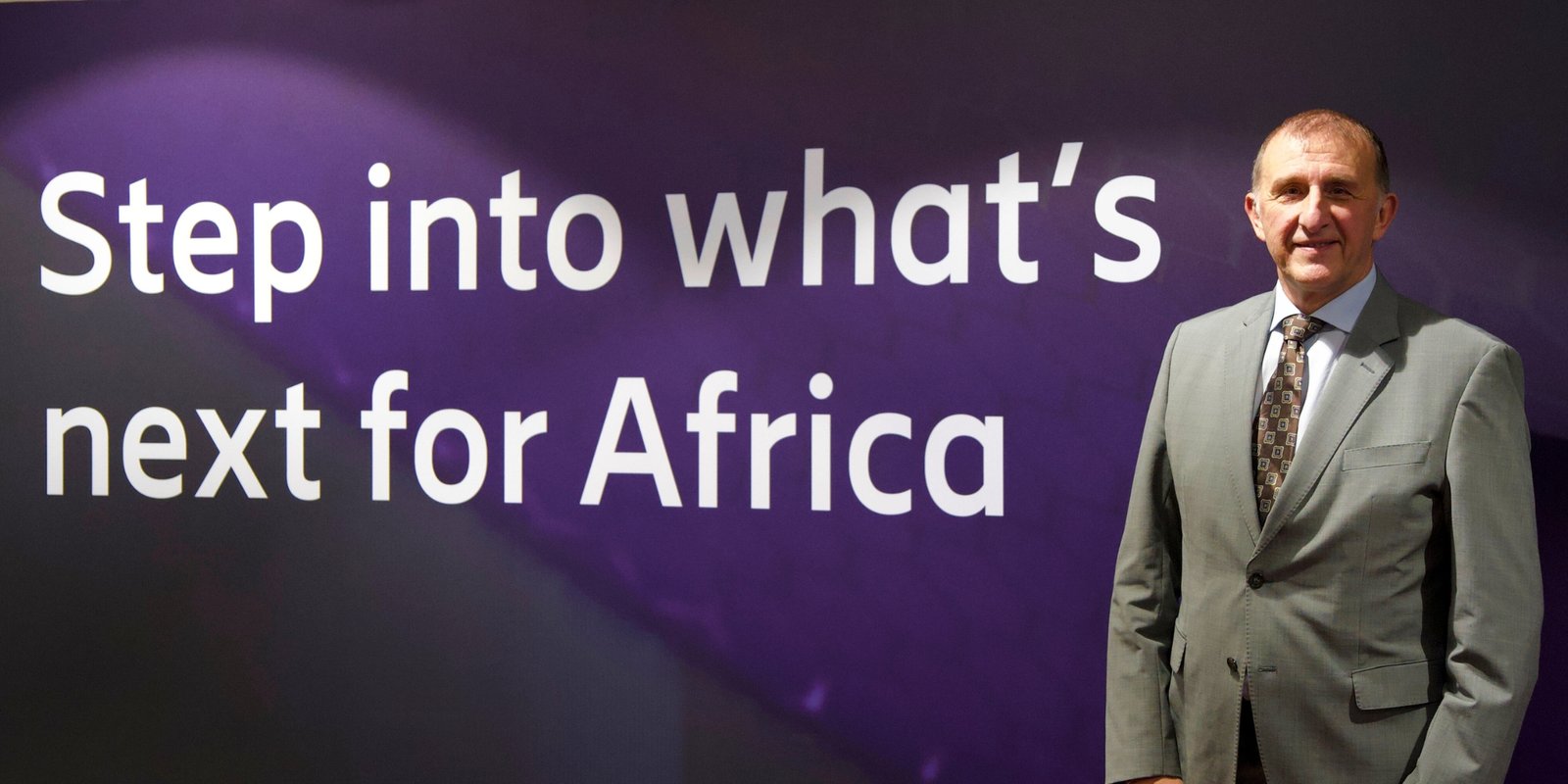
As Africa envisions a connected and sustainable digital future, Ericsson stands at the forefront of this transformation, guided by the power of collaboration, responsible innovation, and localized growth.
In an exclusive interview with Telecom Review Africa on the sidelines of MWC Kigali 2025, Alain Maupin, Vice President and Head of Ericsson East and North Africa, explained how Ericsson’s strategy in East and North Africa is shaping a more connected and inclusive digital future for people, enterprises, and society alike.
The ‘Converge’ theme prevalent at MWC Kigali emphasizes collaboration for a sustainable digital future. In what ways is Ericsson driving this convergence through its technology and partnerships across the continent?
Collaboration is a key player in driving our technology deployment. At Ericsson, we consider collaboration multifaceted, and we work with key entities, including governments, regulators, CSPs, and partners in the broader ecosystem, on several aspects.
Firstly, when it comes to policy, we ensure that fair spectrum policies are pushed forward. This helps CSPs avoid spending all their resources solely on acquiring spectrum, leaving nothing for building infrastructure. We also collaborate with entities like the Smart Africa Digital Academy on upskilling. We run many initiatives through programs like Connect to Learn, collaborating with operators and organizations such as UNICEF. For example, we provided cost-effective Fixed Wireless Access connectivity, open-source cloud-based Ericsson Connect To Learn operating systems, digital devices, and digital curricula platforms to enable a digital education ecosystem at schools.
Our technology approach is open by design, supporting open interfaces that let operators mix and match solutions from different vendors. We are one of the largest contributors to O-RAN standardization, because we believe that locking operators into a single vendor system may offer short-term benefits but harms the industry in the long run, limiting flexibility, innovation, and competitiveness. This open philosophy is central to Ericsson’s vision.
Africa-wide, the ICT industry is acknowledging the effects of technological bias, especially since the introduction of AI. Is Ericsson ensuring its AI-driven network solutions are designed and deployed with local context in mind?
There’s a lot of discussion around AI bias, but what do we actually mean by it? Is it in the design, the data aggregation, or the people who use it? In reality, the real bias in AI is about value, and the value AI delivers. We need to look at factors such as revenue growth, CapEx and OpEx optimization, scaling infrastructure efficiently, and ensuring long-term sustainability. In my view, these four pillars represent the true value of AI, and this is the bias that we have to watch out for more than anything else.
Globally, AI data is largely driven from outside regions like Africa, at least in terms of data volume. But I would like to change this, because if we look at our operators, they have very well-established data governance, and they sit on lots of data that is very relevant because it’s generated in Africa; it’s just a matter of how to mine it properly. With AI, it’s crucial to maintain a human-in-the-loop approach for verification. You can’t simply let algorithms operate autonomously. In all Ericsson designs, there’s a defined learning phase for data ingestion and training, always followed by human validation to ensure the AI stays on course.
If we want Africa to be positioned in the right place, I think we must upskill local teams and ensure they play an active role in AI-driven value creation, leveraging data generated within the continent and its operations.
As markets in East and North Africa evolve at different speeds, what strategies are helping instill lasting digital progress?
I went to leadership school 25 years ago, and they told me ‘Different strokes for different folks’. In East and North Africa, you can’t treat everyone the same; you have to adapt and adjust your approach to each context. In Algeria, for instance, which is very innovation-driven, we cannot have the same value proposition and engagements as we have with a country that is barely rolling out 4G. I have a customer in Zimbabwe who is extremely innovative. They’re now launching 5G SA, and we’ve started discussing network APIs and related technologies. You wouldn’t typically associate Zimbabwe with being among the most innovative countries, but this shows how important it is to adapt, as it presents a fantastic opportunity for us to showcase Ericsson’s technology.
There’s no single answer. Different customers move at different speeds, and we must adjust accordingly. Our goal is to ensure that commercial solutions are scalable both up and down, so we can serve small and large operators alike. You can’t fully customize every solution, so you need to have varied, elastic solutions. As solution engineers and commercial teams, we aim to find the right sustainable model that allows every customer to access and benefit from these technologies.
Ericsson’s connectivity solutions serve people, enterprises, and society. What’s key to realizing this triple impact beyond Kigali?
First and foremost, our key priority is to remain a technology leader. We reinvest a significant portion of our earnings into research and development (R&D) to stay innovative and find the next cutting-edge solutions that help our customers monetize our technology effectively.
Secondly, customer experience has become the new El Dorado. People are willing to pay more if they’re served well. If you look at the Ericsson Mobility Report, the main driver behind customers choosing a service is the quality of their experience. That’s why we put so much effort into improving it. Of course, tools like AI and automation are essential and we integrate them to enhance and personalize customer experience.
The third focus area is upskilling and knowledge development. We’re facing three major technologies simultaneously: 5G, AI, and cloud. To remain relevant, everyone needs continuous upskilling. In Africa especially, it’s crucial to make this learning locally relevant.
In short, our focus is on remaining a technology leader, delivering superior customer experience, and upskilling organizations with locally relevant skills.


![[ENCORE] Conversations That Matter with Al McFarlane](https://lbnntv.com/wp-content/uploads/2023/12/ENCORE-Conversations-That-Matter-with-Al-McFarlane-120x86.jpg)


