Johannesburg is currently on Level 1 water restrictions, and Johannesburg Water is clamping down on leakages as per Rand Water’s supply-side statement. Some areas have intermittent supply, while others are off for days. Despite this, Minister of Water and Sanitation Pemmy Majodina says, “We do not have a water security threat.”

Pemmy Majodina, the new Minister of Water and Sanitation
Delivering a statement in the National Assembly on water security, the Minister said that while there was no immediate national threat, certain parts of the country face localised shortages due to resource mismanagement, leaks, and population growth. “I want to assure South Africans that we have enough water; the national balance exceeds demand,” she stated. “But there are localised deficits in places like Gauteng and parts of KwaZulu-Natal.” The Minister warned, however, that water availability could decline rapidly as supply decreases and demand grows due to economic and population growth, urbanisation, inefficient water use, municipal distribution losses, wetland degradation, and climate change impacts, including heatwaves. Ms Majodina also urged South Africans to change their water consumption behaviour and treat water as a scarce resource. “South Africans are over-consuming water. We are using 218 litres per capita per day, as against the international standard and norm, which is 173 litres. Therefore, we need to reduce consumption. Municipalities must also fix leaks in their water distribution system. We cannot afford to be throwing away almost half of the water that is supplied to municipalities through leaks,” she said. According to the Minister, the water supply disruptions currently affecting Gauteng are not caused by drought or the maintenance-related closure of the Lesotho water tunnel, but rather by challenges in water resource management. “It is caused by the rapid growth in the demand for water due to the influx of people from all corners into the city. Leaks are a result of under-budgeting for infrastructure maintenance by municipalities, as well as illegal connections, and vandalism of infrastructure,” she explained. Outlining the roles of her department and municipalities in the water supply chain, the Minister clarified that delivering water to citizens is the responsibility of municipalities, while the national government manages water resources, and builds national infrastructure such as dams, canals, reservoirs, and water treatment plants. “We are responsible for raw water supply; water boards buy that water from us, treat it and sell it to municipalities, which supply the citizens. We are not trying to run away from our responsibility, but the responsibility of municipalities is clearly defined,” the Minister explained.
uMkhonto weSizwe response
The opposition party uMkhonto weSizwe did not accept the Minister’s distinction between the department and municipalities, arguing they are part of the same government. “Minister, you cannot separate the department from municipalities; you are one government. We also differ from the minister in that South Africa does not have a water security problem. We have a problem with drought. The country is not getting enough rainfall and that’s a threat to our water security,” stated Mr Nkosinathi Nxumalo, an MK Party Member of Parliament.
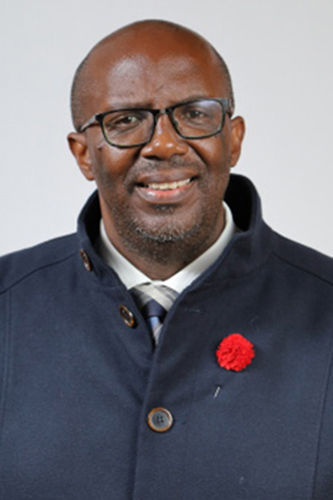
Nkosinathi Nxumalo, MK Party Member of Parliament.
Mr Nxumalo pointed out that corruption and insufficient infrastructure maintenance budgets also threaten water security. He expressed concern about communities living near large dams but still lacking water, calling it “water apartheid”.
Democratic Alliance response
Mr Stephen Moore of the Democratic Alliance cited research indicating that 47% of the country’s water treatment systems are in critical or poor condition, only 14% are in good or excellent condition, 68% of sanitation systems are at high or critical risk, and 41% of water is lost to leaks.
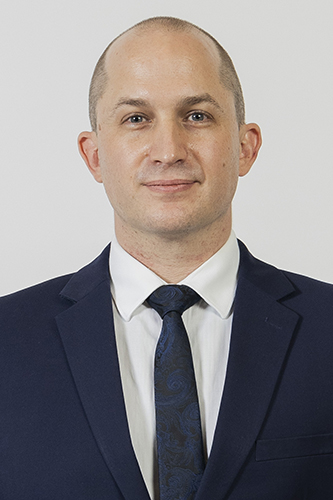
Stephen Moore, from the DA
“While we have emerged battered from 15 years of power cuts, we may not survive water shedding. People will suffer from dehydration and unsafe drinking water; livestock will die from the same causes. As climate change advances, bringing unpredictable weather patterns, our country’s food security will further deteriorate, in a nation where millions already go without three daily meals,” warned Mr Moore.
He proposed that the solution should not be a national takeover of municipal responsibilities but a cooperative approach with stringent oversight. The national government, working with the Presidency, the departments of Cooperative Governance and Traditional Affairs, Water and Sanitation, and the National Treasury must act in unison to save South Africa from disaster.
“The Minister proposed measures like stricter water-use restrictions, incentives for better municipal management, ring-fencing water revenue for infrastructure, and licensing requirements to ensure accountability,” Mr Moore continued. “The Democratic Alliance supports these measures, but the promises alone won’t fix our water system. We need to see enforcement, transparency, and accountability at every level.”
Economic Freedom Fighters response
Ms Rebecca Mohlala of the Economic Freedom Fighters criticised the Minister’s statement as “a torrent of empty promises”. She argued, “The Minister speaks of constitutional rights while people drink from muddy streams. The Minister boasts about raw water security while Gauteng and KZN face crippling water shortages.
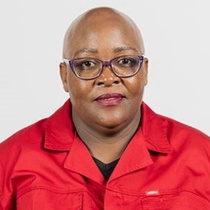
Rebecca Mohlala of the Economic Freedom Fighters
“You boast of 90 per cent access to water yet millions of people still wake up to dry taps and broken promises. You speak of 218 litres per capita; what a fantasy. Our mothers and children are rationing every drop while the elite fill their swimming pools. This is not mismanagement – it is a crime against humanity,” Ms Mohlala said. She also suggested that the call to reduce water consumption should be directed at mining companies, which consume millions of litres in their operations.
The Inkatha Freedom Party’s response
The Inkatha Freedom Party’s representative, Mr Khethamabala Sithole, echoed concerns about inadequate funding for infrastructure maintenance. “Our view is that failure to allocate infrastructure and maintenance resources where they are most needed and address the infrastructure backlog has created a crisis. All municipalities should be resourced financially and through capacity building to sustain and supply clean water,” he suggested. Mr Sithole warned the government not to approach this crisis with complacency, as South Africa is a water-stressed country.
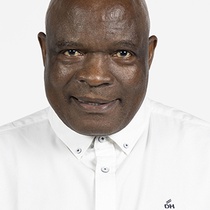
Khethamabala Sithole, of the IFP
Freedom Front Plus response
Mr Wouter Wessels of the Freedom Front Plus said: “Whilst we all know that water is being lost due to pipe leakages, more than 40% of purified water is lost in that fashion, and we cannot say it is due to people wasting water or using water more that is creating this problem. “We must first look at the water that we are losing due to infrastructure problems. Fix the leaking taps in government institutions, such as hospitals, schools and offices, and stop blaming the people,” Mr Wessels said.
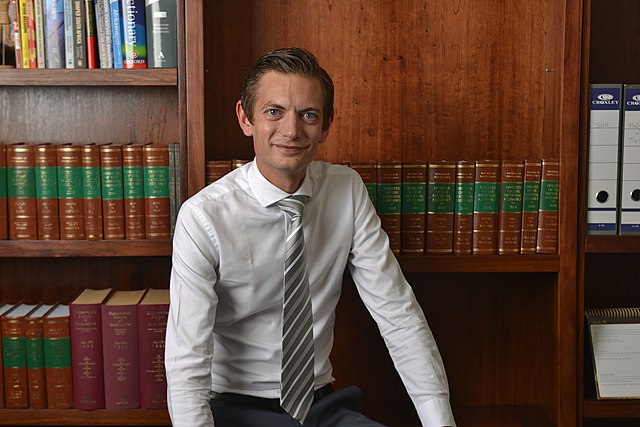
Wouter Wessels of the Freedom Front Plus
Action SA response
Ms Malebo Kobe of Action SA attributed the water crisis to governance failures, citing crumbling infrastructure as a sign of absent leadership. The crisis stems from failure to align infrastructure with population growth and results from incompetence and corruption, she said.
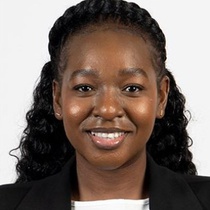
Malebo Kobe of Action SA