

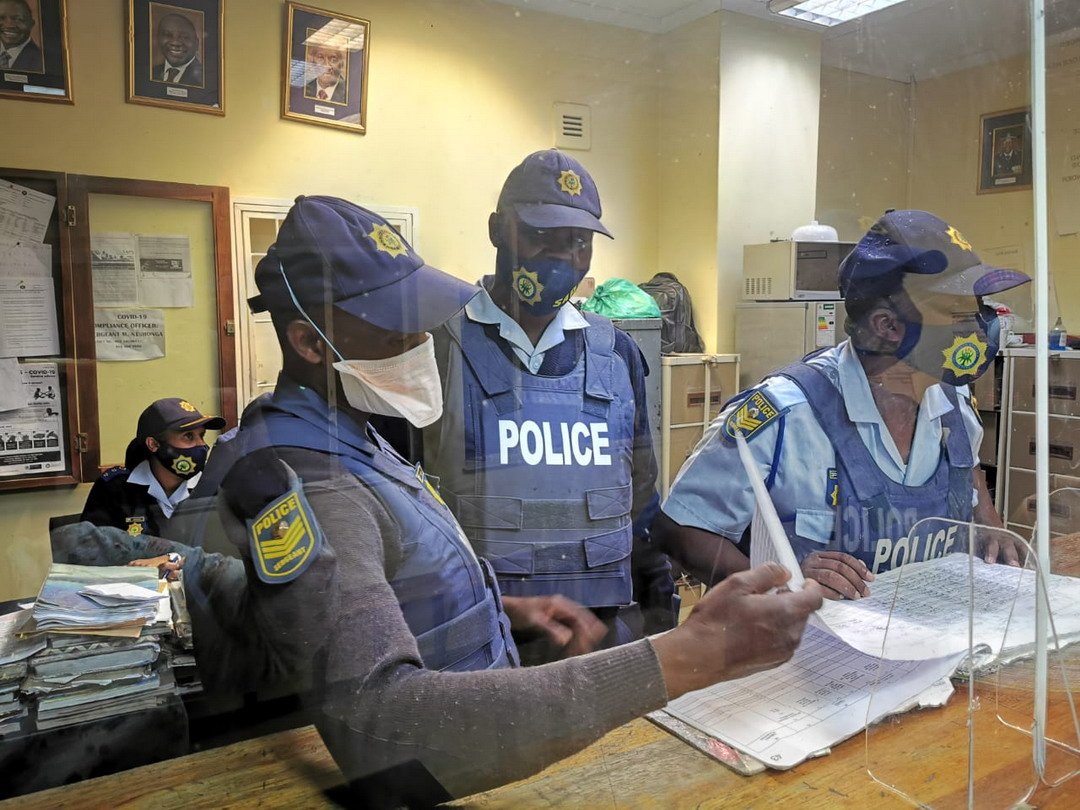

The sorry state of “many police stations” was laid at the door of SA Police Service (SAPS) management and the Minister of Public Works and Infrastructure.


The allegation, by Ian Cameron, who chairs Parliament’s Portfolio Committee on Police (PCP), came after a week-long oversight visit to the Eastern Cape and KwaZulu-Natal provinces.
In a strongly worded post visit statement, Cameron blamed SAPS supply chain and Minister Ian Macpherson’s department for the “abhorrent conditions” encountered at “some” police stations. “The committee believes that the years of inefficiencies, constant delays occasioned by non-ending meetings and lack of implementation of decisions have led to the current chaos. SAPS supply chain confusion and bureaucratic red tape at DPWI (Department of Public Works and Infrastructure) have exacerbated the problem,” the statement reads in part.
Examples given are the Durban and Verulam central police stations, with working conditions at both identified as hampering police in effectively performing their duties. “It is inexplicable how anyone can be expected to work in such conditions and be expected to maintain high morale and deliver quality services,” Cameron is quoted as saying in the statement.
Collapsing floors and dripping water were singled out as “contemptible working conditions” at Verulam with the Durban central station singled out for lifts out of order, cells “not operational” as well as toilets and air conditioning not working.
The PCP, according to a Parliamentary Communication Services statement, highlighted the need for Macpherson’s department to develop a clear infrastructure plan to remedy challenges at the two stations as well as across all provinces. The committee acknowledged the DPWI “massive infrastructure backlog” and fiscal pressure faced by all government departments, including DPWI, adding it “believed that without a deliberate response accompanied by timelines on how these challenges will be resolved, SAPS members would continue to be exposed to unworkable work conditions”.
The poor state of police stations encountered during the PCP oversight visit is not the first time SAPS built infrastructure has been found wanting.
In February last year the “deplorable state” of the former Telkom Towers in the Pretoria central business district – now SAPS headquarters – saw it evacuated after earning an “unfit for human habitation” rating by the Department of Employment and Labour (DEL). The evacuation was spurred by trade union Solidarity.
Other stops on the oversight visit saw the PCP call on Durban Central police station’s K9 and search and rescue units.
On the use of dogs in the port city, Cameron said “despite a fair number of deployable dogs, the majority were old and several handlers did not have dogs” asking for a SAPS review on dogs. “Stop breeding dogs and start buying quality, pre-trained dogs. The K9 unit is a strategic tool for a station like Durban Central, which has a harbour and is battling a high prevalence of drugs.”
The PCP noted, with appreciation, the foresight of SAPS KwaZulu-Natal provincial leadership for “finding a way to capacitate the Durban Central search and rescue unit”.
“Capacitation of the unit from the province’s baseline is a testament to the leadership needed to respond to specific environmental needs within their province,” according to the statement.
For more police and security news, visit ProtectionWeb.


