– Advertisement –
When asked how Nigeria can effectively engage climate actors to achieve its 30% methane emission reduction target by 2030, Yusuf Kelani, Special Assistant to President Bola Tinubu on Climate Change Matters, stated, “It is tough, but we are not going to give up.”
It will be extremely challenging if Nigeria, a country with a pollution estimate of over 223 million as of 2023, or 2.7% of the total world population, produces 32 million tonnes of solid waste each year, with only about 20-30% of it being collected and properly treated. This means that 70–80% ends up in open dumps, drains, or informal disposal sites.

The danger is that poorly managed organic waste emits methane, a potent greenhouse gas (GHG) that contributes 19% of the country’s emissions. Scientifically, it has also been proven that methane is 80 times more potent than CO₂ over 20 years and accounts for approximately 20 per cent of total GHG emissions. Landfills alone constitute 11% of global methane emissions, a worrisome situation that has triggered both local and international attention.
With this clear understanding of the problem, Nigeria, as a signatory to the Global Methane Pledge, has been making efforts to deliver on its commitment of a 30% methane reduction target by 2030. One such effort is the Multi-solving Action to Methane Reduction in Nigeria (MAMRN) project, which seeks to mitigate methane emissions in the country by advocating for sustainable waste management, building policy frameworks, and enhancing capacity at both national and sub-national levels.
Kelani believes that to properly address the issue, it is important to first identify those who are working in the space to ensure effective coordination in the process. According to him, this is because many projects are being carried out in the field by many actors, but their effects are not being properly documented.
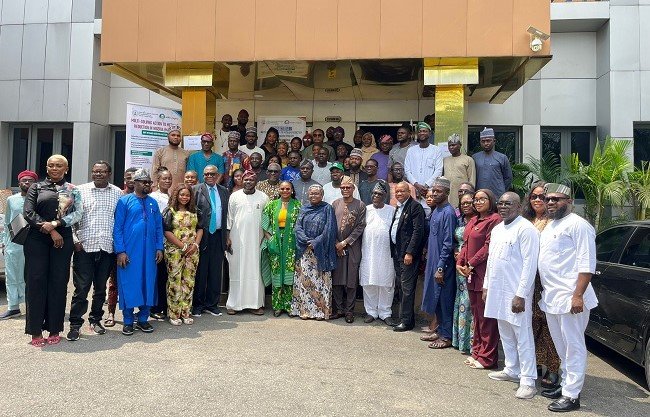
“Well, it’s about trust in the system and confidence in government efforts and activities. That’s basically the challenge,” he said during a one-day stakeholder engagement workshop his office organised in collaboration with the Sustainable Research and Action for Environmental Development (SRADev Nigeria) on Friday, October 24, 2025, in Abuja, Nigeria’s capital, to map climate actors and kick-start a conversation on how to advance dumpsite methane emission reduction across the country.
Although, many people focus more on the problems rather than the solutions whenever discussions around waste pollution are raised. Dump sites are seen as something of a threat to the community, yet they offer several empowerment opportunities in turning waste into wealth if well harnessed. The Lowering Organic Waste Methane (LOW-Methane) Initiative, which Nigeria is part of, aims to cut at least 1 million metric tonnes of annual methane emissions well before 2030 and unlock over $10 billion in public and private investment.
So, how to ensure that there’s a robust engagement within that area such that it becomes something positive is one significant question that the presidential aide strongly believes must be answered to move the country’s waste sector forward. Answers on the right technologies that will gradually put this waste into possible uses for people, especially young people, women and those who are very active within the ecosystem, are all required.
“We will continue to carry out the process and ensure that we achieve our targets,” Kelani assured, because his office, he explained, is existing for the first time. “I really wish to leave a landmark achievement in there.”
Achieving Nigeria’s methane emissions reduction ambition is truly imperative, particularly in safeguarding public health, protecting the environment, and meeting its international climate commitments.
Mallam Balarabe Lawal, Nigeria’s minister of environment, said his ministry has been promoting various mitigation agendas to tackle the problem of methane contamination in the country.
Nigeria’s updated Nationally Determined Contributions (NDCs 3.0) and Long-Term Low Emission Development Strategies, sector-specific methane guidelines, a National Action Plan on Short-Lived Climate Pollutants, and the ministry’s partnership with the Africa Policy Research Institute (APRI) are just a few of the policy initiatives the federal government has implemented to combat methane pollution.
“They provide platforms to translate actionable measures tailored to the waste management value chain, ensuring that national efforts remain cohesive, informed, and results-driven,” the minister, who was represented by Mrs. Asmau Jibril, an Assistant Director with the Department of Climate Change in the ministry, stated.
The importance of developing a landfill methane action plan for Nigeria cannot be overemphasised, according to Dr. Leslie Adogame, Executive Director, (SRADev) Nigeria, because countries like the USA, the European Union, the UK, Brazil, Canada, the United Arab Emirates (UAE), and Chile have all implemented action plans.
There is no doubt that Nigeria’s methane emission crisis can be combated if the right innovation is deployed and ecosystem created. Lagos State has proven this through initiatives such as the Land Carbon Registry and the Air Quality Monitoring Network across all local government areas.
These economic solutions clearly demonstrate that sub-national entities can deliver measurable, data-driven climate action that complements national commitments under the Global Methane Pledge and the Paris Agreement.
By Etta Michael Bisong, Abuja