

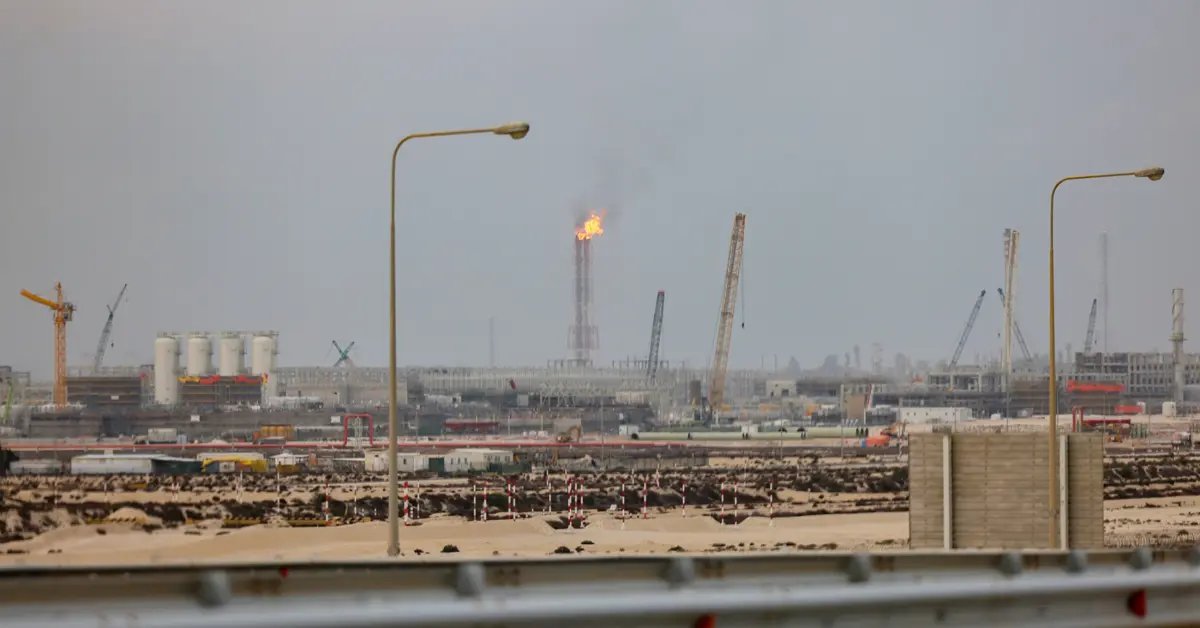
(Bloomberg) — The price of oil and natural gas jumped as escalating attacks in the Persian Gulf caused long-term damage to major energy facilities.
European gas futures surged as much as 35% to more than double their pre-war level. Brent crude touched $119 a barrel, close to its highest since 2022, and European diesel futures topped $190 a barrel at one point, underscoring the wider inflationary risks from the conflict.
An Iranian missile strike on the Ras Laffan complex in Qatar caused extensive damage to the world’s largest liquefied natural gas plant. Two facilities that produce 17% of the country’s LNG exports, or about 13 millions tons a year, were affected and it will take three to five years to repair them, QatarEnergy Chief Executive Officer Saad al-Kaabi told Reuters.
Separately, oil loadings on Saudi Arabia’s west coast, a vital export route for the country amid the closure of the Strait of Hormuz, were briefly halted by an attack. A gas facility in Abu Dhabi was shut after being hit by falling debris from an intercepted strike and two oil refineries in Kuwait were set ablaze by drones.
The attack on Qatar in particular raises the specter of long-term inflationary pressure in energy prices resulting from the US and Israel’s war on Iran. While oil and gas flows through the Strait of Hormuz could resume once the conflict ends, severe damage to any production facilities in the region will have a lasting impact on the global economy.
“The latest wave of attacks on energy infrastructure in the Gulf just underpins the dire supply outlook from the region,” said Florence Schmit, energy strategist at Rabobank. The world now faces an LNG shortage, she said.
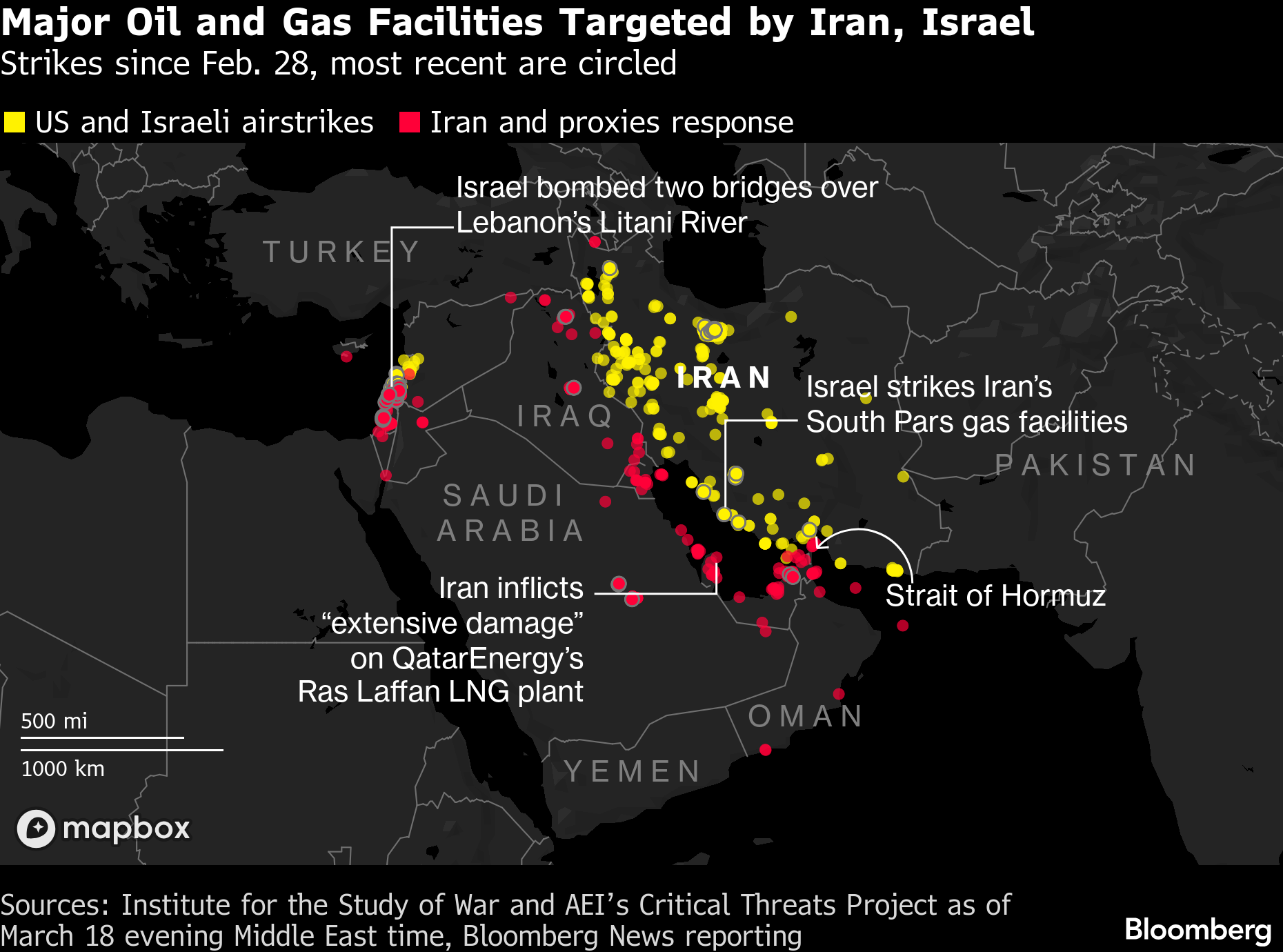
President Donald Trump responded to the attack on Qatar by pressing for a de-escalation. He said Israel would refrain from further strikes on Iran’s South Pars gas field — the attack that prompted Tehran’s retaliation against Qatar. However, he also threatened to “massively blow up the entirety” of South Pars if Iran targets Qatar’s LNG facilities again.
Tehran’s response to Israel’s assault on South Pars “is underway and not yet complete,” the semi-official Iranian Students’ News Agency cited a military spokesman as saying on Thursday.
Treasury Secretary Scott Bessent said the US will continue to take steps to add supplies to oil markets. That could include removing sanctions from Iranian crude on that’s already in tankers on the water, and a new unilateral release of emergency reserves, he said in an interview with Fox Business. He reiterated that the US isn’t intervening in derivatives markets.
Global Impact
QatarEnergy said several of the LNG facilities inside its Ras Laffan Industrial City were attacked by missiles, “causing sizable fires and extensive further damage.” Shipments from the LNG plant had already been halted earlier this month due to the war.
While Asian countries buy most of the LNG shipped from the Middle East, any prolonged disruption to flows would shrink the global supply balance — keeping prices elevated worldwide. Natural gas futures in the US, also a major exporter of LNG, rose as much as 6.7% on Thursday.
Shell Plc’s Pearl gas-to-liquids plant also sustained damage, the company said. A fire has been extinguished and the facility is in a “safe state” and the extent of the damage is being assessed, according to a statement.
The QatarEnergy CEO told Reuters that the attack won’t just affect the country’s exports of LNG. Shipments of a light oil called condensate will be reduced by about 24%, liquefied petroleum gas will fall 13%, helium by 14%, and naphtha and sulfur by 6%. The damaged units cost about $26 billion to build and generated about $20 billion in annual revenue, he said.
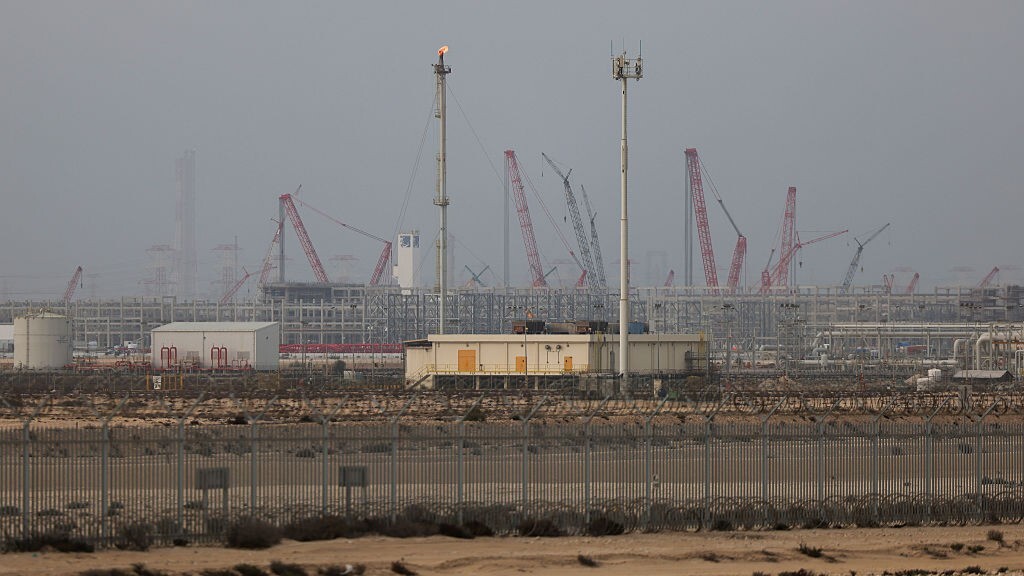
In Kuwait, two oil refineries were struck by drones. A limited fire at an operational unit of the 346,000 barrel-a-day Mina Al-Ahmadi oil refinery has now been extinguished, as has a blaze at the 454,000 barrel-a-day Mina Abdullah refinery, according to state-owned Kuwait Petroleum Corp. and its refining arm Kuwait National Petroleum Co.
A drone fell on Saudi Arabia’s Samref refinery in Yanbu on the western coast, a facility jointly owned by Aramco and Exxon Mobil Corp. A ballistic missile heading toward the port in the region, currently a vital exit route for Saudi Arabia’s oil exports, was intercepted, the kingdom’s ministry of defense said.
Yanbu is critical for Saudi Arabia and the global oil market and Thursday’s attacks mark the first time in this war that it has been targeted by Iran. The kingdom has boosted crude exports from the port after the blockage of the Strait of Hormuz, while Samref is one of the plants the company is relying on to provide fuels like diesel to Europe.
Aramco declined to comment on the status of the refinery and didn’t immediately respond to requests for comment on the port’s status.
Oil has surged more than 50% since the start of the war. More intensive targeting of upstream energy infrastructure, either in Iran or across the wider region, could push prices even higher, according to Rystad Energy A/S.
Disruptions to key infrastructure such as the port of Yanbu could remove 5 million to 6 million barrels a day from the market and potentially push oil prices to $150 or higher, Rystad’s Vice President Aditya Saraswat said in a note on Thursday.
©2026 Bloomberg L.P.


