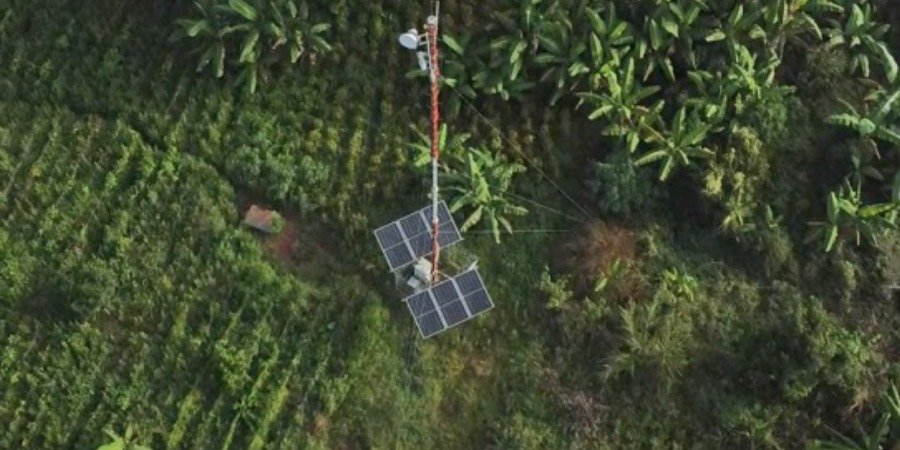
In today’s digital economy, connectivity is a prerequisite for education, healthcare, financial inclusion, entrepreneurship, and participation in modern society. Yet, billions of people remain underserved or completely unconnected, particularly in remote and low-income regions—a reality seen in the Middle East and Africa region. Within this landscape, Nokia Rural Connect has emerged as a flagship initiative supporting Nokia’s broader corporate social responsibility (CSR) and environmental, social, and governance (ESG) strategy.
Rural Connect was born in the Middle East, within MEA Center of Expertise, before becoming a global program for Nokia. It aligns commercial objectives with societal benefit by making connectivity economically viable in areas traditionally considered unprofitable. Through Rural Connect, Nokia advances:
- Digital inclusion (social pillar)
- Circular economy and emissions reduction (environmental pillar)
- Responsible deployment and transparent management systems (governance pillar)
Rural Connect is a strategic ESG instrument that contributes directly to reducing the global digital divide.
Development and Evolution of Nokia Rural Connect
The initial development of Rural Connect addressed three structural barriers to rural connectivity:
- High infrastructure costs
- Lack of reliable grid power
- Low population density affecting return on investment
To overcome these barriers, Nokia designed a solution that is modular, cost-efficient, and grid independent. Since our first pilot in Cameroon in 2023, Nokia Rural Connect has been implemented in eight countries (mainly in Africa) and has received multiple awards for its cost-oriented design, lifespan increase, and circular concept application.
Circularity Through Reuse and Refurbishment of Radio Hardware
While circularity in Rural Connect is not mandatory, when in place, it extends the lifecycle of radio units and maximizes asset utilization. It simultaneously enhances sustainability and financial feasibility, therefore, making it a key sustainability innovation in Rural Connect. The concept of circularity is realized by:
- Promoting the re-use of existing radio hardware units (Nokia’s RAN solutions).
- Deploying refurbished radio hardware units, tested and certified for continued performance.
- Extending equipment lifetime by increasing utilization cycles rather than decommissioning functional assets.
Urban network upgrades often generate hardware that remains technically sound but is replaced due to capacity evolution. Nokia integrates this equipment into Rural Connect deployments where traffic demands are lower but societal impact is high. Some of its benefits:
- Reduces electronic waste
- Lowers embodied carbon emissions from new manufacturing
- Conserves critical raw materials
- Improves project economics for rural business case
Hybrid Renewable Energy: Solar, Wind, and Intelligent Power Management
As Rural Connect evolved, its energy concept expanded beyond solar-only solutions. The platform now incorporates a hybrid renewable energy model, combining:
- Solar power systems
- Wind power generators
Vertical-axis wind turbines are particularly suited for rural telecom sites because they operate efficiently at lower wind speeds, require minimal orientation adjustments, and can function in variable wind conditions often found in remote areas.
This hybrid solar-wind approach increases energy resilience, particularly in regions where sunlight and wind availability fluctuate seasonally. By diversifying renewable energy inputs, Rural Connect reduces dependence on diesel generators and unstable grid connections.
The entire energy ecosystem is managed by the Nokia Power Manager solution, an intelligent platform that:
- Controls and optimizes multiple power sources (solar, wind, batteries, grid, or backup)
- Monitors real-time power consumption
- Tracks battery health and status
- Applies AI-based energy efficiency features
- Measures and reports CO₂ emissions in real time
This smart energy orchestration enhances operational efficiency and ensures maximum renewable utilization while providing transparency in emissions performance—a critical element of ESG accountability.
The Transformational Impact of LEO Satellite Systems in MEA
One of the most significant recent developments influencing rural deployments in our market is the availability of low-Earth orbit (LEO) satellite systems, which, compared to legacy systems based on geostationary satellites (GEO), are capable of higher capacity with major scalability and reduced latency thanks to their lower orbits (800-1,000 km vs. 10,000 km). Companies such as Starlink, OneWeb, and others, have made broadband satellite services based on LEO systems available across large parts of the MEA region.
Historically, one of the main constraints in rural telecom deployment has been backhaul connectivity—the link between a base station and core network. Even if a rural site could be powered sustainably (solar/wind), it still required reliable backhaul, often dependent on microwave links that were unavailable (or too costly) in remote or sparsely populated areas. LEO satellite connectivity changes this dynamic dramatically.
With LEO backhaul integration, we can now deploy Rural Connect sites virtually anywhere without reliance on terrestrial backhaul infrastructure. This removes the most critical bottlenecks in rural expansion and significantly accelerates digital inclusion.
For Rural Connect, LEO backhaul:
- Enables rapid site deployment
- Eliminates dependence on MW/fiber roll-out
- Reduces infrastructure planning complexity
- Supports truly remote coverage scenarios
In the MEA region, where terrain and distance historically limited expansion, LEO satellites unlock geographic flexibility previously unattainable.
Global Importance of Rural Connect
Globally, rural populations remain disproportionately excluded from high-speed connectivity. Communities face systemic disadvantages in education, healthcare access, employment, and entrepreneurship. Rural Connect addresses this inequality by making network expansion economically and environmentally sustainable.
A complementary part of our solution was developed with our partners, with approved ITU recommendation F.792. This solution consists of a multi-media vehicle that implements a mobile service center that can be used to provide educational, health, government, or even religious services using the Rural Connect connectivity.
This integrated approach transforms rural connectivity from a high-risk investment into a shared-value opportunity where business growth aligns with social progress and environmental responsibility.
Conclusion
The multiple saving concepts implemented in Rural Connect and the reuse of hardware significantly lowers entry barriers for operators expanding into low-ARPU rural markets. This makes connectivity rollout more attractive and sustainable from a business standpoint.
The societal impact in MEA regions includes:
- Access to mobile banking and digital payments
- E-learning and remote education services
- Agricultural digital advisory tools
- Telemedicine and health information access
- Improved access to government and public services
Nokia Rural Connect has evolved into a comprehensive ESG-aligned connectivity ecosystem. Through circular reuse of radio hardware, hybrid solar-wind energy systems managed by Nokia Power Manager, and integration with LEO satellite backhaul from providers such as Starlink and OneWeb, the solution overcomes historical barriers to rural deployment.
By combining sustainability, technological innovation, and digital inclusion, Nokia demonstrates how telecom infrastructure can advance both economic growth and environmental responsibility, transforming CSR commitments into measurable global impact.