• Business
  • Markets
  • Politics
  • Crypto
  • Finance
  • Intelligence
    • Policy Intelligence
    • Security Intelligence
    • Economic Intelligence
    • Fashion Intelligence
  • Energy
  • Technology
  • Taxes
  • Creator Economy
  • Wealth Management
  • LBNN Blueprints
  • Business
  • Markets
  • Politics
  • Crypto
  • Finance
  • Intelligence
    • Policy Intelligence
    • Security Intelligence
    • Economic Intelligence
    • Fashion Intelligence
  • Energy
  • Technology
  • Taxes
  • Creator Economy
  • Wealth Management
  • LBNN Blueprints

No confirmed cases of pesticide resistance in tomato leaf miner

Simon Osuji by Simon Osuji
October 3, 2025
in Business
0
No confirmed cases of pesticide resistance in tomato leaf miner
0
SHARES
3
VIEWS
Share on FacebookShare on Twitter

The tomato leaf miner moth is becoming increasingly challenging for tomato farmers to combat. However, CropLife SA says that although some pesticide applications have been ineffective, the pest has not yet shown resistance to any active ingredients.

Related posts

don’t feed more, but feed better

don’t feed more, but feed better

February 5, 2026
Nigeria turns to China to help fix its broken refineries

Nigeria turns to China to help fix its broken refineries

February 4, 2026


No confirmed cases of pesticide resistance in tomato leaf miner
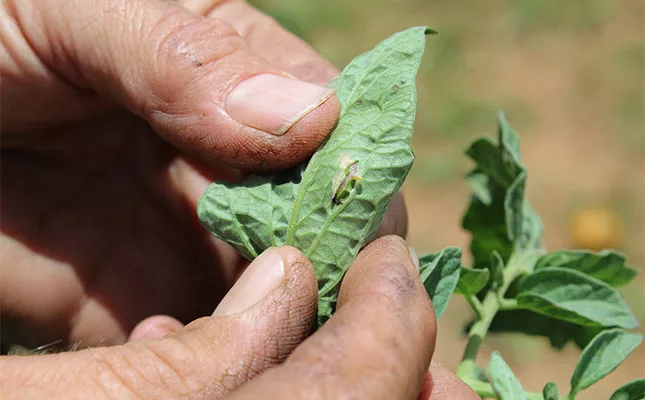
Tuta absoluta larvae feed on tomato leaves. When high populations are present, the leaves and eventually the whole plant die, causing significant yield losses.
Photo: Lindi Botha

In a webinar hosted by CropLife SA in September, farmers were cautioned to implement good stewardship practices to prevent tomato leaf miner (Tuta absoluta) from developing resistance against pesticides.

  1. absoluta is a highly destructive pest in South Africa, affecting mostly tomato crops and causing up to 100% crop losses. Since tomatoes are a key crop for food security and income generation, the pest presents a major challenge to local producers.

Speaking during the webinar, Hamish Ramanand, stewardship specialist at CropLife SA, said there were no tomato varieties that were resistant to the pest, and that since registered crop protection chemicals were limited, farmers needed to be mindful to rotate active ingredients to prevent chemical resistance.

He clarified that, despite many reports from producers that chemicals were ineffective, there was no evidence that T. absoluta had become resistant to pesticides.

“Incidents where there was no knock-down effect after applying pesticides were found to be a result of incorrect applications and dosages. It is therefore critical that farmers follow the correct dosage rates and regularly calibrate spray equipment to ensure it is functioning properly,” Ramanand explained.

However, he noted that sensitivity shifts had been observed, which meant the knock-down effect was reduced after applying pesticides. This was because of overapplication of the same active ingredients, as well as improper applications.

  1. absoluta also carries a high risk of developing resistance because of its fast lifecycle.

“Farmers need to be very careful in their management practices to prevent sensitivity shifts or resistance. Rotate active ingredients, don’t return to the specific ingredient before 60 days, and follow the dosage instructions.

“Cultural practices like destroying all infected material, crop rotation, or leaving fields fallow for at least six weeks are also vital in the fight against T. absoluta,” Ramanand said.

Since the moth also feeds on weeds in the Solanaceae family, fields should also be cleared of these weeds during crop rotation cycles.

Developing and registering new pesticides is a long-term and costly process, and farmers are unlikely to see new chemical options anytime soon.

Therefore, Ramanand said producers needed to develop integrated pest management (IPM) strategies. In addition to responsible chemical use, pest monitoring and biological options should also be implemented. This included using pheromone traps that lured moths so that threshold levels could be monitored, and farmers across a whole area could be notified if there was an outbreak.

Natural enemies like parasitoids and beneficial bacteria could also be used to prevent large-scale outbreaks. Ramanand noted, however, that reliance on natural enemies entirely was not enough to control the pest.

“Farmers need a full IPM programme to manage pests across the whole lifecycle. Just spraying when numbers are high is costly and can do more harm than good,” he explained.


Source link

Previous Post

Amazon now lets Prime members add items to upcoming orders with one tap

Next Post

The UN air service that flies where no one else can

Next Post
The UN air service that flies where no one else can

The UN air service that flies where no one else can

Leave a Reply Cancel reply

Your email address will not be published. Required fields are marked *

RECOMMENDED NEWS

ATAF strengthens Namibia’s capacity in Transfer Pricing audits

ATAF strengthens Namibia’s capacity in Transfer Pricing audits

5 months ago
UNHCR, UN-Habitat join forces to improve urban settlements in El Salvador – EnviroNews

UNHCR, UN-Habitat join forces to improve urban settlements in El Salvador – EnviroNews

12 months ago
Spark Accelerator Program Unveils Second Cohort

Spark Accelerator Program Unveils Second Cohort

4 months ago
Quantum algorithms can break generative AI bottlenecks

Quantum algorithms can break generative AI bottlenecks

1 year ago

POPULAR NEWS

  • Ghana to build three oil refineries, five petrochemical plants in energy sector overhaul

    Ghana to build three oil refineries, five petrochemical plants in energy sector overhaul

    0 shares
    Share 0 Tweet 0
  • The world’s top 10 most valuable car brands in 2025

    0 shares
    Share 0 Tweet 0
  • Top 10 African countries with the highest GDP per capita in 2025

    0 shares
    Share 0 Tweet 0
  • Global ranking of Top 5 smartphone brands in Q3, 2024

    0 shares
    Share 0 Tweet 0
  • When Will SHIB Reach $1? Here’s What ChatGPT Says

    0 shares
    Share 0 Tweet 0

Get strategic intelligence you won’t find anywhere else. Subscribe to the Limitless Beliefs Newsletter for monthly insights on overlooked business opportunities across Africa.

Subscription Form

© 2026 LBNN – All rights reserved.

Privacy Policy | About Us | Contact

Tiktok Youtube Telegram Instagram Linkedin X-twitter
No Result
View All Result
  • Home
  • Business
  • Politics
  • Markets
  • Crypto
  • Economics
    • Manufacturing
    • Real Estate
    • Infrastructure
  • Finance
  • Energy
  • Creator Economy
  • Wealth Management
  • Taxes
  • Telecoms
  • Military & Defense
  • Careers
  • Technology
  • Artificial Intelligence
  • Investigative journalism
  • Art & Culture
  • LBNN Blueprints
  • Quizzes
    • Enneagram quiz
  • Fashion Intelligence

© 2023 LBNN - All rights reserved.