– Advertisement –
The African Union (AU) has “Justice for Africans and People of African Descent Through Reparations” as its theme of the year 2025. This theme arose from the Accra 2023 Reparations Conference. In line with the theme, the government of Algeria and the African Union co-hosted a conference on Crimes of Colonialism: Towards Redressing Historical Injustices through the Criminalisation of Colonialism in Algiers on November 30 and December 1, 2025.
Working towards fair reparations for harms and the exploitation suffered by Africans and peoples of African descent over the past four centuries has been a key concern for the AU and the Organisation for African Unity (OAU) before it. The first Pan African conference on reparations held in Abuja, Nigeria, in April 1993 resulted in the first collective position of African political leadership as captured in the Abuja Proclamation on Reparations.
That declaration stated that “the issue of reparations is an important question requiring the united action of Africa and its Diaspora…” being “fully persuaded that the damage sustained by the African peoples is not a ‘thing of the past’ but is painfully manifest in the damaged lives of contemporary Africans from Harlem to Harare, in the damaged economies of the Black World from Guinea to Guyana, from Somalia to Surinam.”
The Abuja Proclamation called “upon the international community to recognise that there is a unique and unprecedented moral debt owed to the African peoples which has yet to be paid – the debt of compensation to the Africans as the most humiliated and exploited people of the last four centuries of modern history.”
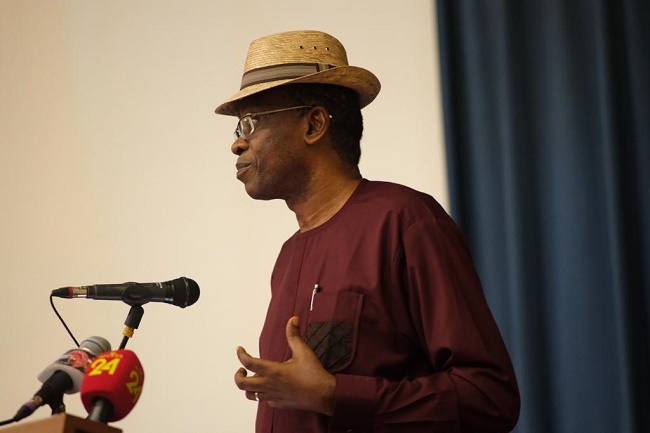
A number of conferences have since been held on reparations and on racism as well. The Algiers conference on the Crime of Colonialism can be said to have stood on the shoulders of those earlier endeavours. I participated on a panel that focused on the Environmental Impacts of Colonialism at this conference. Delegates included ambassadors, ministers of foreign affairs, and experts drawn from across Africa and the diaspora.
Algeria was praised for hosting the historic and strategic conference aimed at seeking a recognition of the crime of colonialism and seeking reparations as the basis for sustained peace and healing. The conference advanced Africa’s position on crimes of colonialism as systemic violence and exploitation that, alongside slavery, qualify as crimes against humanity.
A call was made for a declaration of an African Day for the remembrance of the victims of transatlantic enslavement and colonialism. It was also noted that colonialism has not ended and that there are still 20 colonies in the Caribbean besides those in Africa and elsewhere.
My notes from the event included the fact that colonialism was not a civilising process but one of wanton extraction, exploitation, humiliation and abuse of rights. It embodied the great crimes against humanity including those perpetrated in Congo, Cameroon, Namibia, Angola, Mozambique, Madagascar, and other places. References were frequently made to the nuclear tests that the French carried out in Algeria during the colonial days.
The contributions of Frantz Fanon, author of “The Wretched of the Earth”, an internationalist African anti-colonial activist and revolutionary were acknowledged. The impacts of colonialism on education, economy and other spheres of life were stressed and disruption of African or Africa’s? Culture was highlighted as the destruction of the glue that holds African peoples together.
The high-level ministerial panel on the topic From Recognition to Codification: Criminalising Colonialism in International Law showed that colonialism is a system and not an event and cannot be successfully fought without strategic plans. Such plans and actions must include ways of bringing back African systems of governance through education. Discussions around the human and generational impacts of colonialism underscored the health and genetic effects of nuclear tests as well as intentional spread of disease, displacements and other acts of violence.
Permit me to share some points I put across on the panel on Environmental Impacts of Colonialism. The first point was that colonialism and neocolonialism will not end except coloniality is erased. The persistence of colonialty of power and knowledge reinforces the continuation of colonialism in new forms. These produce extreme and destructive exploitation. And we must not forget, as Kwame Nkrumah stated in his book on Neocolonialism, that the worst form of imperialism is exploitation without responsibility. This mode of rapacious exploitation persists on the continent.
Another key point is that colonialism was birthed and nourished by extractivism. It was all about controlling the colonies or sacrifice zones to the benefit of the colonisers’ home territories which were considered sacred and untouchable. Colonialism extracts nearly anything: labour, data, cultures, minerals, finance and is virtually insatiable. Colonialism’s emphasis on land dispossession, resource extraction, and cultural destruction frequently resulted in ecocidal practices as they were extensive, intentional, persistent and often irreversible.
The fact that the environmental crimes are continuous and persistent can be seen in the ongoing degradation of the Niger Delta where oil and gas has been destructively extracted from colonial times to the present. Other examples include extraction of gold in Obuasi in Ghana, coal in Whitbank in South Africa, oil in the Sudd, South Sudan, gas in Cabo Delgado, Mozambique, colonial extraction of so-called critical minerals in DR Congo and the notorious extraction of uranium in Niger Republic.
The environmental impacts of colonialism also appear through carbon colonialism which is also manifesting as a continent-scale land grab. The time has come for the halting of colonial extraction in all ramifications and a recognition of the ecological/climate debt being owed Africa, as part of the needed reparations. In other words, climate finance should be approached from the platform of ecological and climate debt.
To get off the rut, the AU should produce a model law on Rights of Nature to be adopted by all African nations. Secondly, the AU should promote the codification and utilisation of African environmentalism built on African philosophies, culture and cosmology. The AU should also recognize and promote grassroots initiatives for halting expansion of fossil fuels sacrifice zones and towards resource democracy using the Ogoni example in Nigeria and the Yasuni experience in Ecuador as examples.
Finally, the map of Africa requires urgent review with the abolition and erasure of divisive, thoughtless, colonial boundaries, as those were mere demarcations of zones of ownership, control and exploitation by the colonialists.
Coming away from the conference, I kept ruminating on a strong advice offered by Eric Phillips, Vice Chair, CARICOM Slavery Reparation Commission. He said, “We must not be prisoners of our past, but architects of our future.”
It was a call for action for all, but the tasks rest especially on African political leaders. Will they rise to the occasion and show leadership?
Bassey is Director, Health of Mother Earth Foundation (HOMEF)