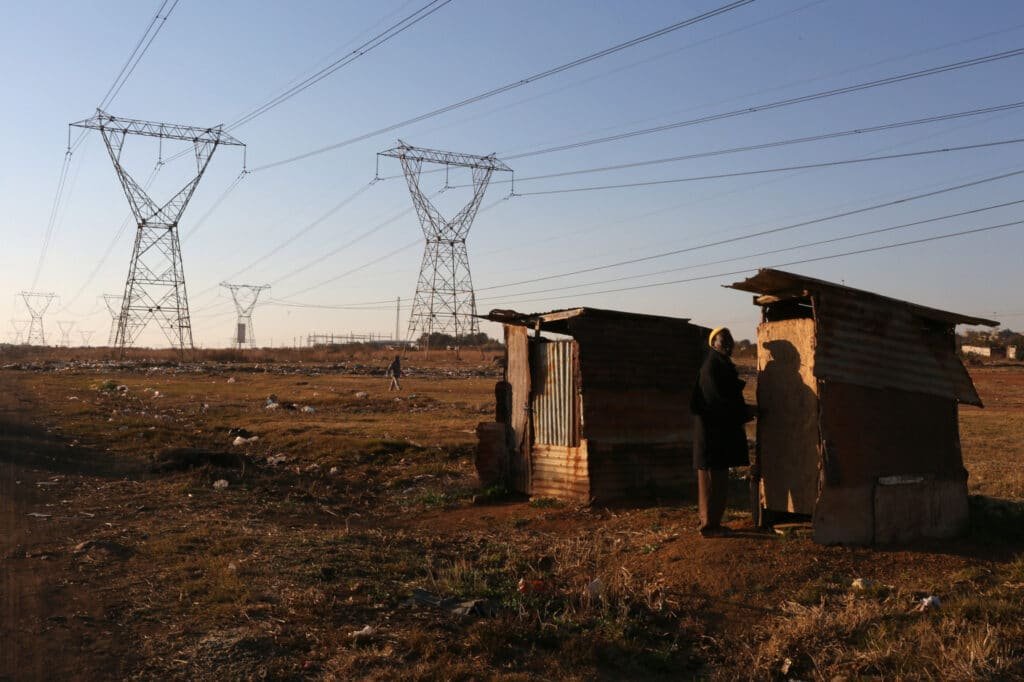
Nigeria’s electricity grid has become a symbol of a deeper structural failure. In 2024 alone, the national grid collapsed more than a dozen times. To put this in perspective, between 2000 and 2022, the grid failed an estimated 564 times.
Nigeria has experienced two national grid failures this year. Each failure plunged homes into darkness, shut factories, stalled hospitals and forced businesses back to diesel generators.


For Africa’s fourth largest economy, this pattern is not just embarrassing. It is costly. The World Bank estimates that unreliable electricity costs Nigeria billions of dollars annually in lost productivity. Installed generation capacity stands at roughly 13,000 megawatts (MW), yet actual supply rarely exceeds 4,500MW. In a country of over 200 million people, that gap tells its own story.
Recently, the federal government has unveiled a $2.6 billion, roughly N4 trillion, debt restructuring and refinancing plan to stabilise the power sector. The initiative has attracted strong investor interest in new power bonds. The administration presents the move as part of a broader effort to restore confidence in Nigeria’s macroeconomic environment.
At first glance, clearing sector debts and refinancing liabilities appears sensible. Generation companies are owed trillions of naira. Gas suppliers have complained of unpaid invoices. The Nigerian Bulk Electricity Trading Company struggles to settle obligations. Liquidity is tight across the entire value chain.
But Nigeria’s grid crisis is not simply a cash flow problem. It is a structural failure that spans generation, transmission and, most critically, distribution. Injecting $2.6 billion into the system may buy time. It does not repair the weakest links.
The real question is not whether the bailout is necessary. It is whether it is sufficient.
A grid that keeps falling
Nigeria’s grid instability is no longer sporadic. It is systemic. The country recorded repeated system collapses in 2024, some triggered by frequency instability and others by transmission faults. When the grid trips, it often takes hours to fully restore the supply.
The Transmission Company of Nigeria, which manages the national grid, operates infrastructure that is both overstretched and underinvested. While generation capacity has expanded modestly since privatisation in 2013, transmission capacity has not kept pace.
The grid frequently struggles to reliably wheel more than 5,000MW. This is far below Nigeria’s peak demand, which industry experts estimate at over 20,000MW.
When frequency drops below safe thresholds, generators are forced offline to protect equipment. The result is a cascading collapse.
In theory, more money could strengthen transmission lines, upgrade substations and stabilise frequency control. In practice, the problem runs deeper.
Nigeria’s electricity debt problem
The power sector’s liquidity crisis has built up over the years. The federal government owes generation companies (GensCos) trillions of naira in unpaid invoices. At various points, the shortfall between market revenue and the actual cost of supply has widened sharply.
Gas suppliers have also complained of delayed payments, which affects fuel availability for thermal plants. Without a reliable gas supply, generation drops. Without generation, the grid weakens further.
The proposed N4 trillion debt reduction plan aims to clear legacy arrears and restore market balance. Officials argue that once debts are settled, generators will have the confidence to invest in maintenance and capacity expansion.
The Group Managing Director of Sahara Power Group, Kola Adesina, said that resolving legacy debts would restore confidence and enable power producers to reinvest.
“Capital formation can only come when there is confidence, when you can truly see a line of sight in recovering investments previously made. Because we were owed so much, it was a bit of a problem for us to put in more money,” Adesina said.
“But last year we took the bull by the horns, based on President Bola Tinubu’s commitment to resolving the legacy issues, and I can say that once this process is over, construction will commence immediately on the second phase of our Egbin Power Plant. On behalf of the generation companies, I’d like to thank the President for this resolution.”
Tariffs and political limits
Nigeria’s electricity tariffs have long been a political minefield. Cost-reflective tariffs are necessary for market viability. Yet successive governments have been reluctant to pass full cost increases to consumers. Subsidies, explicit and implicit, have created revenue gaps.
The Nigerian Electricity Regulatory Commission introduced service-based tariffs and, more recently, adjustments for Band A customers. But the broader market still suffers from under-recovery.
When distribution companies fail to collect enough revenue, they cannot fully pay the Nigerian Bulk Electricity Trading company. NBET then struggles to pay generators. The debt cycle repeats. Debt cancellation treats the symptom. It does not resolve the pricing imbalance.
If there is one segment that defines Nigeria’s electricity crisis, it is distribution. Distribution companies were privatised in 2013 with the promise of efficiency gains and investment. More than a decade later, aggregate technical, commercial and collection losses remain high.
Meanwhile, metering gaps persist. Millions of customers are still on estimated billing. Collection efficiency in some franchises lags behind global standards. The distribution therefore appears to be the weakest link in the value chain. Even when generation improves, distribution bottlenecks and losses erode gains.
High losses mean that only a fraction of energy generated is paid for. That revenue shortfall undermines the entire market. Bolaji Kolawole, an industry consultant, describes the distribution problem as structural.
“Many DisCos lack the capital base and governance structure required for large-scale network upgrades. Some are effectively trading companies, not infrastructure operators,” he said.
Injecting $2.6 billion to settle upstream debts does not automatically strengthen distribution networks.
Transmission under strain
Moreover, transmission sits between generation and distribution, and it has struggled to expand at the pace required. The grid’s fragility is partly a function of ageing infrastructure. Substations are overloaded. Protection systems can fail under stress. Maintenance backlogs accumulate.
The federal government secured multilateral support in the past for transmission upgrades, including World Bank programmes. Yet implementation delays and funding gaps remain common. A more resilient grid would require sustained capital expenditure over many years, not a one-off refinancing package.
One positive signal in the current intervention is investor appetite. According to The Africa Report, the new power bonds linked to the debt plan have attracted investor demand, as investors view Nigeria’s macroeconomic reforms as improving the investment climate.
For bondholders, the refinancing structure may provide clearer repayment pathways backed by federal guarantees. But long-term private capital in power generation and distribution will depend on predictable regulation, enforceable contracts and foreign exchange stability.
Foreign investors still face currency risk. Revenue in naira must often service obligations in dollars. Without confidence in tariff adjustment mechanisms and currency convertibility, large-scale new investment may remain cautious.
The Electricity Act and state reform
The Electricity Act 2023 opened the door for states to establish their own electricity markets. Lagos state, Enugu state and others have signalled plans to develop localised generation and distribution frameworks. In theory, decentralisation could reduce pressure on the national grid.
If states can attract private capital into embedded generation and mini-grids, reliance on the fragile central grid may fall.
However, regulatory clarity is still evolving. Coordination between federal and state authorities will determine whether decentralisation delivers real reform. A $2.6 billion bailout does not directly address this governance transition.
To be fair, Nigeria is not the only African country grappling with electricity sector debt and instability. South Africa’s Eskom has received government support worth tens of billions of dollars over the past decade. Yet load shedding persisted for years before recent improvements.
The lesson from Eskom is sobering. Financial support can stabilise operations. Structural reform takes longer. For Nigeria, the risk is that without deep changes in distribution performance, tariff discipline and transmission investment, the grid will continue to wobble.
What happens next
The immediate priority will be implementing the debt reduction plan smoothly and transparently. Clearing arrears could restore confidence among generation companies and gas suppliers. It may also improve operational stability in the short term.
But the deeper test will come in the next 12 to 24 months. Will distribution companies invest meaningfully in metering and network upgrades? Will regulators enforce loss reduction targets? Will tariffs adjust in line with cost without political reversal? And will transmission projects move from approval to completion? Time will tell.
Nigeria’s grid crisis is decades in the making. It cannot be solved by a single refinancing operation.
The $2.6 billion bailout offers breathing space. It addresses accumulated debts and signals federal commitment to stabilising the market.
Yet Nigeria’s electricity crisis is not primarily about unpaid invoices. It is about structural weakness across the value chain, with distribution losses and tariff distortions at its core.
Without disciplined reform in pricing, governance and infrastructure investment, the liquidity gap will reopen. The grid will remain fragile. Investors will remain cautious.
Nigeria needs capital. But more than that, it needs market discipline and operational reform. A bailout can steady the ship. Only structural change can keep it afloat.