– Advertisement –
If Nigeria is to win the war against climate change and secure a sustainable future for its citizens, both living and unborn, it must immediately review its current strategy and shift its fight from the glasshouses in Abuja, the country’s capital, where most climate talks are usually held, to the subnational level spread across the various states.
Rainfall patterns in Katsina State, in the northwestern region, have become more unpredictable, leading to the disruption of agricultural cycles and endangering lives and food security. Similar to this, the constant flooding that still dominates the lives of the people in Bayelsa, another state in the South-South part of the nation, has resulted in the displacement of numerous communities.
These are the everyday realities that are taking place all around the country, not predictions from climate theories. The issue of climate change in Nigeria has become urgent, tangible, and deeply localised. Sadly, however, the infrastructure for responding remains heavily centralised, mostly in urban areas.
As Nigeria advances its climate objectives, from updating its Nationally Determined Contributions (NDCs) to implementing the Climate Change Act and detailing a net-zero pathway, one thing becomes increasingly clear: our 36 states hold the key to implementation. A national goal is meaningless if states are structurally underprepared to act.
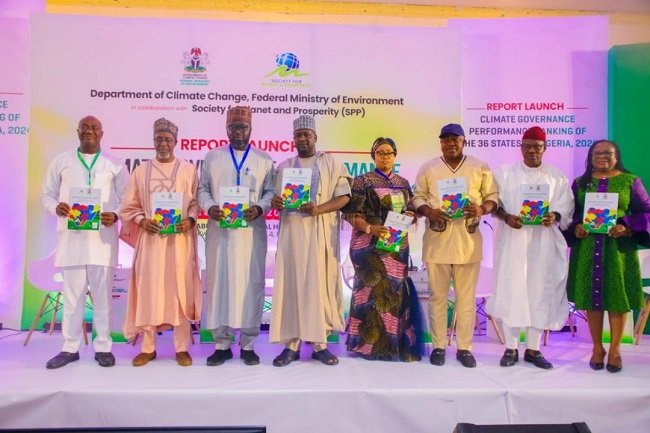
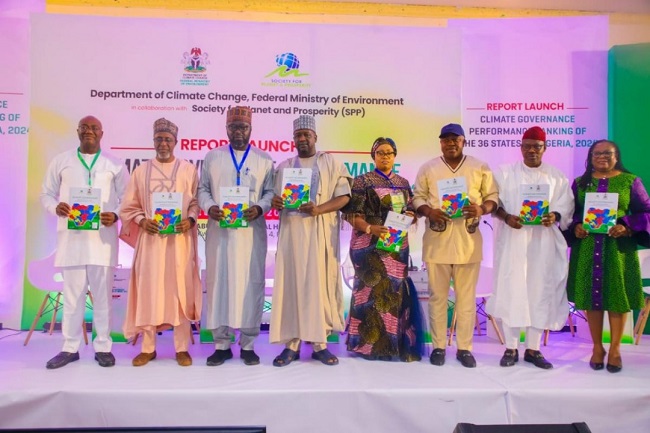
In order to tackle this issue, the Department of Climate Change (DCC) in the Federal Ministry of Environment and the Society for Planet and Prosperity (SPP) carried out an extensive training needs assessment of climate change desk officers, directors, and focal persons throughout Nigeria. With 48 contributions from 34 states and the FCT, the response was overwhelming and provided the most comprehensive image to date of the capacity gaps impeding successfully implementing climate action at the state level.
From what the states told us in the assessment, three core gaps emerged as top priorities:
- Accessing and managing climate finance (29 states)
- Greenhouse gas (GHG) inventory and reporting skills (28 states)
- Monitoring, Evaluation, and Reporting (MER) for climate projects (25 states)
These aren’t “nice-to-haves.” They are foundational capabilities, essential for designing fundable climate projects, tracking impact, and mainstreaming climate into state policies and budgets.
Respondents also highlighted further areas for support: climate budgeting, carbon markets, digital monitoring tools, stakeholder coordination, gender integration, and effective engagement strategies. This points to a growing awareness among state actors of the complex, interlinked demands of modern climate governance.
Yet, despite this motivation and readiness, many states still face systemic barriers such as
• Underfunded or poorly structured climate desks
• Limited technical capacity, especially on climate finance
• Absence of reliable data systems or over-reliance on external consultants
• Weak integration of climate priorities into broader state planning
This implementation gap, between ambition and ability, undermines Nigeria’s credibility and progress where it matters most.
To move from diagnosis to delivery, as a framework to bridge the gap, the SPP/DCC team is launching a Capacity Building Implementation Framework, a practical roadmap to equip states/climate desk officers with the tools, skills, and support needed to lead local climate action.
But this cannot, and should not, be a standalone effort. Thus, in the Call to Collective Action,
Federal MDAs must:
• Institutionalise annual training and capacity-building for subnational actors
• Provide standardised toolkits, data frameworks, and benchmarking models
Donors and Development Partners must:
• Prioritise state-level technical support in GHG inventory, MER systems, and climate finance.
• Build readiness for Article 6 and results-based climate budgeting
State Governments must:
• Establish and fund dedicated climate change desks
• Mainstream climate into development planning and inter-ministerial coordination
Civil society and academia must:
• Drive peer learning, mentoring, and knowledge exchange
• Co-develop digital tools and community-responsive engagement strategies
The evidence is clear: Nigeria’s states are ready. What they need now is coordinated, sustained, and strategic support. That’s why we propose the creation of a National Subnational Climate Training Compact, a bold, collaborative initiative bringing together public, private, and development partners to ensure every state is equipped to lead climate action from within.
This is because it is not the beautiful glass palaces of Abuja, where most high-level climate talks are conducted, but rather the decisions made and the capacities built in places like Abia, Zamfara, and all points in between that will assure Nigeria’s climate resilience. The time to act is now, and we are all responsible for it.
By Timothy Ogenyi, who leads the SCGPR 2.0 project and coordinates subnational climate governance initiatives for the Society for Planet and Prosperity (SPP)