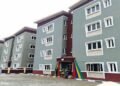
Ahmed Musa Dangiwa, Nigeria’s Minister of Housing and Urban Development, revealed that Africa is grappling with a staggering housing shortfall of no less than 50 million units, accompanied by a daunting $1.4 trillion gap in housing finance.
While addressing attendees at the 7th Africa Housing Awards held in Abuja, Dangiwa emphasized that the ongoing housing crisis stands as one of the continent’s most pressing developmental hurdles.
He remarked, “The trajectory of this deficit is deteriorating and could potentially soar to approximately 130 million housing units by the year 2030 if solutions are not expedited; housing remains one of Africa’s most pressing developmental imperatives.
“Currently, around 54 million Africans reside in urban slums, underscoring the magnitude of unmet demand fueled by rapid urbanization, ineffective housing finance mechanisms, and the absence of large-scale delivery.”
He articulated that housing shortages have now positioned themselves at the core of impediments to economic growth, threats to social stability, and challenges of urban resilience across the continent.
Notably, Nigeria exemplifies the broader African deficit, with a conservatively appraised housing shortfall exceeding 17 million units.
“The Federal Government is responding by transitioning from sporadic projects to a cohesive national housing delivery program under President Bola Tinubu’s Renewed Hope Agenda. Over 10,000 housing units have been initiated across 14 states and the Federal Capital Territory over the past two years, in addition to urban renewal and slum improvement initiatives benefiting more than 150 communities nationwide,” he stated.
However, he stressed that no single nation can resolve the deficit in isolation, advocating for enhanced continental collaboration, increased private sector engagement, and scalable financing strategies.
The theme of the housing deficit was prominent throughout the Africa Housing Awards, where 52 individuals and institutions were celebrated for their contributions aimed at bridging supply shortfalls.
The awards’ convener, Festus Adebayo, noted that the housing and construction sector continues to be a significant catalyst for job creation and economic prosperity, yet faces mounting pressure from escalating demand, regulatory deficiencies, and global economic challenges.
“These pressures led to the establishment of the awards platform to foster accountability and best practices across the sector. The Housing Development Advocacy Network is adopting a zero-tolerance approach against unethical practices, cautioning that the group will unveil fraud and misconduct within the sector, even among award recipients, to safeguard homebuyers and investors,” he asserted.
He also mentioned that stakeholders are collaborating with the National Assembly, the Federal Capital Territory Administration, the Federal Ministry of Housing, Lagos State, and other regulatory bodies to fortify housing regulations in alignment with international best practices.