The Islamic State group’s two affiliates in West Africa rely on both modern cryptocurrency and hawala, a traditional person-to-person exchange, to finance their operations. Nigerian authorities are tightening their controls over both financial channels to undermine the terror groups.
Islamic State’s Nigeria-based Maktab al-Furqan office oversees financial operations of both Islamic State West African Province (ISWAP), operating in the Lake Chad Basin, and Islamic State Sahel Province (ISSP), headquartered in northern Mali.
The two groups raise millions of dollars in revenue through a complex mix of extortion, kidnapping and zakat, a form of religious obligation that IS has exploited across Africa and the Middle East. In Lake Chad, for example, fishermen must pay around $40 each for a permit. ISWAP demands a “tax” for each carton of fish or head of cattle in its territory.
“Curbing terrorism financing isn’t easy,” Malik Samuel, a researcher for the Institute for Strategic Studies wrote in an analysis of IS finances in West Africa. “That requires identifying and eliminating revenue sources through incentivizing community participation, raising awareness of the dangers of working with ISWAP, and providing employment to prevent civilians from seeking alternative livelihoods from the terror group.”
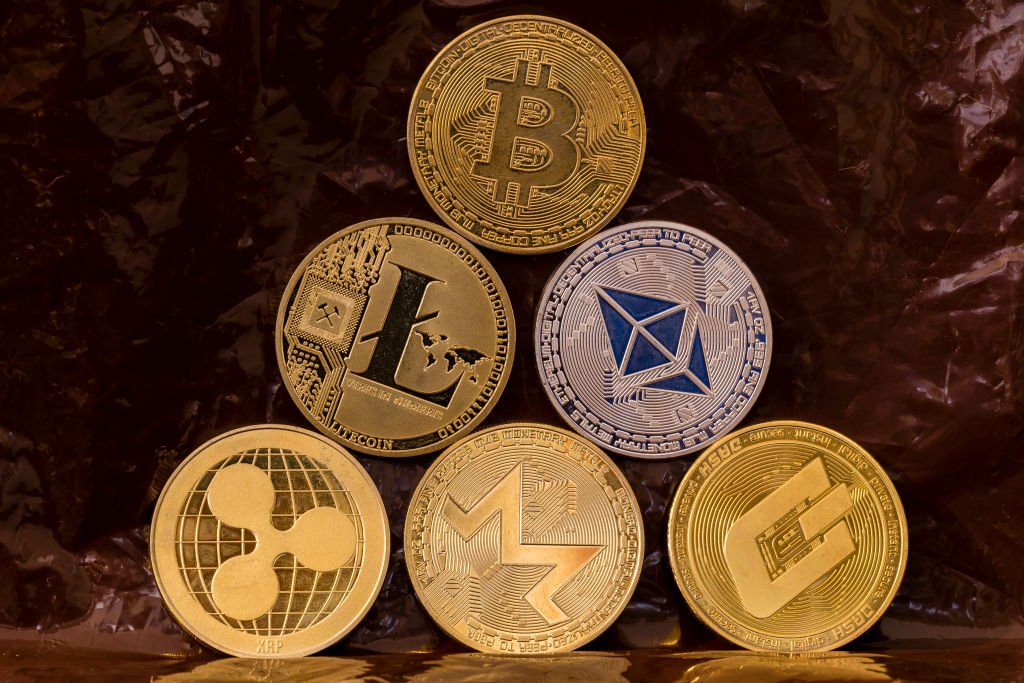
Much of the money that ISWAP raises is converted into Monero, a cryptocurrency gaining popularity for its security measures designed to make transactions untraceable. Nigerians have embraced cryptocurrencies of all kinds as a hedge against the national currency, the naira. With an estimated one-third of its 200 million people using cryptocurrency, Nigeria is now second only to India among the world’s largest crypto markets.
According to the Counter ISIS Finance Group, Nigerians’ interest in cryptocurrencies has made West Africa a global focal point for cryptocurrency transfers. Nigeria’s growing cryptocurrency market — expected to reach $1.6 billion this year — creates a massive pool of funds that make it difficult to track terrorist transactions.
At the other end of the technology spectrum, hawala remains a reliable method for moving money across borders and among IS branches. ISWAP uses the person-to-person transfers, which typically require brokers on each end of the transaction and an identifying password. Using hawala, terrorists can transfer money from Lake Chad to the Sahel and beyond while avoiding conventional banks.
“Hawala networks likely play an important role in IS’s growing influence in West Africa, especially regarding transfers between groups facilitated by Maktab al-Furqan,” analyst Adam Rousselle wrote for the Global Network on Extremism and Technology.
Nigeria has begun cracking down on both financial methods in an effort to disrupt ISWAP’s ability to finance itself and support its counterparts in the Sahel. In 2021, Nigeria’s central bank blocked financial institutions from processing cryptocurrency transactions, a move that had limited impact since most crypto transactions are outside conventional banking channels. Nigeria removed the ban in early 2024.
“Undaunted by these challenges, the government has continued to fight against cryptocurrency, partly in response to a spike in money laundering cases in the country involving the technology,” Nigeria analyst Kingsley Charles wrote recently for New Lines Magazine.
The informal nature of hawala makes it more difficult to control. Nigeria’s approach so far has been to adopt new licensing guidelines that would push financial transactions through conventional banks.
There are also challenges related to divided regional oversight. Within ISWAP’s territory, Cameroon and Chad belong to the Action Group Against Money Laundering in Central Africa. Niger and Nigeria are part of the Inter-Governmental Action Group against Money Laundering in West Africa. Both organizations are members of the anti-money laundering Financial Action Task Force global network.
“Dismantling ISWAP’s financial networks requires a robust strategy involving joint efforts from the four affected Lake Chad Basin countries and beyond, as the group extends its operations,” Samuel wrote.