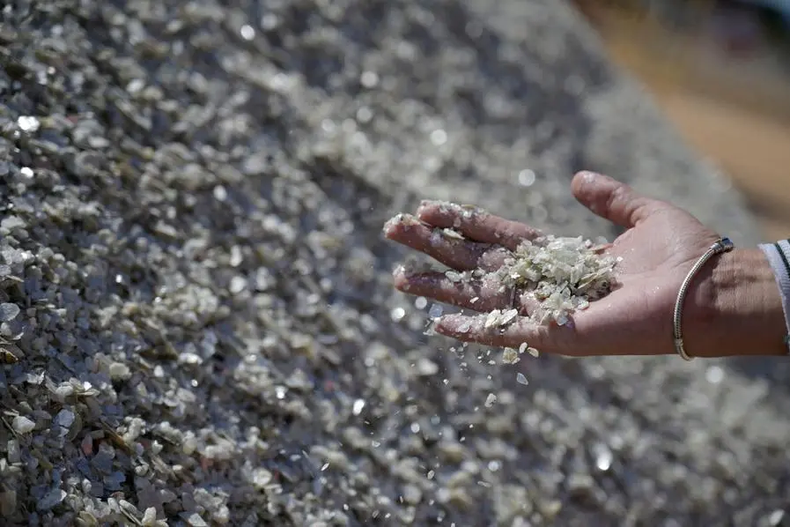
Nigeria is set to launch two major lithium processing plants this year marking a shift from raw mineral exports towards adding value domestically.
The announcement came from Nigeria’s mining minister, Dele Alake, who revealed that a $600 million lithium processing plant near the Kaduna-Niger border is slated for commissioning this quarter, while a $200 million lithium refinery on the outskirts of Abuja is close to completion.
He also added that two more lithium plants are expected to come to life in Nasarawa state before the third quarter of 2025.
“We are now focused on turning our mineral wealth into domestic economic value – jobs, technology, and manufacturing,” Alake said.
More than 80% of the funding for the four plants is being provided by Chinese companies, including Jiuling Lithium Mining Company and Canmax Technologies according to separate announcements by governors of the host states. The remaining stakes are owned by local investor Three Crown Mines.


Building value beyond extraction
Lithium is one of the most sought-after minerals globally, especially because of its critical role in producing electric vehicles, solar panels, and other green energy technologies.
A 2022 study by Nigeria’s Geological Survey Agency discovered significant deposits of high-grade lithium across half a dozen Nigerian states, drawing strong interest from global players.
In the wake of these findings, China’s Ming Xin Mineral Separation Nig Ltd. was selected by Kaduna State in 2023 to build Nigeria’s first lithium-processing plant, with ambitions to manufacture batteries for electric vehicles (EVs).
The Nigerian government made it clear that its focus is on building value at home. In 2022, the government claimed it had rejected a proposal from Tesla to purchase raw lithium from the country.
Ayodeji Adeyemi, special assistant to the minister of mines and steel development, told Rest of World that the proposal was turned down because it did not align with Nigeria’s new broader mining policies.
Ongoing reforms include a ban on the export of unprocessed minerals, formalising artisanal mining operations, which account for much of the current extraction, and establishing a state mining firm where investors can own up to a 75% stake.