

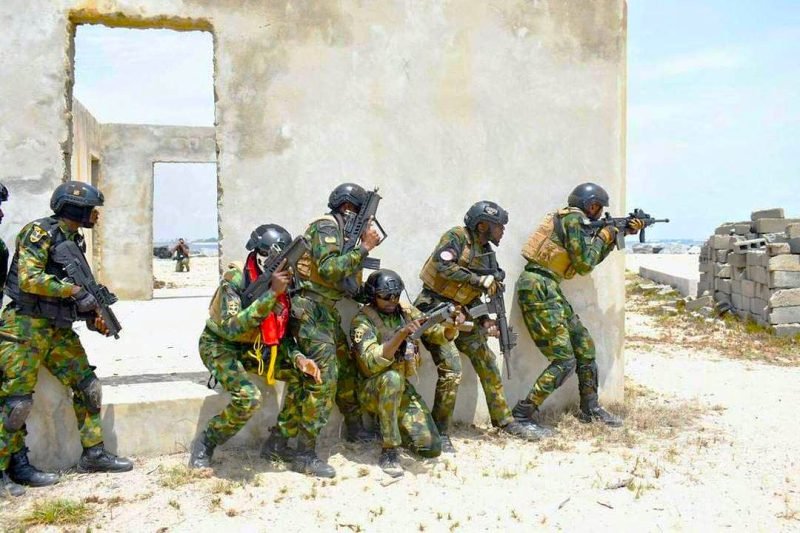
At 2 a.m. on December 7, 2025, some Beninese soldiers wearing military fatigues took over a state television station to announce that President Patrice Talon had been removed and that the constitution had been suspended. Within 18 hours of this announcement, the Benin airspace and core institutions came under Nigerian control, the cameras were still rolling, but the balance of power had flipped: Nigerian combat aircraft including drones and ISR were quickly deployed into Benin’s airspace, surveying the country, and carrying out precision strikes, and Nigerian-led ECOWAS ground troops were simultaneously deployed to secure the same station the coup plotters had seized before dawn.
In a region where 11 coups have succeeded since 2020, Benin’s failed because Nigerian forces moved faster than the plotters. West Africa is entering a new era of coups, and Nigeria, as a regional power, is particularly sensitive to this development. By December 9th, the Nigerian Senate had formally endorsed a foreign military deployment to the Beninoise Republic, its first since the 2017 Gambia crisis, showing political will from the Nigerian perspective to project regional muscle. This was not bureaucratic peacekeeping; it was rapid force projection. Only one West African military could put jets over Cotonou and troops on the ground in under a day: Nigeria.
What Actually Happened in Benin
As the coup began, the Nigerian government received two formal requests from the embattled Beninese counterpart: the first was for “immediate Nigerian air support,” and the second was for “protection of constitutional institutions” in Cotonou. The Beninese Foreign Minister noted coup plotters had “heavy civilian population” around their barracks, thus this required a “surgical strike” capability, and only Nigeria had both the capacity and willingness in the region to execute that mission immediately. These requests made by the Beninese government were legal under the 1999 ECOWAS Protocol on Conflict Prevention and the 2001 Protocol on Democracy and Good Governance, which allow for action, including military action, in the event of an unconstitutional change of government or when a member state requests assistance.
Benin’s own military was still engaging the coup plotters when Nigeria intervened. Nigerian Air Force aircraft were immediately in control of Benin’s skies and conducting precision strikes on Camp Togbin near the airport, where part of the mutinous force was concentrated. At the same time, the Nigerian-led ECOWAS ground troops then manoeuvred to secure the state TV station earlier captured by the coupists. At the early hours of the military operation, the ECOWAS contingents immobilised several armoured vehicles in Cotonou, the state capital, and deployed alongside contingents from Sierra Leone, Côte d’Ivoire, and Ghana as part of the Standby Force. Only Nigeria could put precision airpower and organised ground forces into Benin within hours, which is why this was not just a bureaucratic peacekeeping but a rapid force projection unique in West Africa.

The Pan-Africanist Critique
President Talon of Benin has long been viewed by scholars and civil society as a backsliding leader who is accused of revising the country’s legal & constitutional rules to extend his stay in power. Many argue that Benin’s real coup already happened under him. Thus, to some, it looked like Nigeria was defending a government that many argue had already undermined Benin’s democracy through constitutional manipulation, a tension Nigerian officials didn’t really address.
Pan-Africanists strongly opposed the Nigerian intervention, and they saw Nigeria as a Western tool used by France and the United States to try to keep neo-colonial control over Benin. Many also invoked Nigeria’s long history of military rule to question its moral authority to defend “democracy” beyond its borders, making the fair point that Nigeria should focus on the struggles with insecurity within its own borders before intervening in others’ problems.

Sceptics raise very valid questions in Nigeria’s intervention: Who has the authority to declare one authority “legitimate” and another a “junta” when both often emerge from contested processes? Was Nigeria really defending democracy, or defending a particular regional political order that privileges incumbents and Western-aligned elites? Why exactly did ECOWAS move from threats to actual deployment in Benin but not in Niger in 2023? These questions deepen suspicions of inconsistency and selective principles.
Nigeria’s officials argue that regional stability, not Western leverage, is the core logic: as Foreign Minister Yusuf Tuggar put it, “our democratic institutions may not be perfect, but they remain resilient”, and democracy is “our strategic contribution to regional peace.” The common narrative online that conflates ECOWAS’ threatened but unrealised intervention in Niger with the rapid, invited action in Benin glosses over this legal and political distinction; they are connected in optics, but they are not the same scenario. Benin requested assistance legally, and Nigeria was fulfilling its ECOWAS obligations. Legal authority under ECOWAS protocols doesn’t settle the moral question, but it does distinguish requested intervention from imposed regime change.
The Historical Foundation That Cannot Be Ignored
The Economic Community of West African States (ECOWAS) was once seen to have the most advanced mechanisms for addressing regional peace and security in Africa. This view was attributed to several factors: the role of the ECOWAS Cease-fire Monitoring Group (ECOMOG) in the 1990s in contributing to the restoration of peace to West Africa’s trouble spots in Liberia and Sierra Leone, Guinea-Bissau, and Côte d’Ivôire; Nigeria became the de facto backbone of ECOMOG operations in Liberia and Sierra Leone.
In Liberia, Nigeria supplied around 12,000 of roughly 16,000 ECOMOG troops and covered close to 80–90 per cent of the mission’s finances, effectively underwriting regional security for most of the 1990s. In Sierra Leone, Nigerian contingents again made up about 12,000 of the ECOMOG forces, which led the combat that restored President Ahmad Tejan Kabbah after the 1997 coup. Nigeria has always been the region’s security guarantor.
Nigeria now ranks 3rd in Africa and 31st globally on the 2025 Global Firepower Index, reflecting sustained investment in personnel, equipment and logistics. With over 215,000 active-duty troops, combat aviation capable of precision-strike missions, and decades of experience in both internal counterinsurgency and external peace operations, it is the only West African military that can coordinate airpower, rapid deployment, and brigade‑level ground operations beyond its borders on short notice.
The paradox here is that Nigeria still battles Boko Haram, ISWAP and banditry at home, but those threats have driven rather than destroyed its capacity to sustain multi‑theatre operations, including rapid external interventions. In that sense, Nigeria’s strategic importance is not theoretical: among ECOWAS states, it alone combines the lift, firepower and command structure to put jets over Cotonou and organised ground forces in Benin within hours, as the December 2025 timeline showed.
Conclusion: What This Means Going Forward
Pan‑African critics like myself will keep debating whether Nigeria’s interventions genuinely protect African sovereignty or risk entrenching a conservative regional order, but that debate does not automatically turn Abuja into a Western proxy. The real tension is not between ‘African sovereignty’ and ‘Western puppetry’, but between two African political projects: a treaty‑based security community under ECOWAS and a looser, anti‑imperialist bloc emerging in the Sahel.
With Mali, Niger and Burkina Faso walking away from ECOWAS in January 2025, the bloc’s remaining members now rely, implicitly or explicitly, on Nigeria as their default security guarantor. The Benin operation marked the moment Nigeria stopped debating its regional role and started exercising it again in real time.
The Benin precedent also sharpens uncomfortable questions: can Nigeria keep underwriting regional order while Boko Haram, ISWAP and bandit gangs still test its authority at home? Will smaller ECOWAS states accept a security architecture where their survival may depend on the choices of one oversized neighbour? Could there be a middle ground where the anti‑imperialist bloc emerging in the Sahel works with ECOWAS?
Strategically, the fact is hard to dispute: Nigeria is now West Africa’s only credible rapid‑intervention power, and Benin was the proof, not the theory. December 2025 settled whether Nigeria matters; the real question is whether its neighbours are comfortable living next door to the one state that can change their fate within eighteen hours.


