


– Advertisement –
In a landmark step towards environmental sustainability, the Federal Government of Nigeria, in collaboration with the United Nations Development Programme (UNDP), has commissioned the Optimised System House at Vitapur Nigeria Limited in Lagos, for the production of Methyl Formate-based pre-blended polyols in the Rigid Polyurethane Foam sector.
The project, funded under Stage II of the Hydrochlorofluorocarbons Phase-out Management Plan (HPMP) of the Montreal Protocol, marks Nigeria’s decisive shift away from ozone-depleting substances and positions the country as one of only two African nations – alongside South Africa – with such a facility.
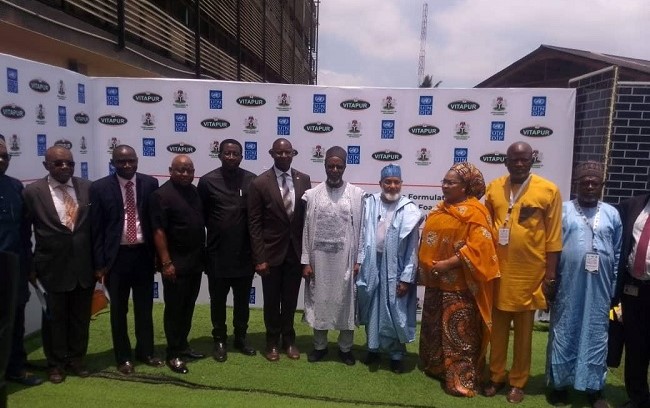
Speaking at the commissioning, the Minister of Environment, Balarabe Abbas Lawal, emphasised the significance of the project in Nigeria’s climate and ozone protection efforts.
“With this commissioning, Vitapur has completely phased out the use of HCFC-141b in its operations. This will also support downstream companies to eliminate harmful substances from their foam production lines. Together, we have phased out over 301 metric tons of HCFC-141b, fulfilling Nigeria’s obligations under the Montreal Protocol,” he stated.
The Minister explained that the optimisation of the System House was necessary after challenges such as shrinkage and high-density issues were identified in earlier formulations. The improved facility now deploys a mix of environmentally friendly blowing agents such as Hydrofluoro-olefins (HFOs), Cyclopentane, and Methylal, enabling the sustainable production of high-quality rigid foams for insulation panels, thermoware, spray foams, and other applications.
The project achieved several critical milestones such as:
- Provision of modern equipment including blending tanks, smoke detectors, and upgraded control panels.
- Supply of advanced raw materials such as silicone, catalysts, and new generation blowing agents.
- Establishment of an internationally certified laboratory at Vitapur, equipped with precision testing machines like Flash Point Tester and K-Value Tester for quality assurance.
- Job creation and green skills development through the training of indigenous technicians and engineers in ozone-friendly technologies.
The Minister highlighted that this optimisation builds on earlier successes, including the conversion of Slavit Nigeria Ltd in 2023 from HCFC-141b to Cyclopentane-based technology, which phased out an additional 96 metric tons of harmful chemicals.
Welcoming guests, Mr. Zakari M. Sada, Chairman of Vitafoam Nigeria Plc, the parent company of Vitapur, reaffirmed the company’s commitment to sustainability and job creation.
He urged the Federal Government to introduce policy incentives that would enable local manufacturers to thrive.
“One of our biggest challenges is the import levy and 40% duty imposed on steel sheets used in local sandwich panel production, while finished insulated panels are allowed duty waivers. This policy imbalance hurts domestic industry and discourages investment,” Sada noted.
He also called for stricter enforcement of the ban on ozone-depleting substances (ODS) to protect both the environment and local manufacturing.
In his project status report, Mr. Taiwo Adeniyi, Group Managing Director of Vitafoam Plc, revealed that the optimised facility has not only phased out HCFC-141b in Vitapur’s operations but has also:
- Increased blending capacity for ozone-friendly raw materials.
- Enhanced laboratory testing and training capabilities.
- Opened opportunities for local research into polyurethane formulations, reducing dependence on imports.
According to him, the initiative supports Nigeria’s industrialisation drive by creating jobs, boosting exports, saving foreign exchange, and enabling technology transfer across sectors such as construction, refrigeration, oil and gas, and automotive industries.
The project aligns with Nigeria’s commitments under the Montreal Protocol and the Kigali Amendment, both of which aim to protect the ozone layer and reduce global warming potential (GWP) from industrial chemicals.
“This facility makes Nigeria a leader in West Africa on ozone and climate-friendly technologies. It is a demonstration of how public-private partnerships can deliver sustainable industrial growth while protecting the environment,” said the Minister.
The ceremony ended with a symbolic presentation of the handover certificate for the project from the Federal Government and UNDP to Vitapur Nigeria Limited, marking a new phase in Nigeria’s environmental and industrial development journey.
By Ajibola Adedoye


