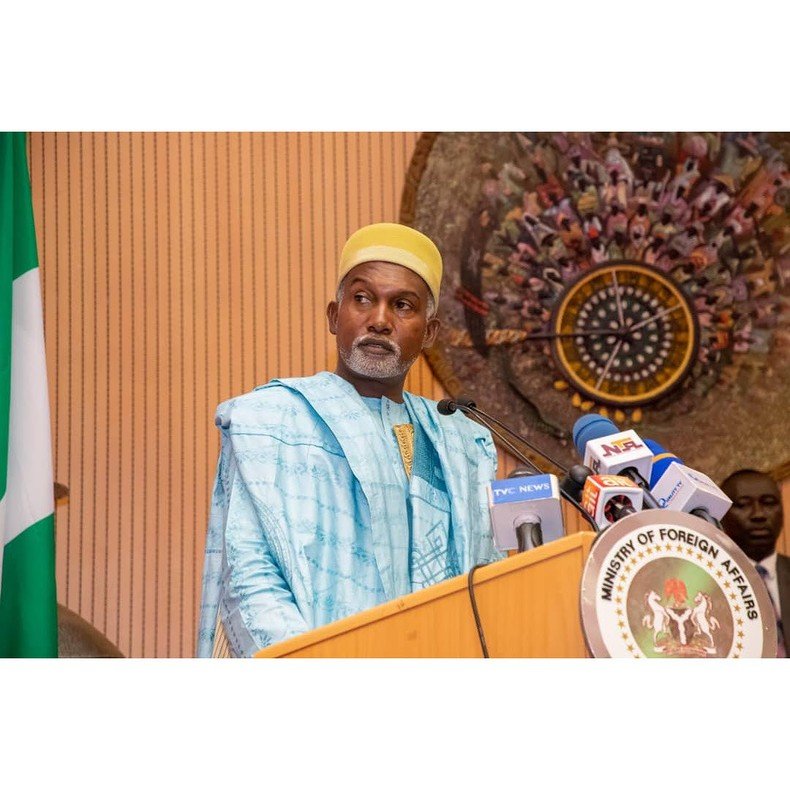
The landmark pact, announced by Nigeria’s Minister of Foreign Affairs, Hon. Yusuf Maitama Tuggar, was formalized on the sidelines of the 39th African Union Assembly in Addis Ababa.
“This important step removes a longstanding barrier to official engagement and opens the door to faster, more efficient diplomatic exchanges between Nigeria and Angola,” Tuggar wrote on X, noting that the agreement reflects the shared determination of both nations to convert historic goodwill into practical, operational cooperation.
The agreement builds on a long-standing history of solidarity between the two countries, dating back to Africa’s liberation movements and extending into today’s economic and diplomatic priorities.
Economically, Angola stands out as one of Africa’s largest crude oil producers and exporters. Petroleum accounts for more than 90% of the country’s export earnings and represents a significant share of government revenue, making oil the backbone of its economy.
Angola has consistently ranked among sub-Saharan Africa’s top oil producers, often competing with Nigeria for output leadership. Its crude is exported primarily to China, India, and European markets, reinforcing its strategic importance in global energy supply chains.
The new agreement is expected to deepen bilateral coordination, particularly in trade, security cooperation, and regional policy alignment, while strengthening economic ties anchored in Angola’s energy dominance.

Why African nations must embrace visa openness
Experts say this pact highlights the growing importance of visa liberalization for diplomatic mobility across Africa. Countries such as Ghana have led the way by offering some of the continent’s most liberal visa regimes, facilitating business, official travel, and educational exchange.
For Nigeria, the waiver allows faster engagement with Angola, one of southern Africa’s largest economies, enabling more agile coordination in multilateral forums.
Angola, in turn, gains easier access to West Africa’s largest economy, supporting its broader integration goals within the African Union.
The move is also a model for other African countries, showing that reciprocal visa liberalization can unlock trade, investment, and shared development opportunities.
Nigeria and Angola’s agreement demonstrates that practical steps toward integration, like visa openness, can translate historic goodwill into tangible results. As more African nations follow suit, freer movement will become a critical tool for driving continental prosperity and shared progress.