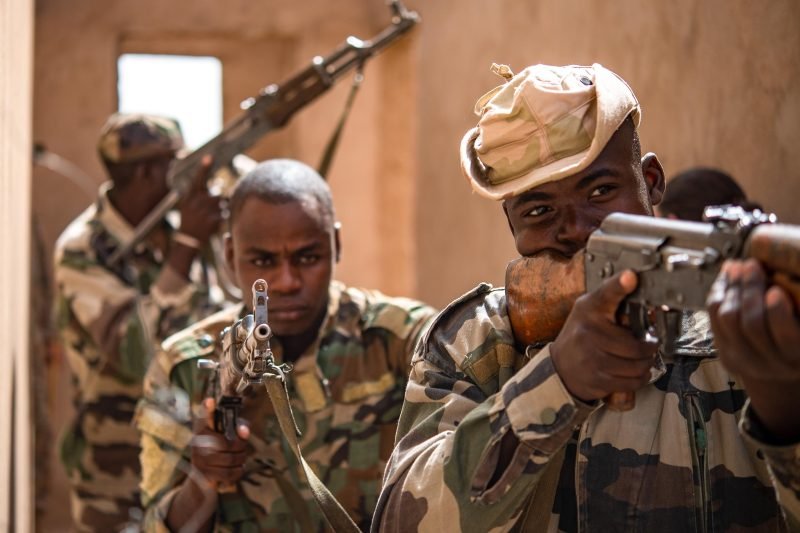
The military leadership in Niger has formalised a shift toward a total defence posture by approving a general mobilisation and the requisition of civilian resources. This move, sanctioned during a cabinet meeting in mid-January 2026, aims to address a persistent and diversifying jihadist threat that spans multiple geographic fronts. By enacting these measures, the National Council for the Safeguard of the Homeland (CNSP) transitions the state toward a “nation-in-arms” doctrine, requiring every citizen to respond to call-up orders and submit private property for military use.
This legislative framework allows the state to seize vehicles, fuel, and other logistical assets to sustain operational momentum. The government statement notes that people, property, and services are now subject to requisition to preserve the integrity of the national territory. This policy reflects the severe pressure placed on the Nigerien Armed Forces (FAN) by a decade-long conflict that has claimed nearly 2,000 lives, according to the Armed Conflict Location & Event Data Project (ACLED).
Niger faces a complex operational environment characterised by two distinct theatres of violence. In the west, particularly within the Liptako-Gourma “three-borders” region shared with Mali and Burkina Faso, the state contends with affiliates of Al-Qaeda and Islamic Jihad. These groups utilise mobile tactical units to conduct ambushes and plant improvised explosive devices (IEDs) along critical supply routes.
In the southeast, the Lake Chad Basin remains a volatile zone where Boko Haram and the Islamic State West Africa Province (ISWAP) operate. These groups specialise in asymmetrical warfare, frequently targeting both military outposts and civilian infrastructure. The general mobilisation seeks to fill the gaps left by the withdrawal of international partners, notably French and United States forces, whose departure in 2024 and 2025 removed substantial Intelligence, Surveillance, and Reconnaissance (ISR) capabilities from the Nigerien inventory.
Niger’s army, locked in a battle with jihadist groups in several regions, should double in size to “at least 50,000” soldiers in the next five years, Defense Minister Issoufou Katambe has told parliament.
The impoverished country lies in the heart of the Sahel, a region plagued by overlapping jihadist insurgencies that have spilt across borders over the past decade.
“An army must have at least 50,000 to 100,000 or 150,000 soldiers, and we are at only 25,000, which is why the president of the republic has pledged that in the next five years we must increase this figure, we must have at least 50,000 in this army,” he told lawmakers on Saturday.
He told reporters later that the decision was part of the long-term fight against terrorism and said “arrangements were being made to achieve this objective.”
Force Structure and Civilian Integration
The mobilisation follows a previous 2020 initiative that doubled the size of the professional military to 50,000 troops. To retain experienced leadership during this transition, the junta previously raised the retirement age for ranking officers to 52 years. However, the current decree suggests that professional force numbers alone are insufficient to secure vast, porous borders.
Niger appears to be modelling its strategy after its neighbour, Burkina Faso. In 2022 and 2023, the Burkinabè authorities recruited approximately 50,000 “Volunteers for the Defence of the Homeland” (VDP). These are civilian auxiliaries who receive basic tactical training and small arms to defend their local communities. While this provides a massive surge in manpower, it presents technical trade-offs regarding command and control (C2), as integrating semi-trained civilians into professional military hierarchies can lead to coordination failures or human rights concerns.
Regional Realignment and the AES Joint Force
The mobilisation is not an isolated domestic policy but a pillar of the Alliance of Sahel States (Alliance des États du Sahel or AES). This pact, formed between Niger, Mali, and Burkina Faso, represents a definitive break from the G5 Sahel and ECOWAS frameworks. The AES has announced the creation of a joint anti-jihadist force comprising 5,000 troops.
Unlike previous regional coalitions that relied heavily on Western funding and logistics, the AES joint force emphasises sovereign resource mobilisation. This includes the “voluntary” contribution fund started in 2023, which draws on citizen donations to procure military hardware and support agricultural projects intended to bolster food security during wartime. The challenge for this 5,000-man force lies in logistical sustainment; operating across thousands of kilometres of desert terrain requires a robust supply chain that the requisition of civilian goods is intended to provide.
The shift to general mobilisation indicates a move toward “total war”, where the distinction between the civilian and military spheres blurs. By requisitioning services and property, the junta can bypass traditional procurement delays. For example, the military can immediately integrate commercial trucks into tactical logistics convoys to transport water, ammunition, and rations to remote outposts in the Tillabéri region.
However, the socio-economic impact of such measures is notable. Constant requisitioning can disrupt local markets and transport sectors, potentially alienating the very population the military seeks to protect. Furthermore, the reliance on citizen-led defence funds places a substantial financial burden on a nation already facing international sanctions and economic isolation.
The success of this mobilisation will depend on the military’s ability to provide adequate training and clear rules of engagement for recruits. Without the sophisticated air support and electronic warfare tools previously provided by Western allies, the FAN must rely on high-volume manpower and localised intelligence. The move demonstrates a clear intent to pursue a military solution to the insurgency, prioritising territorial sovereignty over the democratic governance structures that existed before the 2023 coup.