
• Business
  • Markets
  • Politics
  • Crypto
  • Finance
  • Intelligence
    • Policy Intelligence
    • Security Intelligence
    • Economic Intelligence
    • Fashion Intelligence
  • Energy
  • Technology
  • Taxes
  • Creator Economy
  • Wealth Management
  • LBNN Blueprints
  • Business
  • Markets
  • Politics
  • Crypto
  • Finance
  • Intelligence
    • Policy Intelligence
    • Security Intelligence
    • Economic Intelligence
    • Fashion Intelligence
  • Energy
  • Technology
  • Taxes
  • Creator Economy
  • Wealth Management
  • LBNN Blueprints

New Superconductive Materials Have Just Been Discovered

Simon Osuji by Simon Osuji
January 12, 2025
in Artificial Intelligence
0
New Superconductive Materials Have Just Been Discovered
0
SHARES
0
VIEWS
Share on FacebookShare on Twitter


The original version of this story appeared in Quanta Magazine.

In 2024, superconductivity—the flow of electric current with zero resistance—was discovered in three distinct materials. Two instances stretch the textbook understanding of the phenomenon. The third shreds it completely. “It’s an extremely unusual form of superconductivity that a lot of people would have said is not possible,” said Ashvin Vishwanath, a physicist at Harvard University who was not involved in the discoveries.

Ever since 1911, when the Dutch scientist Heike Kamerlingh Onnes first saw electrical resistance vanish, superconductivity has captivated physicists. There’s the pure mystery of how it happens: The phenomenon requires electrons, which carry electrical current, to pair up. Electrons repel each other, so how can they be united?

Then there’s the technological promise: Already, superconductivity has enabled the development of MRI machines and powerful particle colliders. If physicists could fully understand how and when the phenomenon arises, perhaps they could engineer a wire that superconducts electricity under everyday conditions rather than exclusively at low temperatures, as is currently the case. World-altering technologies—lossless power grids, magnetically levitating vehicles—might follow.

The recent spate of discoveries has both compounded the mystery of superconductivity and heightened the optimism. “It seems to be, in materials, that superconductivity is everywhere,” said Matthew Yankowitz, a physicist at the University of Washington.

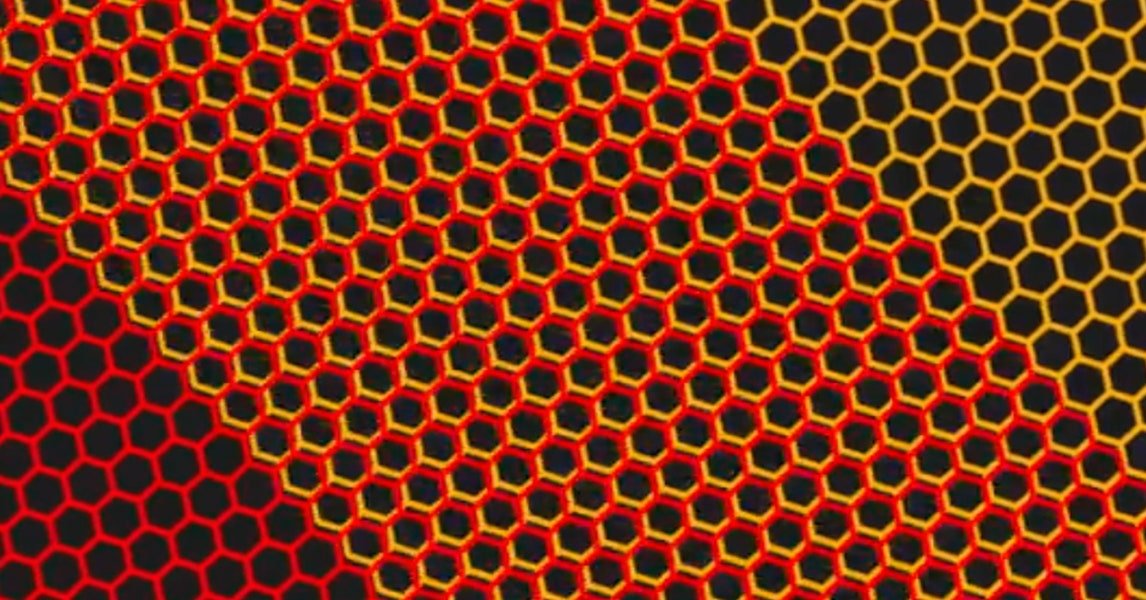
The discoveries stem from a recent revolution in materials science: All three new instances of superconductivity arise in devices assembled from flat sheets of atoms. These materials display unprecedented flexibility; at the touch of a button, physicists can switch them between conducting, insulating, and more exotic behaviors—a modern form of alchemy that has supercharged the hunt for superconductivity.

It now seems increasingly likely that diverse causes can give rise to the phenomenon. Just as birds, bees and dragonflies all fly using different wing structures, materials seem to pair electrons together in different ways. Even as researchers debate exactly what’s happening in the various two-dimensional materials in question, they anticipate that the growing zoo of superconductors will help them achieve a more universal view of the alluring phenomenon.

Pairing Electrons

The case of Kamerlingh Onnes’ observations (and superconductivity seen in other extremely cold metals) was finally cracked in 1957. John Bardeen, Leon Cooper, and John Robert Schrieffer figured out that at low temperatures, a material’s jittery atomic lattice quiets down, so more delicate effects come through. Electrons gently tug on protons in the lattice, drawing them inward to create an excess of positive charge. That deformation, known as a phonon, can then draw in a second electron, forming a “Cooper pair.” Cooper pairs can all come together into a coherent quantum entity in a way that lone elections can’t. The resulting quantum soup slips frictionlessly in between the material’s atoms, which normally impede electric flow.

Bardeen, Cooper, and Schrieffer’s theory of phonon-based superconductivity earned them the physics Nobel Prize in 1972. But it turned out not to be the whole story. In the 1980s, physicists found that copper-filled crystals called cuprates could superconduct at higher temperatures, where atomic jiggles wash out phonons. Other similar examples followed.



Source link

Related posts

The 60-Year-Old Code Running Your Bank Just Met Its AI Match

The 60-Year-Old Code Running Your Bank Just Met Its AI Match

February 24, 2026
6 Best Duffel Bags We Tested While Traveling (2026)

6 Best Duffel Bags We Tested While Traveling (2026)

February 24, 2026
Previous Post

Putin Decorates Russian Soldier in Hand-to-Hand Combat Video

Next Post

Heads of State Depart Uganda after Comprehensive Africa Agriculture Development Programme (CAADP) Summit

Next Post
Heads of State Depart Uganda after Comprehensive Africa Agriculture Development Programme (CAADP) Summit

Heads of State Depart Uganda after Comprehensive Africa Agriculture Development Programme (CAADP) Summit

Leave a Reply Cancel reply

Your email address will not be published. Required fields are marked *

RECOMMENDED NEWS

Nothing Phone (3a) Lite Review: Bloating the Brand

Nothing Phone (3a) Lite Review: Bloating the Brand

3 months ago
Amazon buys Indian video streaming service MX Player

Amazon buys Indian video streaming service MX Player

2 years ago
Amazon’s new eero Signal keeps you connected to the internet when outages occur

Amazon’s new eero Signal keeps you connected to the internet when outages occur

2 weeks ago
ADFD extends additional AED 147mln loan to complete Velana International Airport development in Maldives

ADFD extends additional AED 147mln loan to complete Velana International Airport development in Maldives

1 year ago

POPULAR NEWS

  • Ghana to build three oil refineries, five petrochemical plants in energy sector overhaul

    Ghana to build three oil refineries, five petrochemical plants in energy sector overhaul

    0 shares
    Share 0 Tweet 0
  • The world’s top 10 most valuable car brands in 2025

    0 shares
    Share 0 Tweet 0
  • Top 10 African countries with the highest GDP per capita in 2025

    0 shares
    Share 0 Tweet 0
  • Global ranking of Top 5 smartphone brands in Q3, 2024

    0 shares
    Share 0 Tweet 0
  • When Will SHIB Reach $1? Here’s What ChatGPT Says

    0 shares
    Share 0 Tweet 0

Get strategic intelligence you won’t find anywhere else. Subscribe to the Limitless Beliefs Newsletter for monthly insights on overlooked business opportunities across Africa.

Subscription Form

© 2026 LBNN – All rights reserved.

Privacy Policy | About Us | Contact

Tiktok Youtube Telegram Instagram Linkedin X-twitter
No Result
View All Result
  • Home
  • Business
  • Politics
  • Markets
  • Crypto
  • Economics
    • Manufacturing
    • Real Estate
    • Infrastructure
  • Finance
  • Energy
  • Creator Economy
  • Wealth Management
  • Taxes
  • Telecoms
  • Military & Defense
  • Careers
  • Technology
  • Artificial Intelligence
  • Investigative journalism
  • Art & Culture
  • LBNN Blueprints
  • Quizzes
    • Enneagram quiz
  • Fashion Intelligence

© 2023 LBNN - All rights reserved.