

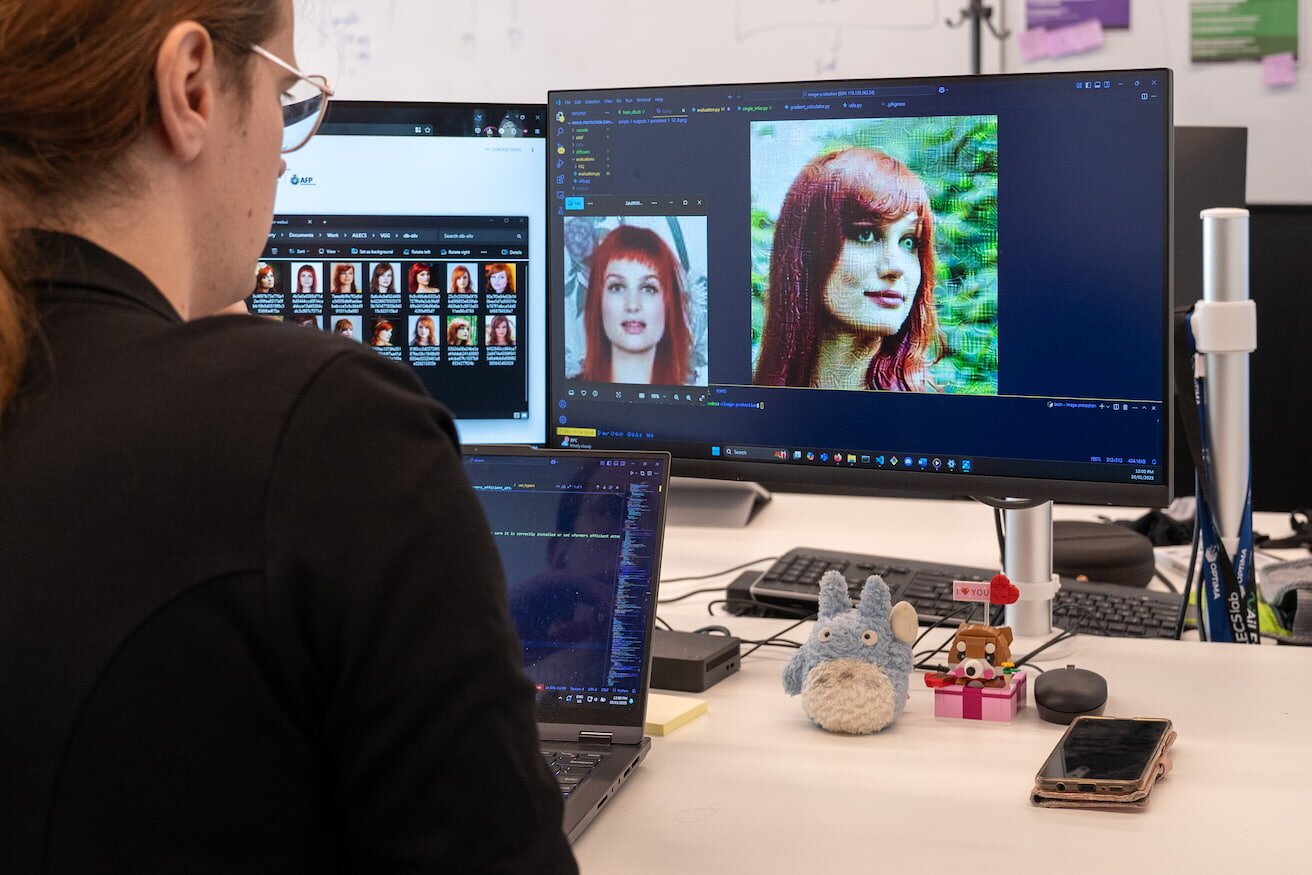

Monash University and the Australian Federal Police (AFP) are teaming up to turn the tech tables on cybercriminals through a dose of digital poison.
The AI for Law Enforcement and Community Safety (AiLECS) Lab, a collaboration between the AFP and Monash University, is developing a new disruption tool which, among its broad applications, can slow down and stop criminals producing AI-generated child abuse material, extremist technology propaganda, and deepfake images and videos.
Known as “data poisoning,” it involves the subtle alteration of data to make it significantly more difficult to produce, manipulate, and misuse images or videos using AI programs.
AI and machine learning tools (MLs) require significant amounts of online data to produce AI-generated content, so by poisoning this data, AI models then create inaccurate, skewed or corrupted results. This also makes it easier to spot a doctored image or video created by criminals.
The AI-disrupter, called “Silverer,” is in its prototype stage. It has been in development for the last 12 months under AiLECS researcher and Project Lead, Ph.D. candidate Elizabeth Perry.
Perry said the name was a nod to the silver used to make mirrors. Similarly, the tool would be used to create reflections of an original image. “In this case, it’s like slipping silver behind the glass, so when someone tries to look through it, they just end up with a completely useless reflection,” she said.
“Before a person uploads images on social media or the internet, they can modify them using Silverer. This will alter the pixels to trick AI models and the resulting generations will be very low-quality, covered in blurry patterns, or completely unrecognizable.”
Digital forensics expert and AiLECS Co-Director Associate Professor Campbell Wilson said the generation of fake and malicious images was becoming much more of a problem.
“Currently, these AI-generated harmful images and videos are relatively easily created using open source technology and there’s a very low barrier to entry for people to use these algorithms,” Associate Professor Wilson said.
The AFP has identified an increase in AI-generated child abuse material, with criminals leveraging the technology to produce and share significant amounts of fake explicit content online.
AFP Commander Rob Nelson said data-poisoning technologies were still in their infancy, and being tested, but showed promising early results in terms of law-enforcement capability. “Where we see strong applications is in the misuse of AI technology for malicious purposes.
“For example, if a criminal attempts to generate AI-based imagery using the poisoned data, the output image will be distorted or completely different from the original. By poisoning the data, we are actually protecting it from being generated into malicious content.”
Commander Nelson said the disruption tool could also aid investigators by cutting down the volume of fake material to wade through. “A number of data-poisoning algorithms already exist, and as we see in other cyber security areas, emerging methods to avoid them appear quickly soon after.
“We don’t anticipate any single method will be capable of stopping the malicious use or re-creation of data, however, what we are doing is similar to placing speed bumps on an illegal drag racing strip. We are building hurdles to make it difficult for people to misuse these technologies.”
The overarching goal of the Silverer research project is to develop and continue to enhance technology that will be easy-to-use for ordinary Australians who want to protect their data on social media.
The prototype version of the tool is currently in discussions to be used internally at the AFP.
Monash University
Citation:
Poisoned pixels: New AI tool to fight malicious deepfake images (2025, November 10)
retrieved 10 November 2025
from https://techxplore.com/news/2025-11-poisoned-pixels-ai-tool-malicious.html
This document is subject to copyright. Apart from any fair dealing for the purpose of private study or research, no
part may be reproduced without the written permission. The content is provided for information purposes only.


