In a sundry afternoon in 2008, one of Africa’s dollar billionaires and oil moguls, Femi Otedola, received a phone call that would change everything.
The price of diesel globally had crashed from about $146 per barrel to about $40.

At the time the news broke, Otedola had already ordered a shipment containing one million tons sailing across the Atlantic, headed for Nigeria.
He then owned the defunct Forte Oil and controlled not less than 90% of the diesel import market.
The global crash sent shockwaves through his business, resulting in billions of dollars in losses.
But that was not the end of his ordeal. Beyond the crash, Otedola suffered another blow from currency devaluation, as the naira plunged from about N120 to about N160 per dollar.
The windfall was a cocktail of high interest, bad loans, and heavy replacement costs that could have crushed any businessman.
At some point, Otedola’s company had a debt portfolio of about $1.2 billion—more than his own net worth at that time.
“I had two options, either to commit suicide or to weather the storm. I decided to weather the storm. I just knew it was a phase I had to go through. You see, God prepares you for greater things, and of course experience is the best teacher, so I had to learn my lessons. I took the bitter pill,” Otedola later told Forbes.
With default inevitable, loan sharks came calling. Banks took the billionaire to court.
What followed were multiple court cases, asset seizures, and an intervention from Nigeria’s debt management agency, AMCON, which helped restructure some of the liabilities, offering a lifeline.
But none of these came without a cost. Zenon’s debt made Otedola the single largest debtor in Nigeria’s banking sector.
He had to let go of almost all his real estate assets and shareholdings.
His story has since been retold as a tale of resilience and recovery.
But it is not an isolated story in Nigeria’s capital-intensive oil and gas sector.
A familiar cycle of debt
Most oil firms in Nigeria are burdened with heavy debt portfolios, many finding themselves on the brink of collapse, asset sales, or even forced mergers to stay afloat.
Not every liability reaches the same magnitude as Otedola’s, compounded by unfortunate timing and harsh policy shifts, but the pattern remains similar.
Most oil firms in Nigeria suffer from debt contracts owed largely to local banks.
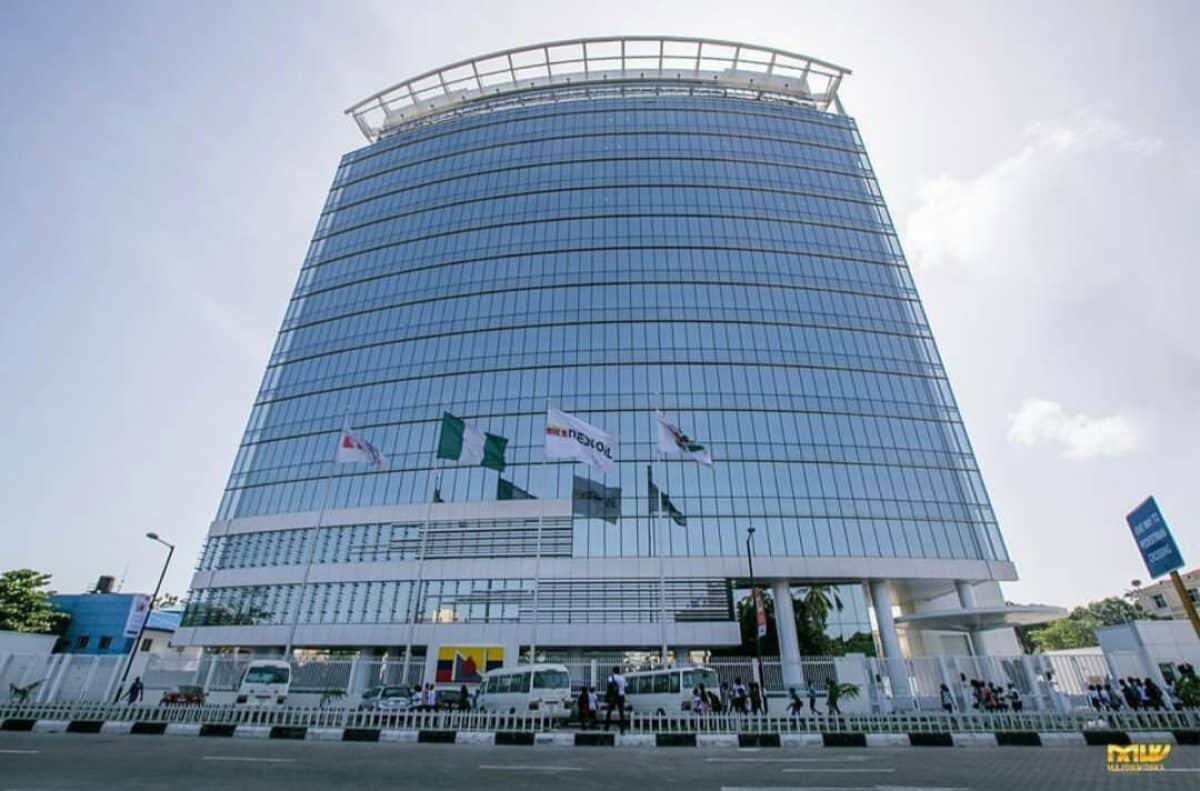
The latest headline involves Nestoil, whose head office in Lagos was recently sealed by the Nigeria police.
The firm owes a consortium of local banks.
Reports suggest that Nestoil, owned by Ernest Azudialu-Obiejesi, owes more than $1 billion. The leading lenders in the case are FBNQuest Merchant Bank Limited and First Trustees Limited, both subsidiaries of First Bank—whose major shareholder today is, ironically, Femi Otedola himself.
Other banks involved include Citibank Limited, Central Securities and Clearing Systems Plc, Fidelity Bank Plc, Guaranty Trust Bank Plc, Globus Bank Limited, Keystone Bank Limited, Opay Limited, Polaris Bank Limited, Providus Bank Limited, and Stanbic IBTC Bank Limited.
Nestoil has maintained that the sealing of its headquarters does not affect its operations, stating that a resolution of the legal dispute is underway.
“Nestoil remains fully operational across all business lines. Our subsidiaries, projects, and commitments in the oil, gas, power, and infrastructure sectors continue without disruption. Proactive measures have been implemented to protect our workforce, sustain operations, and uphold our obligations to clients and partners,” the firm said in a statement.
While this could help save face for a short term and allay shareholders and investors’ fears temporally, a $1 billion debt cannot be brushed aside as a minor hiccup.
Why the debt trap persists
The larger context extends beyond Nestoil. The structural nature of oil financing in Nigeria makes debt traps almost inevitable.
Most securities for oil companies and projects come with high interest rates, short moratoriums, and elevated risk premiums. This is expected in an industry that is capital-intensive, requires heavy upfront investment, and carries high exposure to market volatility.
Another recent case that flew under the radar was the court dispute between First Bank Plc and General Hydrocarbons Limited (GHL), owned by businessman and media mogul, Nduka Obaigbena.
A court ordered GHL to pay First Bank $112,100 and N111 million in costs over a dispute related to Oil Mining Lease (OML) 120. Reports suggested that First Bank seized some of the company’s assets as part of the settlement.
Bad loans and defaults are not only damaging to oil firms; they also weigh heavily on the banks themselves.
Take the case of the defunct Diamond Bank, which was absorbed by Access Bank in 2016.
One of its major pitfalls was a portfolio of bad loans defaulted by oil companies amounting to more than $1.8 billion.
Other banks have faced similar challenges, with significant consequences for their operations.
The truth is, when it comes to bad debt, it is usually a lose-lose situation.
The missing financing structure
In a country like Nigeria, where interest rates are above 20% and credit ratings remain low, most oil projects turn to local banks with limited liquidity and high-risk appetites.
These banks depend on loan repayments for survival. But without access to private equity, venture capital, or institutional investors, many independent oil firms are left to finance procurement, operations, and projects while absorbing all the associated risks.
The pressure for returns is immense.
Add to this the volatility of global oil prices, a fragile domestic economy, and occasional policy missteps, and the result is bad loans meeting bad timing.
There is, however, some respite. International financiers have begun to step in to support African energy projects.
Afreximbank, for instance, has become a key player, offering loans at below-market rates with longer repayment periods and better structural terms.
Recently, the Pan-African bank announced a $300 million debt financing for Oando, and played a major role in financing Nigeria’s Dangote Refinery.
Reports indicate that the refinery is seeking a $5 billion loan to fund its expansion to 1.4 million barrels per day.
But Afreximbank has also been stretched thin.
With reserves of just over $40 billion, its capacity to fund multiple large-scale projects across the continent is strained.
Fitch Ratings recently downgraded Afreximbank’s issuer rating, citing concerns that some of its sovereign borrowers may default, affecting the bank’s debt exposure.
One of the reasons given by the rating firm is that “debt owed to Afreximbank by some of its sovereign borrowers might be included in the perimeter of these sovereigns’ debt re-structuring.”
In simple terms, Fitch fears some of the banks big debtors may default on their loans.
The need for an energy Bank
One potential solution lies in the proposed African Energy Bank, designed to finance oil and gas projects across the continent, with an initial capital of about $5 billion.
However, funding challenges have delayed its take-off, with multiple missed deadlines.
Nestoil’s saga underscores why the establishment of such a bank is urgent. It also highlights the deeper struggles of Nigeria’s oil and gas firms operating in a country still grappling with energy poverty.
Until structural frameworks are reformed and financing mechanisms improved, oil and gas firms will continue to battle debt traps and recurring defaults.
There are no simple answers. But the conversation must move beyond the sensational headlines of companies collapsing under debt.
It must focus on creating a financial climate that boosts liquidity, attracts investment, and supports the backbone of Africa’s most critical industry.