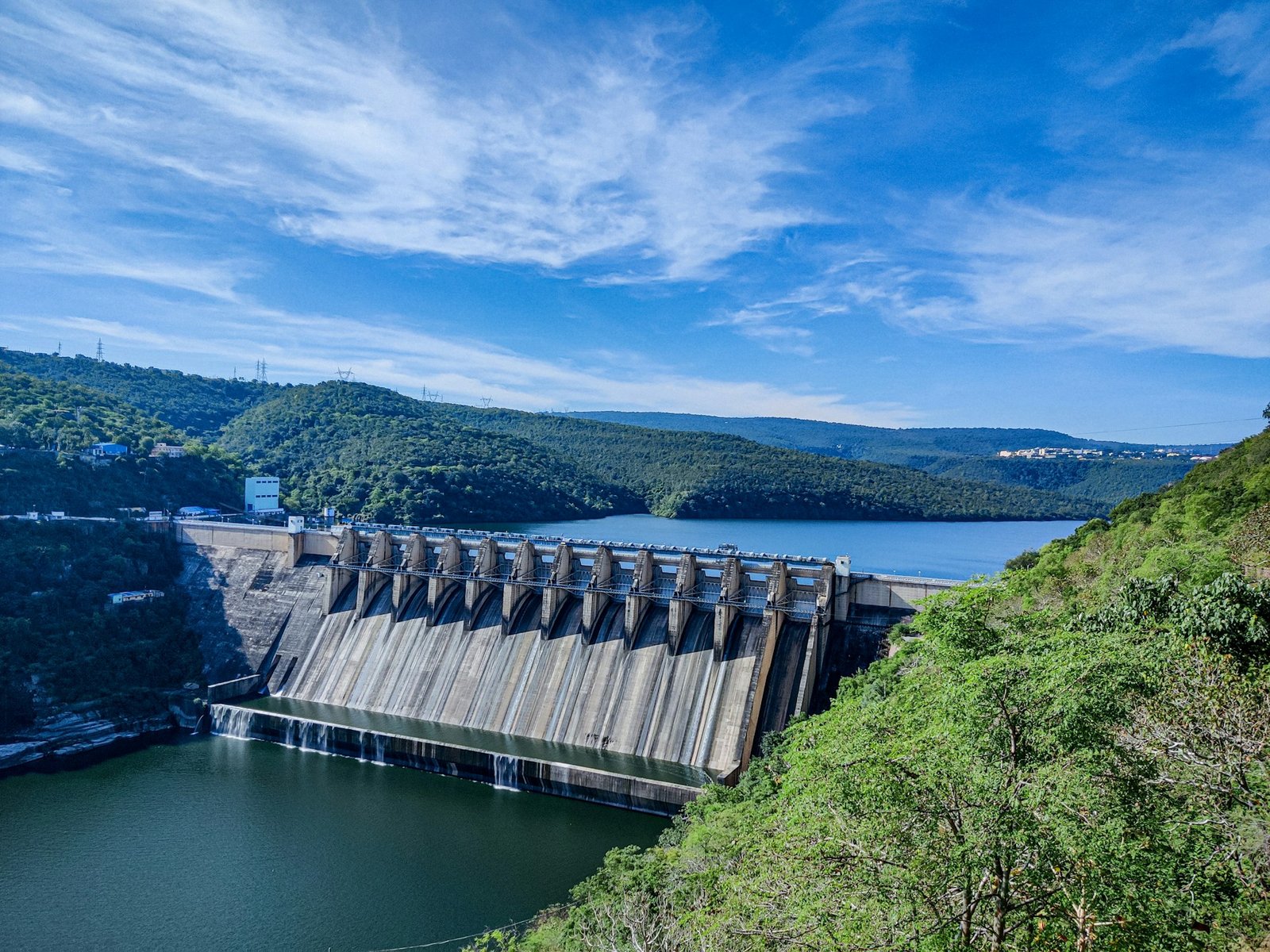
The government of Mozambique is seeking $5 billion in financing for the construction of the Mphanda Nkuwa (MNK) hydroelectric project.
The renewable energy megaproject, billed to cost $5 billion dollars, will be built on the Zambezi River, in Tete province, central Mozambique, with financial completion scheduled for 2027.
Mozambique’s government presented the project plan during the Mission 300 meeting in London with the African Development Bank (AfDB) as part of its National Energy Compact.
“Mozambique is firmly committed to becoming a regional energy hub of reference, contributing to inclusive growth, climate resilience and industrialization across the region,” Mozambique’s Minister of Mineral Resources and Energy, Estêvão Pale said.
“Our national energy strategy is based on expanding access to energy, diversifying generation, green industrialization and accelerating the transition to low-carbon sources, with hydropower playing a central role”.
The project is structured according to the Build, Own, Operate and Transfer (BOOT) model and represents the largest public-private infrastructure investment in Mozambique.
Once completed, the project will constitute a key piece in Mozambique’s national energy strategy to position the country as a regional exporter of clean energy and an industrial hub.
Mozambique already is an important electricity exporter in the South African region as it earns over $431 million from exports to South Africa and Zambia.
Minister Pale said the Mphanda Nkuwa project is a priority for the Mozambican government because it simultaneously provides an internal and regional response to the challenges of economic and social development.
“It is a clean energy project that will shape the next chapter of economic integration and climate resilience in Mozambique and the region,” Minister Pale said.
What to know about the Mphanda Nkuwa hydroelectric project
The Mphanda Nkuwa hydroelectric plant includes a run-of-river dam, located 61 kilometers downstream from the Cahora Bassa dam, also installed on the Zambezi River, in Tete.
It will also feature a high-voltage energy transmission line spanning approximately 1,300 kilometers from Tete in central Mozambique to Maputo in the south of the country.
The first phase of the project will generate 1500 megawatts of electricity for the country. The hydroelectric project is expected to start commercial operations in 2032.
In 2023, Mozambique signed an agreement with a consortium led by French power company, Électricité de France (EDF).
The consortium consists of EDF, French oil company TotalEnergies, and Japanese multinational Sumitomo Corporation.
The Franco-Japanese consortium is the majority shareholder, with a 70% stake in the venture, while Mozambique’s power utility Electricidade de Moçambique (EDM) and Hidroeléctrica da Cahora Bassa (HCB) will take the remaining 30%.
Once operational, the hydropower dam will enable a significant expansion of regional energy supply, reinforce national electrification and drive long-term industrial growth in Mozambique and Southern Africa.