

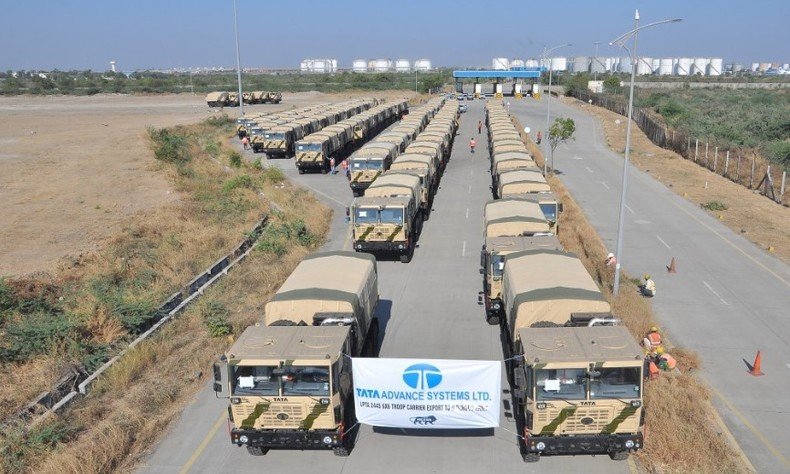
New data released by the Stockholm International Peace Research Institute shows Morocco increased its arms imports by 12% between the 2016–2020 and 2021–2025 periods, ranking 28th globally and accounting for around 1% of global arms imports.
The United States was Morocco’s largest weapons supplier during the 2021–2025 period, providing 60% of its arms imports. Israel followed as the second-largest supplier with 24%, while France accounted for 10%.
As of the end of 2025, Morocco still had several defence deals pending with international partners, including Spain and the United States, suggesting the country’s military modernisation programme could expand further in the coming years.


Algeria’s imports fall sharply
For decades, Algeria had been Africa’s dominant arms importer, largely driven by its long-standing geopolitical rivalry with Morocco.
However, SIPRI data shows Algeria’s arms imports plunged by 78% between the two periods, pushing the country down to 33rd globally with 0.9% of global arms imports.
Russia remained Algeria’s main supplier during the 2021–2025 period, accounting for 39% of imports, followed by China with 27% and Germany with 18%.
SIPRI noted that tensions between Morocco and Algeria continue to be a major factor behind defence spending in North Africa. However, the institute also cautioned that Algeria tends to keep many of its defence deals confidential, meaning some purchases may not be fully reflected in available data.
Egypt remains a major defence power
Egypt has spent heavily over the past decade to modernise its armed forces, purchasing advanced fighter jets, naval vessels and missile systems from suppliers including France, Russia, Germany and the United States.
According to SIPRI, Egypt has consistently ranked among the world’s largest arms importers, reflecting Cairo’s strategic focus on strengthening its military capabilities across the Mediterranean, the Red Sea and the wider Middle East and North Africa region.
The three North African countries: Morocco, Algeria and Egypt, therefore continue to dominate Africa’s defence procurement landscape.
Arms imports decline across Africa
Despite strong military spending in North Africa, overall arms imports across the African continent declined by 41% between 2016–2020 and 2021–2025.
The largest suppliers of weapons to Africa during the period were the United States, which accounted for 19% of imports, followed by China at 17%, Russia at 15%, and France at 8.3%.
Global arms trade continues to rise
Globally, the volume of major arms transfers increased by 9.2% between the 2016–2020 and 2021–2025 periods, marking the largest increase since 2011–2015.
Much of the growth was driven by Europe, where arms imports surged by 210%, giving the region 33% of global arms imports for the first time since the 1960s.
Meanwhile, Russia’s position in the global arms trade weakened significantly. Its share of global arms exports fell from 21% in 2016–2020 to 6.8% in 2021–2025, largely due to reduced sales to key buyers including Algeria, China and Egypt.
Analysts say the latest figures underline how shifting alliances, regional tensions and strategic competition among global powers continue to reshape the global defence market, with Africa remaining an important arena for military procurement.



