– Advertisement –
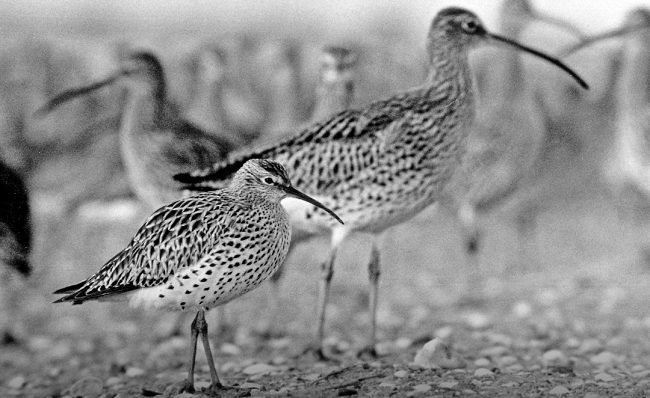
The International Union for Conservation of Nature (IUCN) on Friday, October 10, 2025, officially declared the Slender-billed Curlew (Numenius tenuirostris) extinct, marking the first known global extinction of a formerly widespread migratory bird species whose range included mainland Europe, North Africa, and West Asia.
The last confirmed sighting of the species was at Merja Zerga, Morocco, just over 30 years ago, on February 25, 1995. Friday’s announcement ends hope for the survival of this species, after years of exhaustive searches for any remaining individuals. This devastating loss underlines the urgent and sustained need for stronger, coordinated conservation efforts for migratory birds, and migratory species in general.

Reflecting on the broader implications, Amy Fraenkel, Executive Secretary of the Convention on the Conservation of Migratory Species of Wild Animals (CMS), stated: “The extinction of the Slender-billed Curlew is a tragic and sobering moment for migratory bird conservation. It underscores the urgency of implementing effective conservation measures to ensure the survival of migratory species. Hopefully, the loss of this species will help galvanize action to protect other threatened migratory species.”
The Slender-billed Curlew was listed under CMS Appendix I and II at the signature of the Convention in 1979. In September 1994, just five months before what was later confirmed as the bird’s last sighting, a Memorandum of Understanding concerning Conservation Measures for the Slender-billed Curlew was adopted under CMS. The goal was to safeguard the species’ remaining individuals (then estimated at about 50) through international cooperation among 30 Range States, spanning from nesting areas in northwestern Siberia and Kazakhstan to non-breeding sites in southeastern Europe, the Middle East, the Mediterranean, and North Africa.
In June 1995, a new treaty was born out of negotiations under the CMS framework, to prevent the decline of the migratory waterbirds in the African-Eurasian flyway. At the signing of the new Agreement on the Conservation of African-Eurasian Migratory Waterbirds (AEWA), the Slender-billed curlew was also included as a priority species among 255 waterbird species listed for conservation.
“Two-thirds of bird species are in decline and the Slender-billed Curlew’s extinction serves as a poignant reminder that conservation frameworks must be implemented swiftly, backed by adequate science, resources and sustained political will,” said Jacques Trouvilliez, the AEWA Executive Secretary.
Several other waterbird species lister under either CMS or AEWA (or both) have been moved to a higher risk level on the IUCN Red List in recent years, indicating more efforts are needed to reverse their declines. These include waders, such as the Grey Plover (Pluvialis squatarola), Broad-billed Sandpiper (Calidris falcinellus), and Curlew Sandpiper (Calidris ferruginea) which were uplisted to Vulnerable, and the Ruddy Turnstone (Arenaria interpres) and Dunlin (Calidris alpina) which were uplisted to Near Threatened.
“With new technologies and knowledge now available, there is no excuse for allowing such tragedies to repeat. You cannot restore a species once it is gone,” says Nicola Crockford, Chair of the joint CMS/Birdlife Slender-Billed Curlew Working Group and observer for BirdLife International to AEWA and CMS.
Implemented Conservation Measures Have Meaningful Results
Effective conservation is one of the most reliable ways to halt declines and prevent extinctions; when key threats are tackled and habitats are managed well, wildlife populations often rebound. In 2020 the IUCN downlisted the Red Kite from Near Threatened to Least Concern, reflecting gains from targeted action: coordinated efforts across Europe cut poisoning and illegal killing through stronger enforcement, investigation, and awareness; practical site management in key range states improved breeding success and survival; and tighter monitoring with rapid responses to mortality clusters prevented setbacks.
Partnerships among authorities, land managers, and communities turned policy into everyday practice, showing that sustained, threat-focused work can move a species from decline to recovery, while continued vigilance is still needed to hold the gains. Another example is the ban on lead shots on wetlands which was recently adopted by EU members and should prevent one million waterbirds from being poisoned every year.
Need for Multilateral Conservation Action
While the proximate cause of the extinction of the Slender-billed Curlew is not fully known, unsustainable hunting and habitat loss were almost certainly major factors. With many migratory species now under increasing threat, the role of treaties such as CMS and AEWA in bringing together governments and stakeholders has never been more important. They provide the framework, guidance, and tools needed for coordinated action to protect these species, and full implementation of the provisions of these treaties could greatly reduce the risk of further extinctions.
The upcoming Meetings of the 9th Session of the AEWA Meeting of the Parties (MOP9) in November 2025 in Bonn, Germany, and 15th Session of the CMS Conference of the Parties (COP15) in March 2026 in Campo Grande, Brazil will offer a critical opportunity for policymakers and experts to reflect on this loss and strengthen current conservation efforts.