Much of Africa depends heavily on imported fuel, meaning global energy shocks quickly translate into higher transport costs, rising food prices and pressure on government budgets.
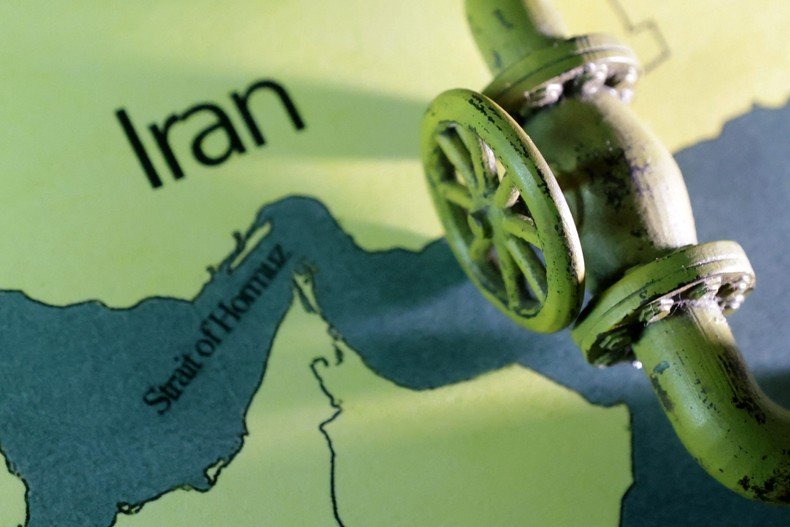
The latest spike in oil prices followed tensions involving the United States, Israel and Iran, which have raised fears about disruptions to energy supplies moving through one of the world’s most important shipping routes.
Much of the world depends on the Middle East’s oil and gas exports, and the Strait of Hormuz has become the vital channel for that trade. The narrow passage connects the Persian Gulf to the Arabian Sea and allows tankers carrying about 13 million barrels of oil per day to reach global markets, according to energy consultancy Kpler.
Any disruption to that route has immediate consequences for global energy prices.
Concerns about shipping disruptions have already pushed oil prices sharply higher. US crude climbed about 14 per cent this week to around $76.31 a barrel from $71.29, while Brent crude, the global benchmark, rose 7.3 per cent to about $83.39.
For many African economies, the increase could create significant economic strain.
According to an analysis by Bloomberg Economics, only three sub-Saharan African countries are expected to see their current account balances improve if crude prices remain around $85 a barrel, while most others would experience the opposite effect.
“For most African economies, higher oil prices mean weaker currencies and renewed inflationary pressure, which could put rate hikes back on the table,” said Yvonne Mhango, an economist at Bloomberg Economics.
Congo expected to be worst hit
The Democratic Republic of the Congo is expected to face the largest impact among major African economies.
Despite its vast mineral wealth, the country imports most of its fuel. Higher oil prices therefore increase the cost of energy, transportation and industrial activity, placing additional pressure on an economy already dealing with currency volatility and limited refining capacity.
Analysts say the country’s current account balance could deteriorate the most among large African economies if oil prices remain elevated.
South Africa faces rising fuel and inflation pressure
Africa’s most industrialised economy, South Africa, is also highly exposed to rising oil prices.
The country imports most of its crude oil and refined fuel, making domestic petrol and diesel prices highly sensitive to global market movements.
Higher oil prices are expected to push up fuel costs in the coming months, raising transport expenses and adding to inflationary pressure at a time when economic growth remains weak. A prolonged surge in oil prices could also force policymakers to delay interest-rate cuts as they attempt to contain inflation.
East Africa vulnerable to higher import bills
Several East African economies are also likely to feel the impact quickly.
Countries including Kenya, Uganda, Tanzania and Ethiopia rely heavily on imported petroleum products to power transport systems, manufacturing and electricity generation.
When oil prices rise, these countries face higher import bills, which can weaken their currencies and widen current account deficits.
Governments often absorb part of the increase through fuel subsidies, adding pressure to already stretched public finances.
For households, the effects are usually felt through higher transport fares and rising food prices as the cost of moving goods increases.
The impact is not limited to eastern and southern Africa.
In Côte d’Ivoire, one of West Africa’s fastest-growing economies, higher oil prices could increase the cost of fuel imports and add to inflation risks.
As in many African countries, fuel costs play a key role in the price of transporting agricultural products, meaning higher energy prices can quickly push food prices higher.
The latest crisis shows a long-standing vulnerability across many African economies: heavy dependence on imported fuel.
Because most countries lack large refining capacity or domestic oil production, global energy shocks often ripple quickly through their economies.
Even a conflict thousands of kilometres away can translate into higher fuel prices, rising inflation and pressure on government budgets across the continent.
If tensions in the Middle East continue to escalate and shipping disruptions persist, economists warn that the economic pressure on oil-importing African countries could intensify in the months ahead.