
Five suspects arrested in connection with allegedly recruiting young South Africans as mercenaries were granted bail ranging from R5 000 to R30 000 in the Kempton Park Magistrate’s Court on Monday, 8 December.
Ahead of Patricia (Nonkululeko) Mantula (39), Thulani Mazibuko (24), Siphamandla Chabalala (23), Xolani Ntuli (46) and Sfiso Mabena (21) appearing in court following their arrest at OR Tambo International Airport last week, a Democratic Alliance (DA) parliamentarian indicated he will provide further “new” evidence on the 17 young men who apparently paid to be trained in what was initially said to be “security and/or bodyguarding”.
Chris Hattingh sits on both Parliament’s Joint Standing Committee on Defence (JSCD) and the Portfolio Committee on Defence and Military Veterans (PCDMV). Without going into any detail a statement has him saying the “recruits”, 16 from KwaZulu-Natal and the other from Eastern Cape, paid R20 000 [apparently each] to inadvertently join the Russia/Ukraine war via the MK (uMkhonto weSizwe) Party. Invoices for the foreign training were “issued through individuals linked to MKP”.
“If true this paid recruitment pipeline represents a serious criminal and national security concern,” according to Hattingh, adding the report “implicates” former president and MKP founder Jacob Zuma as well as one of his daughters, Duduzile Zuma-Sambudla, in communications and logistics for the trips.
He has it that if a registered political party is involve in a crime it can be investigated and prosecuted, with de-registration by the Independent Electoral Commission (IEC) and its public funding withdrawn as potential outcomes. Additionally, party leaders can be criminally charged and have assets frozen.
“A [political] party found guilty of human trafficking or illegal recruitment can be dissolved. South Africa cannot allow a former president and his party to run an off-the-books war recruitment network,” Hattingh said.
The five suspects, charged for contravening sections of South Africa’s Foreign Military Assistance Act, did not have their bail applications opposed by the National Prosecuting Authority (NPA) with IOL (Independent On Line) reporting there were no grounds to justify continued detention.
All five will be back in court on 10 February while further investigation – including the Hattingh payment allegation – is underway.
According to Phindi Mjonondwane, National Prosecuting Authority (NPA) spokesperson, Mantula is alleged to have arranged the travel and recruitment of the four men to join the Russian Federation military. Further investigation led to the arrest of the rest of the group.
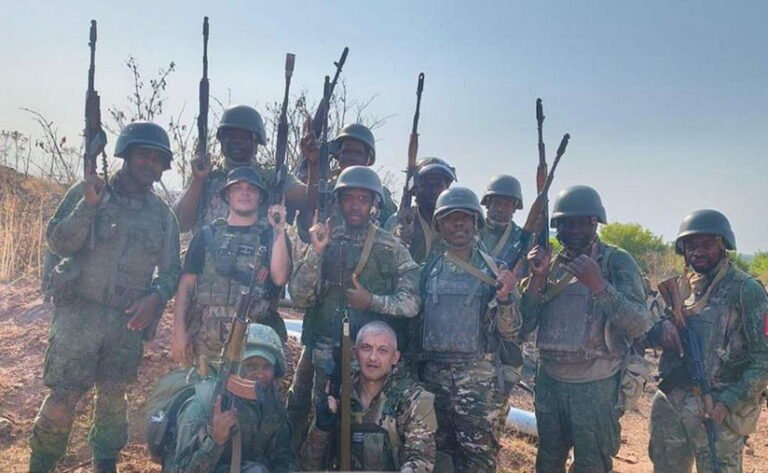
The arrest of the five suspects comes after the group of 17 South African mercenaries in Russia, aged 20 to 39, sent distress calls for assistance to return home in early November. Two of the mercenaries are believed to have died.
Mlungsie Mncube, a brother of one of the recruits, said the men were told they would receive special training in Kenya. Recruiters offered a lump sum of R80 000 and promised nearly R1 million upon their return home after one year.
“They didn’t know they were going to war,” Mncube told SABC News. “They believed they were going for training and would come back to be part of MK [uMkhonto weSizwe] security forces. Those who recruited them, we don’t know what their intention was, but we know they were given money.”
“We hope that the situation with Russia violating South African legislation and dragging or luring these people into this war will … be an eye-opener for South African society,” Oleksandr Shcherba, Ukrainian ambassador to South Africa, said in a report by Agence France-Presse (AFP). “Ever since this news broke, I received emails from family members of these young people who were lured to the front line. And they were desperate. Don’t do that to your mothers and fathers and sisters.”
Russia has intensified recruitment in Africa and the Middle East as it sustains heavy losses and manpower shortages. Frontelligence Insight, an open-source intelligence group, reported that Russian recruiters often target economically vulnerable countries, offering large sums and promising bogus noncombat roles.
On 28 November, Duduzile Zuma-Sambudla, resigned from parliament after being accused of tricking the men into joining a Russian mercenary group to fight in Ukraine. Zuma-Sambudla’s half sister, Nkosazana Bonganini Zuma-Mncube, had filed an affidavit accusing her of luring the men to Russia on claims that they would receive yearlong security training and then return to South Africa. At least eight of the 17 men were members of the Zuma family, the affidavit said.
Zuma-Sambudla joined parliament in 2024 under her father’s opposition uMkhonto weSizwe party. One South African man fighting in Ukraine told The New York Times he received a phone call in July from someone who identified themself as Zuma-Sambudla to join a yearlong training programme in Russia after which he would have a job working in security for the MK party. Six weeks after arriving in Russia, he was given military fatigues and sent to the front lines of the war in the Donbas region.
Another South African man fighting in Ukraine told the BBC that Zuma-Sambudla and other recruiters bought him tickets to travel from South Africa. South African police are investigating.