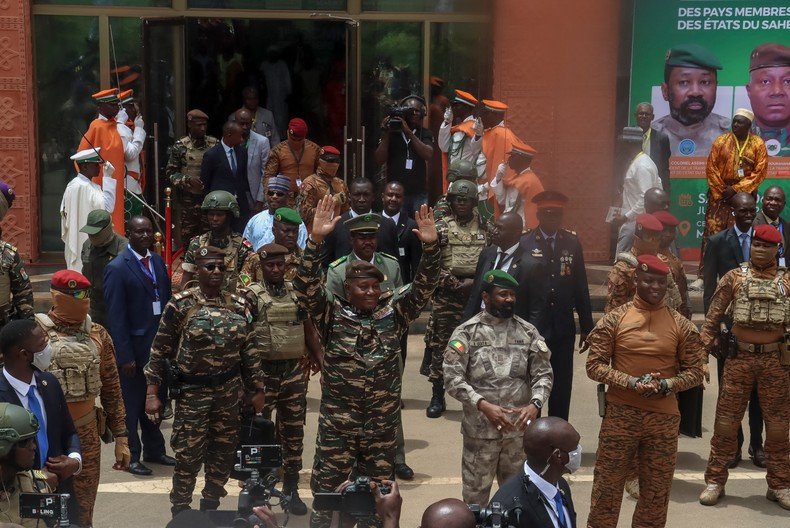
In a statement released on Tuesday, Mali’s Ministry of Economy and Finance said claims circulating on social media and echoed by some local media outlets about the imminent introduction of a common currency for the Alliance of Sahel States, AES, were based on fabricated information.
“No communication has been issued by the Ministry of Economy and Finance announcing the upcoming introduction of a common currency or the finalisation of an operational timeline to that effect,” the ministry said.
Their withdrawal marked a significant break from the region’s dominant political and economic framework and fuelled debate about deeper integration within the new bloc.
The three countries are currently members of the eight-nation West African Economic and Monetary Union, which uses the CFA franc, a currency pegged to the euro and backed by the French treasury.
Any move to abandon the CFA franc would represent a major shift with far-reaching economic and diplomatic implications.
Speculation about a possible Sahel currency gained traction after Niger’s military leader, General Abdourahamane Tiani, said in 2023 that the three countries were exploring a monetary alliance. However, no official timeline or policy framework has been announced since.
Reinforcing its position, Mali’s finance ministry urged journalists and citizens to seek confirmation only from official sources, calling on the public to “rely exclusively on official institutional channels” for information on AES decisions.
The statement suggests that while monetary cooperation remains a topic of interest within the Sahel alliance, concrete steps towards a shared currency are not yet on the table.