- Telco, which runs fintech M-Pesa, is set to take up KES20 billion ($155.2 million) from the KES41.4 billion ($321.3 million) offered by investors in the first tranche.
- Proceeds will finance investments that support an energy-efficient digital future, including 5G deployment, solarisation of network sites, and the transition from legacy technologies to cleaner, more efficient solutions.
- Nairobi Securities Exchange argues that Safaricom Green Bond aligns with new NSE strategy and highlights the depth and maturity of Kenya’s capital markets.
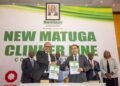
Safaricom PLC has listed its Green Bond at the Nairobi Securities Exchange (NSE), with a total of 2,453 individual investors accounting for 96 percent of the applications.
Safaricom, which will take up $155.2 million (KES20 billion) from the $321.3 million (KES41.4 billion) offered by investors in the first tranche, said green bond applications through USSD and payments via M-PESA constituting 59 per cent of the applications as the bond introduced new market standards by prioritising innovation and accessibility.
The telco’s bond enjoyed an oversubscription of 175 per cent in what is now Kenya’s largest Green Bond issuance. The listing, celebrated through the NSE bell-ringing ceremony on Tuesday, represents Safaricom’s return to the capital markets and the first issuance under its Medium-Term Note (MTN) Programme, anchored in the company’s Sustainable Finance Framework.
Safaricom’s green bond a vote of confidence on telco’s business model
“This transaction demonstrates what is possible when local capital markets are deliberately and thoughtfully engaged. It is a clear vote of confidence in our fundamentals, strategy, and long-term outlook, and a strong signal of confidence in the depth and resilience of Kenya’s capital markets,” said Dilip Pal, Safaricom PLC Group Chief Finance Officer.
Additionally, the Green Bond reflects a strategic shift in how Safaricom, which is rolling out services in new market Ethiopia, finances its growth, positioning capital markets as a scalable and sustainable source of long-term financing alongside traditional funding avenues. It also signals Safaricom’s intention to be an innovative, disciplined issuer aligned with the long-term development of Kenya’s capital markets.
Dilip said the proceeds will finance investments that support an energy-efficient digital future, including 5G deployment, solarisation of network sites, and the transition from legacy technologies to cleaner, more efficient solutions.
“This landmark Green Bond aligns with our new NSE strategy and highlights the depth and maturity of Kenya’s capital markets, anchored by the NSE,” said Frank Mwiti, the CEO, Nairobi Securities Exchange.
Safaricom green bond: Implications for Kenya’s capital markets
Beyond Safaricom, the listing affirms the capacity of Kenya’s capital markets to mobilise long-term capital for productive investment and reinforces the role of sustainable finance in supporting national development priorities.
The company reaffirmed its commitment to deepening participation in capital markets through continued innovation. Initiatives such as Ziidi, Safaricom’s mobile money market fund, have already lowered barriers to saving and investing by bringing capital markets products closer to everyday Kenyans. Safaricom indicated it will continue exploring new ways to expand access and drive financial inclusion.
The green bond is now listed and available for trading on the Nairobi Securities Exchange.
Safaricom is the biggest telecommunications company in East Africa with over 60 million customers connected across Kenya and Ethiopia. Latest diclosures show that the telco’s total economic value was estimated at KES1.1 trillion ($ 8.5 billion) for the 12 months through March 2025.
Listed on the Nairobi Securities Exchange and with annual revenues of close to KES388 billion as at March 2025, Safaricom provides connectivity through a wide range of technologies, including 2G, 3G, 4G, and 5G.
The telco’s fintech unit M-Pesa empowers 37.9 million customers to transact, save, or borrow money through their mobile phones, M-PESA has driven financial inclusion in Kenya to 84.8 per cent of the adult population in 2024, up from a low of 26.7 per cent in 2006, and generated over KES 161 billion in revenue as of FY25.
Read also: Safaricom’s economic, social and environmental impact in Kenya grows to $8.5 billion