


A Parliamentary question on the review of South Africa’s long term defence strategy drew a lengthy response from Defence and Military Veterans Minister Angie Motshekga who basically said it remains a work in progress, and that doubling defence spending to 1.5% of GDP will take many years.
The Economic Freedom Fighters’ Carl Niehaus asked Motshekga whether, considering that the last review of the SA National Defence Force (SANDF) was conducted 10 years ago in 2015, she has any plans to initiate another review of the state of the SANDF that will take into consideration the present realities.
She elaborated that the 2023/24 financial year Ministerial Priorities set the Defence Minister the target of ‘Conducting an Evaluation of the Defence Review 2015 and Action Plan’ for completion by 31 October 2024.
“Furthermore, on 24 January 2024 the Department was tasked by the Commander-in-Chief [President Cyril Ramaphosa] to develop a strategy and plan for an interim force at 1.5% of GDP, including to capitalise the SDA [Strategic Defence Account] at 10% of the budget; and ring-fence a further 5% of budget for R&D [Research and Development]”.
The resulting work was delivered to the Presidency at the end of October 2024 and presented at a Ministerial Work Session in March 2025. This included a PESTEL (political, economic, social, technological, environmental and legal) analysis of the national, regional, continental, and global levels; a SWOT (strengths, weaknesses, opportunities and threats) analysis; a draft Defence Capstone Policy Concept for South Africa; a draft Military Capstone Strategising Concept for the defence and protection of South Africa; a draft South African Military Strategy, Force Design and Force Structure for 2025-2055; and the long-term SANDF capability development plan (Journey to Greatness) document covering 2025-2055.
Furthermore, engagements were held with the SA National Security Secretariat (SANSS), the support body for the National Security Council (SANSC), to develop a report on reviewing the 2015 Defence Review and the considerations for investing in a sustainable modern defence force. An initial engagement was held in March and another engagement took place in June, where “positive support was expressed in terms of the 1.5% of GDP Defence Funding Target as set by the President.”
Motshekga explained that the Directors-General directed that the Department of Defence engage in a process to develop a Defence Value Proposition in line with the President’s direction and a long-term defence funding trajectory (30 years) on the understanding that the allocation of 1.5% of GDP to defence constitutes the minimum funding threshold. At present, Motshekga told Niehaus, defence is funded to the tune of just .68% of GDP.
A third engagement with the SANSS took place on 31 October, “wherein the abovementioned Long-Term Force Evolution Strategy and Planning Concept for the SANDF was presented to the Directors-General. The SANSS endorsed the work and referred the work to the National Security Council for its support and endorsement to Cabinet. The matter was tabled at the National Security Council in Cape Town on 4 November 2025. The matter was held over for a Special NSC, the date of which is still to be determined,” Motshekga’s reply, dated 5 December 2025, concluded.
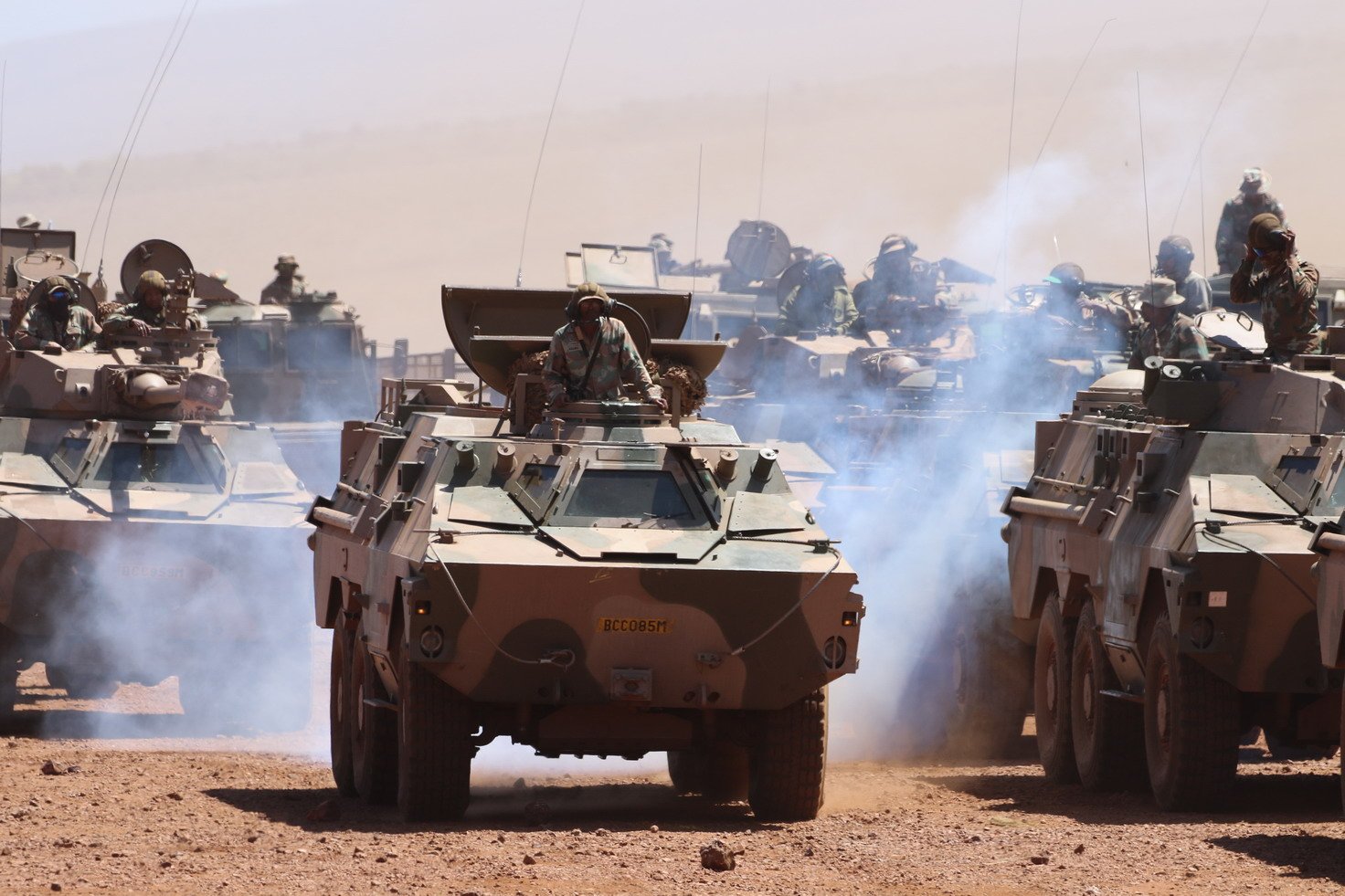
Speaking to DefenceWeb at the SA Army’s Exercise Vukuhlome 2025 Distinguished Visitors’ Day last month, Motshekga acknowledged the Department of Defence (DoD) is facing challenges – primarily financial ones – and these are being addressed by Cabinet, Parliament, and the DoD. “We are doing all we can in our power to sustain this pride of the nation,” she said of the SANDF.
South Africa’s defence budget will increase, but gradually, with a 50% increase planned over the next five years, Motshekga explained. She cautioned that doubling spending to 1.5% of GDP can’t be done overnight and she does not want to increase spending too quickly as this will create all sorts of problems. Doubling the defence budget is achievable in phases, she said, with spending increasing to more than 1% of GDP taking at least five years.
Earlier this year, Motshekga in reply to a parliamentary question posed by Maliyakhe Shelembe of the Democratic Alliance, stated that spending 2% of GDP on defence would take 30 years.
Motshekga replied that “the incremental growth of the defence funding will happen over six multi Medium Term Strategic Framework Periods.” Each of these is five years long. The Minister added that defence spending would grow from the 0.67% at present to 1.35% over a period of six years and hit 2.40% on year 30.
“That the SANDF needs more money is beyond dispute,” said defence analyst Ricardo Teixeira. “The real question is how to spend it without wasting it. Throwing money at the problem is tempting but could be dangerous. Without the capacity to plan appropriately and account for and maintain equipment, a sudden influx of funding could easily be squandered. The outcome would be another round of headlines about mismanaged contracts, irregular procurement and expensive barely used hardware.”


