

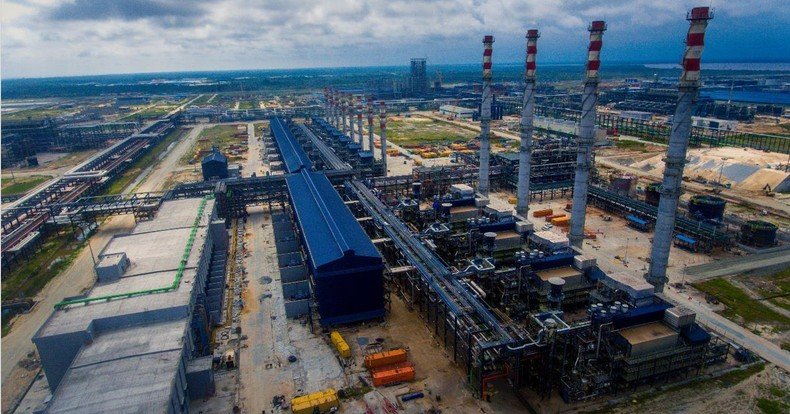
In a scathing indictment of the country’s port infrastructure and pricing structure, Dangote revealed that lifting refined petroleum products from the Lekki-based refinery is now more expensive for oil marketers than buying from offshore storage depots in neighboring countries, such as Togo.
Speaking bluntly at the just-concluded Global Commodity Insights Conference on West Africa’s refined fuel market, regarding the economic inefficiencies afflicting the local market, Dangote cited a slew of port-related fees and regulatory constraints that local merchants confront.
At the event, which was jointly hosted by the NMDPRA and S&P Global Commodity Insights in Abuja, Dangote noted that multiple fees at the refinery’s loading point and discharge at domestic terminals, which are essentially absent when marketers import gasoline from offshore facilities such as the Lomé Floating Storage Terminal, were to blame.
What Dangote said
“In terms of port charges, it is currently more expensive to load a domestic cargo of petroleum products from the Dangote Refinery, as customers pay both at the point of loading and the point of discharge.
But when they load from Lome, which competes with us, they pay only at the point of discharge. This is simply unfair and unsustainable,” the Nigerian billionaire relayed.
As reported by the Punch, after their findings, marketers who source fuel from the Dangote Refinery have to pay these charges.
This was also reiterated by the Independent Petroleum Marketers Association of Nigeria National Publicity Secretary, Chinedu Ukadike.
“We don’t load in Lomé, but for Nigerian distribution through the coastal route, it is easier to use the vessels here in Nigeria because it is interstate.
Most of the international clearance and the rest is not applicable, because you would be able to avoid a lot of charges, both international and local charges,” he stated.
“It is better to load from Dangote via both means. But if you are loading coastal from another country, it is more difficult than when you are loading from Nigeria,” he added.
Rebuttal from other oil market players
Some other players have cited the refinery’s restrictive sale methods as a reason why there are complications in the supply chain.
This point was elaborated on by Executive Secretary of DAPPMAN, Olufemi Adewole, who noted that the way Dangote conducts business does not benefit most local marketers, particularly small businesses that rely on flexible coastal supply chains.
“Since the advent of Dangote refinery, it has not been smooth sailing at all.
We had preliminary meetings with their management. We received promises and assurances that we would be accommodated. We are ready and still willing to patronise Dangote.
But the issue is, is Dangote ready to give us the product we want?” he stated.
“You don’t get the price upfront,” Adewole explained. “It is only after you’ve been cleared that a proforma invoice is issued. Meanwhile, there appears to be a select group Dangote prefers to trade with,” he added.
The Major Energy Marketers Association of Nigeria’s Executive Secretary, Clement Isong, advocated for regulatory balance in order to stop monopolies from forming.


