

– Advertisement –
The 9th Annual Leventis Lecture organised by A.P. Leventis Ornithological Research Institute (APLORI), Centre of Excellence, University of Jos, which held on Thursday, November 13, 2025, at the Aliyu Akwe Doma Indoor Theatre, University of Jos Permanent Site, served as a profound convergence of conservation science, policy, and traditional leadership. The event honoured the Institute’s founder and provided a strategic, economic roadmap for protecting Nigeria’s natural heritage.
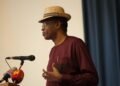
Tunde Morakinyo, Executive Director of the Africa Nature Investors (ANI) Foundation, delivered the core address, “Bringing Nature and People Back to Life: Gashaka Gumti and Okomu National Parks, in focus.”

The lecture was held to honour Dr. Anastasios Paul “Tasso” Leventis CBE, OFR, a distinguished philanthropist and conservation leader who is the Chairman of the A. G. Leventis Foundation who leads without seeking the spotlight. Dr. Leventis’s enduring legacy is defined by his significant contributions to conservation and capacity building in Nigeria:
- He established the A. P. Leventis Ornithological Research Institute (APLORI) in Jos, which now serves as a Centre of Excellence for ornithological research and training and Africa’s first Centre for Species Survival under the IUCN Species Survival Commission.
- APLORI has graduated more than 200 conservation professionals who are now active in government, academia, and NGOs.
- Through the Leventis Foundation Nigeria agricultural youth scheme, he has trained and equipped over 30,000 youths and farmers in sustainable-farming methods over three decades.
The event opened with an official procession and drew wide representation from academia, government institutions, traditional authorities, and the private sector. The Vice-Chancellor of the University of Jos, represented by the Deputy Vice-Chancellor (Academics), Prof. Rahila P. Gowon, delivered the welcome address.

She reaffirmed the importance of the Annual Leventis Lecture as a permanent fixture to honour the founder’s enduring legacy. The Special Guest of Honour, Cornelius Dongnaan Doeyok, Plateau State Commissioner for Tourism, Culture and Hospitality, highlighted the crucial role of ornithology in advancing practical conservation outcomes and drew attention to the pressing conservation challenges facing birds and other wildlife, including the threat of habitat loss, climate change, and escalating human–wildlife conflict. Citing the ongoing crisis at the newly designated Pandam National Park, he urged participants to translate scientific knowledge into action.
A central message of the Lecture was the need to reposition Nigeria’s National Parks as engines of rural development rather than viewing them solely as biodiversity protection areas. Morakinyo presented a compelling argument for a “win-win” strategy that secures ecological integrity while delivering tangible social and economic benefits to surrounding communities. He framed the conversation around a fundamental question:
“How do we make conservation meaningful and bring economic benefits to people in rural areas, or even to our government, so that they have a reason to protect it rather than destroy it?”
Using Gashaka Gumti National Park (GGNP) and Okomu National Park as case studies, he outlined a dual strategy centred on security and community-driven economic development. He noted that many parks had become vulnerable to illegal activities such as poaching, logging, mining, and uncontrolled pastoralism – often enabled by wider insecurity. In GGNP, for example, recurrent fires associated with illegal grazing continue to degrade savanna and montane habitats at an alarming pace.
Morakinyo described ANI’s three-phase conservation – development model, which transitions parks from donor dependency to financial sustainability through a structured Public–Private Partnership with the National Park Service.
The first phase establishes governance frameworks and delegated management systems that ensure accountability. The second phase focuses on securing the landscape through philanthropy-supported ranger training, law enforcement, community programmes, and infrastructure rehabilitation. The final phase engages the private sector through investments in ecotourism and premium carbon credit projects, including a recently registered REDD+ initiative in Gashaka Gumti.

Both Gashaka Gumti and Okomu National Parks remain under immense pressure despite their ecological importance. Gashaka Gumti, which spans 6,731 km², supports Critically Endangered Hooded Vultures as well as Nigeria–Cameroon Chimpanzee (EN), Giant Pangolin (EN), and Martial Eagle (EN), and African Golden Cat (VU). Okomu, covering 202 km², protects one of the last remaining lowland rainforest blocks in southern Nigeria, home to Critically Endangered African Forest Elephants and African Grey Parrot (EN).
ANI’s community programme has expanded rapidly, with over 2,000 women in 42 Savings and Loans Groups across 39 villages in Gashaka Gumti. These groups have launched small agri-processing enterprises, supported the distribution of 3,000 fuel-efficient cookstoves, and are expanding into fish farming, poultry, and agri-waste briquette production, alongside scholarship and school rehabilitation programmes that support young people.
Morakinyo emphasised that communities become defenders of the park when their livelihoods – and their children’s futures – are tied to its long-term health.
Looking ahead to 2028, ANI’s roadmap includes full implementation of Gashaka’s grazing and fire management plan, proposed species reintroductions to restore ecological balance, and the creation of a transboundary conservation complex linking Gashaka Gumti with Cameroon’s Tchabal Mbabo.
Morakinyo also challenged young conservationists to prioritize economic models that make conservation viable, integrate artificial intelligence into monitoring and protection, use mass media to build public engagement, and expand conservation efforts into urban spaces through green infrastructure design.
His message underscored the balance between rigorous protection and community empowerment, concluding that the “true win-win” emerges when communities see the park as essential to their security, livelihood, and future.
Goodwill Messages: Calls for Action and Partnership
Conservator-General, National Parks Service (represented by DCP Jonah Moses): The CG stated that the 9th Leventis Lecture is apt at this moment of global concerns regarding Protected Areas (PA) and the need for participatory management practices. He emphasised the key roles of various conservation bodies in helping PA management, and praised ANI’s effort in their 30-year agreement in protecting the park.
He called on all stakeholders in Plateau state to extend support to the newly designated Pandam National Park (protection, infrastructure, and support zone community development), and pledged support for all developmental partners, thanking APLORI for the invitation and continued partnership.
The Dean, School of Natural Science (represented by HOD, Zoology): The representative applauded the Centre’s efforts and envisioned more results from the already excellent work by APLORI in producing the best from the department.
Father of the Day (HRH. Rev. (Dr.) Isaac A. Wakili): The Paramount Ruler called the lecture timely and very apt amid environmental problems, declaring: “To destroy nature is to destroy ourselves.” He stressed the collective role of traditional rulers, policy makers, and citizens to restore harmony. He commended APLORI for its remarkable contribution to capacity building across Africa, urged everyone to translate the knowledge into action, and reaffirmed the commitment of traditional rulers to supporting APLORI’s mandate.
Prof. Adams A. Chaskda, Director of APLORI, delivered the Vote of Thanks, appreciating the Vice-Chancellor – represented by the DVC Academics – for making time to attend despite the ongoing NUGA Games. He also thanked the founder, guest speaker, guest of honour, participants, the press, and APLORI staff, noting that everyone had “done excellently well and deserves the trophy, if one existed.” He accepted responsibility for any shortcomings and wished all attendees a safe journey.
The climax of the day’s events was the official commissioning of the new PhD Conservation Biology Students’ Hostel of the A.P. Leventis Ornithological Research Institute, Centre of Excellence, University of Jos, located in the Laminga community. The facility was formally commissioned on November 13, 2025, by Louisa Agathi Leventis, assisted by the Vice-Chancellor of the University of Jos, Prof. Tanko Ishaya.
In Attendance
The event was attended by Dr. Anastasios P. Leventis; Alhaji Ahmed Mantey, Chairman of the Board of Directors; Dr. Hope Usieta, Executive Director of the Leventis Foundation Nigeria; Philip Hall, Board Chair of APLORI; Cornelius Dongnaan Doeyok, Commissioner for Culture, Tourism and Hospitality, Plateau State; principal officers of the University of Jos; members of the Academic Staff Union of Universities (ASUU), University of Jos Branch; senior staff from the University’s Research and Development Office; the Dean of the School of Natural Sciences; the Dean of the Postgraduate School; traditional rulers including the Agwom Izere of Izere, HRH Rev. (Dr.) Isaac A. Wakili, and the Village Head of Laminga, Adagwom Musa Arin.
Others include Dr. Ibrahim Musa Goni, Conservator-General of the National Park Service of Nigeria, represented by DCP Jonah Moses; the Curator of the Jos Museum; representatives from NESREA; Dr. Samuel Godongs, Director General for Research, Documentation and Planning in Plateau State; several commissioners; the Chairman of the Nigerian Union of Journalists, Plateau State; the Director of Press and Public Affairs to the Governor of Plateau State; the Director of Wildlife Park Service; and media partners including PRTV, NTA, Ice FM, and other press representatives.
By Kumle Nanlep and Bello Adamu Danmallam