


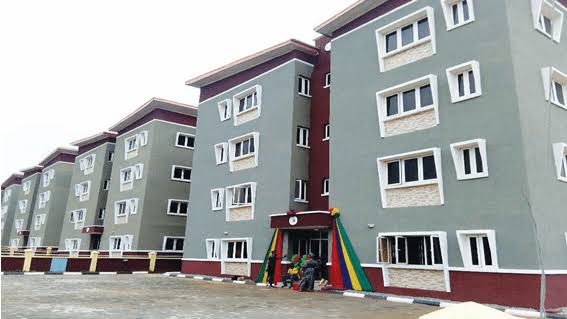

Dr. Waliu Adeoye, Managing Director of Stallion Cardinal Homes, has reported that rental costs in select areas of Lagos and Abuja have escalated by as much as 20% year-on-year.
This surge exacerbates the already significant housing challenges faced by residents, particularly concerning affordability in major cities. Finding affordable housing is becoming increasingly difficult for many.
Adeoye stated that Nigeria’s real estate sector is currently at a pivotal moment. A confluence of policy changes presents a unique opportunity to reshape housing accessibility, provided these reforms are effectively implemented. The lack of affordable housing continues to be a pressing issue.
“The rental market in Nigeria, especially in Lagos and Abuja, is deteriorating,” Adeoye explained. “Some locations are experiencing annual rent increases of 15 to 20%. With a large percentage of urban Nigerians being renters, this sector is facing a crisis. The common practice of landlords demanding one to two years’ rent in advance poses a significant obstacle for many households.”
He emphasized the potential impact of recent policy initiatives: “The combination of new tax laws, efforts to digitize land records, recapitalization of mortgage institutions, and the development of housing data infrastructure represents the most comprehensive housing policy push Nigeria has undertaken in decades. Addressing the housing deficit requires a multi-pronged approach.”
“For the first time in a generation, we are witnessing a coordinated effort in housing-related reforms,” Adeoye continued. “The critical question is whether these policies will translate into tangible results – more homes, accessible mortgages, and secure land titles for Nigerians. The future of affordable housing depends on effective execution.”
Adeoye also highlighted the role of private developers: “Private developers also have a role to play, and Stallion Cardinal Homes has invested in capacity building, flexible payment structures, and site-and-service models to expand access. However, individual company efforts cannot replace systemic reform.” The government needs to work together with private developers to solve the issues of affordable housing.
According to Adeoye, the housing crisis is not fundamentally a technical issue.
“We know what works. What Nigeria lacks is sustained political commitment to implementation beyond announcement ceremonies and policy documents. Key initiatives currently underway include the implementation of the Nigeria Tax Act 2025, which took effect on 1 January; the launch of the Ministry of Finance Incorporated Real Estate Investment Fund; the rollout of the Land4Growth digital land titling programme; the recapitalisation of the Federal Mortgage Bank of Nigeria; and plans to operationalise a National Housing Data Centre. The availability of affordable housing is crucial for economic stability.
Adeoye noted that despite repeated policy pronouncements over the years, Nigeria’s housing deficit has continued to widen, growing from about 17 million units a decade ago to an estimated 28 million units today; this time must be different.
Regarding tax reforms, Adeoye acknowledged the positive impact of provisions allowing small businesses to deduct a portion of rent from taxable income and exempting parts of the construction value chain from certain taxes. However, he cautioned that tax incentives alone would not resolve the underlying structural problems in the housing market. Access to affordable housing requires more than just tax incentives.
“A rent deduction capped at N500,000 offers little relief to someone paying N3m annually; mortgage-related tax incentives are meaningless when mortgage penetration remains below one per cent of GDP and most Nigerians cannot access formal credit.”
Land administration was identified as a major impediment, with Adeoye noting that fewer than five percent of land parcels in Nigeria have formal titles.
He explained, “This means between $150bn and $300bn worth of property is effectively dead capital; it cannot be leveraged, mortgaged, or securely transferred. The Land4Growth programme, which targets the issuance of one million digital land titles across up to 20 states in its first phase, is potentially transformational if properly implemented.” Secure land titles are crucial for economic development and access to affordable housing.
“Digital land registries can reduce fraud, speed up transactions, provide collateral for lending, and strengthen state revenue through property taxation; the success would depend largely on state governments.
“For this to work, states must commit to transparency rather than see digitisation as another avenue for rent-seeking; most importantly, the programme must prioritise security of tenure, including for residents of long-established informal settlements.”
Concerning mortgage financing, Adeoye pointed out that Nigeria’s mortgage-to-GDP ratio of approximately 0.5% highlights the severity of the problem. While the Federal Mortgage Bank offers loans at single-digit interest rates through the National Housing Fund, access remains limited. Overcoming barriers to affordable housing finance is essential.
“Fewer than 20,000 Nigerians access NHF-backed mortgages annually in a country of over 200 million people. The MOFI Real Estate Investment Fund, capitalised at N1tn, is a step forward but still excludes most Nigerians working in the informal economy.”
“Over 90 per cent of our workforce have no payslips or formal documentation,” Adeoye said. “They are effectively invisible to the mortgage system despite having real incomes and real housing needs.”
While supporting discussions on rental regulation, Adeoye advised caution against policies that could discourage housing supply.
“We need tenant protections, but we must avoid heavy-handed controls that push rental housing into informal arrangements,” he stated, advocating for standardized lease agreements, dispute resolution mechanisms, and tax incentives for long-term affordable rentals.
Josephine Ogundeji



