

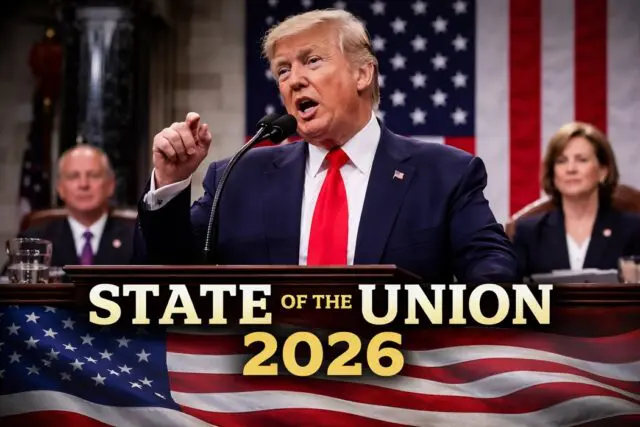
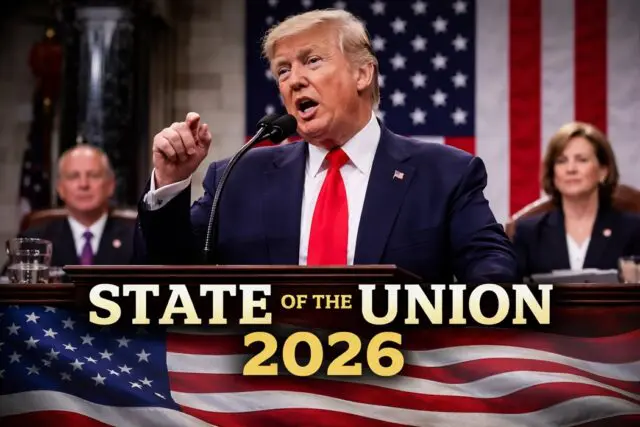
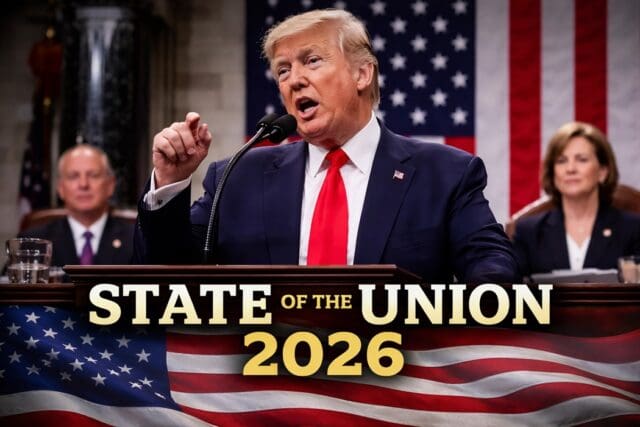
WASHINGTON, D.C. — On February 24, 2026, President Donald Trump delivered the longest State of the Union address in U.S. history. He spoke for 1 hour and 48 minutes to a joint session of Congress at the U.S. Capitol. The marathon speech came amid low approval ratings for the president. In addition, there was rising public concern over inflation, immigration enforcement, and global tensions — all key issues ahead of the 2026 midterm elections.
1. A Record-Breaking Address With a Campaign-Style Tone
Trump’s nearly 108-minute message set a new length record for State of the Union speeches, surpassing his own previous milestone. He blended policy points with political messaging aimed at energizing his base. He opened with a sweeping proclamation that the United States is in a “Golden Age” of prosperity and power. As a result, he summed up economic growth, national security advances, and aggressive immigration enforcement as hallmark achievements of his second term.
2. Economy Front and Center: “Golden Age of America”
The president devoted significant time to his economic agenda. He claimed record stock market performance, lower gas and grocery prices on some staples, and broader economic strength. Trump credited dramatic tax reforms and tariffs for a “turnaround for the ages.” He also urged lawmakers to extend Republican tax and spending priorities.
Fact-checking outlets flagged several claims as misleading: overall grocery costs remain high compared with pre-pandemic levels. Additionally, inflation had already eased before Trump took office in 2025. Some tariff benefits have been offset by increased consumer expenses.
– Advertisement –
3. Immigration Clash: Border Security and Partisan Spat
Immigration was a dominant theme, with Trump promoting strict border enforcement and mass deportations. He blamed Democrats for what he called a “border invasion.” In a highly covered moment, he asked members of Congress to stand if they agreed the government’s first duty is to protect citizens over people without papers. This move drew boos and applause from different sides of the chamber.
Trump’s remarks sparked audible pushback from Democratic lawmakers. Representatives Ilhan Omar and Rashida Tlaib repeatedly heckled the president. They accused him of policies that “killed Americans,” referencing deaths tied to immigration enforcement actions. Rep. Al Green was later escorted from the chamber amid protest signs directed at Trump’s social media controversies.
4. Foreign Policy Highlights and Iran Warning
Turning to global issues, Trump declared that his administration had ended “eight wars” in ten months — a statement met with scrutiny. He focused sharply on Iran’s nuclear ambitions. He warned Tehran against pursuing nuclear weapons. Trump asserted that while he prefers diplomacy, the U.S. would resort to military action if necessary. However, Iran’s government publicly rejected many of Trump’s assertions as misinformation in the wake of the speech.
The president also mentioned U.S. actions in Venezuela. He celebrated the capture of Nicolás Maduro and the release of political prisoners as examples of his foreign policy achievements.
5. Medal Presentations and Patriotic Moments
Amid the political and policy thrust of the address, Trump paused to recognize service and achievement. He awarded the Medal of Honor to Chief Warrant Officer Eric Slover and Navy Captain E. Royce Williams. He also presented the Presidential Medal of Freedom to U.S. Olympic goaltender Connor Hellebuyck on behalf of the men’s hockey team. This was a moment widely covered as one of the evening’s lighter highlights.
6. Supreme Court Tensions
The president also took aim at the Supreme Court. He particularly criticized a recent ruling that struck down key components of his tariff strategy. Trump suggested the decision was influenced by foreign entities. These comments prompted a visibly stoic response from justices present in the chamber.
Summary: President Trump’s 2026 State of the Union address combined policy pitching with campaign rhetoric. He focused on immigration, economic growth claims, and a confrontational approach with Democratic lawmakers. Fact-checkers highlighted discrepancies in economic and foreign policy claims. This underscored the politically charged nature of the speech just months before the 2026 midterms.


Key Observations on President Trump’s State of the Union Address
Related
– Advertisement –


