After a shock offensive by rebels brought an end to Bashar al-Assad’s regime, Syria is at a crossroads.
Rebuilding Syria from the ashes of the devastating civil war is sure to be a long road. For Syrians looking to offer their compatriots relief and begin to reconstruct a new Syria, however, cash is in short supply.
There’s one way, however, that the West can help Syrians get access to the funds necessary for a shot at a stable and prosperous future: end U.S. sanctions.
The sanctions were born of a decadeslong effort to isolate the Syrian regime — an effort that began to crescendo when Assad launched a brutal crackdown against the revolution that erupted 13 years ago.
“Not considering sanctions relief right now is like pulling the rug out from under Syria just when it’s trying to stand.”
Today, with Assad gone, a growing number of humanitarian advocates, experts, and lawmakers are calling on the U.S. to immediately end sanctions on Syria as a necessary step both to usher in reconstruction and allow aid to reach the country’s immiserated population.
“Not considering sanctions relief right now is like pulling the rug out from under Syria just when it’s trying to stand,” said Delaney Simon, a senior analyst at the International Crisis Group. “I can’t overemphasize the intensity of the effect of the sanctions on the Syrian economy.”
Congress had a chance this month to end the harshest sanctions against Syria simply by letting them expire. The Caesar Syria Civilian Protection Act of 2019 is supposed to sunset on December 20, but Congress is committed to keeping it in force.
A recent proposal for next year’s U.S. defense budget included a provision that would extend the Caesar sanctions; the text was released just hours before Assad’s fall. Because the defense budget is a must-pass legislative behemoth, that text is unlikely to change. Because Assad’s fall meets certain conditions in the law, though, the president can waive many of the sanctions.
Terror designations for the Syrian state and rebels effectively leading the country, however, create huge obstacles for trade.
Proscribed Terrorists
Much of the trepidation over Syria’s future direction stems from the central faction behind Assad’s ouster, Hay’at Tahrir al-Sham, or HTS.
An Al Qaeda offshoot, HTS is designated as a terrorist organization by the U.S. and U.K. governments, so doing business with the group is prohibited. Abu Mohammed al-Jolani, the HTS leader, also has a $10 million bounty on his head, thanks to his role in both Al Qaeda and the Islamic State in Iraq and Syria.
HTS and al-Jolani are now trying to distance themselves from their past affiliations — sparking what Politico recently reported was a “furious debate” in Washington over whether the U.S. should delist the group.
The HTS terror listing, however, is only one of the barriers to opening Syria.
Decades of U.S. economic pressure, spurred mostly by hawkish lawmakers, made Syria one of the most heavily sanctioned countries in the world. Under this economic warfare — along with the pressures of a brutal civil war waged by Assad’s despotic regime, the vicious rebels of the Islamic State, and various other militant groups — Syrian civilians have suffered untold deprivations.
With the end of a half-century of rule by the Assad family dynasty, analysts and lawmakers say, ending sanctions can begin to offer Syrians relief and buoy their economy. The road to that relief, though, runs through Washington.
“We don’t know exactly what the future of Syria is going to be,” said Robert Ford, who served as the ambassador to Syria under President Barack Obama, on Thursday. “We don’t know if it’s going to be a state that respects the rights of minorities, which was one of the conditions laid out by the Department of State yesterday for restoring relations.”
“But it’s still early in the game,” he went on. “It seems to me that a gesture now of eliminating some sanctions, and in particular those targeting the construction sector would be, I think, a very good gesture.”

Photo: Muhammad Haj Kadour/AFP via Getty Images
Washington’s Role
The Syrian government itself has been designated as a “state sponsor of terrorism” since 1979, but the economic warfare intensified in 2011, when the civil war broke out. A series of executive orders restricted most remaining trade between Syria and the U.S. Then, in 2019, Congress passed the bipartisan Caesar Syria Civilian Protection Act, which dramatically expanded the U.S.’s ability to sanction individuals, businesses, and governments for doing business with Assad’s regime.
At the time it was passed, proponents argued that the law was designed to mitigate potential harm to Syrian civilians — “to avoid penalizing humanitarian assistance, including medical and food supplies intended for civilian use,” as the establishment Brookings Institution put it. A U.N. special rapporteur, however, found in a 2023 report that the “growing overcompliance” to sanctions, and in particular the Caesar law, had “serious adverse effects on a broad spectrum of human rights.”
As a result of the U.S. sanctions — which target entire sectors of the economy and all of Syria’s major banks — the currency plummeted and inflation skyrocketed, exacerbating already dire humanitarian and economic conditions on the ground. Secretary of State Antony Blinken himself has said that the U.S.’s policy is to oppose reconstruction in Syria until there was “irreversible progress toward a political solution.”
That moment seems to have arrived — and a few lawmakers, at least, appear ready to seize on it.
This week, two lawmakers, Rep. Joe Wilson, R-S.C., and Rep. Brendan Boyle, D-Pa., wrote a letter urging that the Biden administration ease some of the sanctions on Syria. The lawmakers called on the administration to keep sanctions on former officials with the Assad government, but to suspend other parts of the Caesar Act — specifically those that blacklisted whole sectors of the economy and blocked reconstruction.
“A deliberate and phased approach is required to unwind sanctions and export controls against Syria,” the letter said.
For Wilson and Boyle, it was a turnaround. As members of the influential House Foreign Affairs Committee, the lawmakers had previously supported legislation to strengthen the Caesar sanctions and repeatedly claimed that the exemptions built into the U.S. sanctions were sufficient.
Aid Not Enough
For many observers of Syria, the calls to end broad-based sanctions will be welcome, especially because of the impact the economic blockade had on the Syrian population.
“The argument that the secondary sanctions had no impact on Syrian civilians is not proven,” Ford, the former ambassador. “If the sanctions did delay construction projects, then there is less housing as a result and that means less housing for the Syrian public. It also means there were fewer jobs and lower wages. Certainly, our efforts to block deliveries of energy products, and especially oil, gasoline, for sure, helped raise energy prices in Syria, and that too hit the public.”
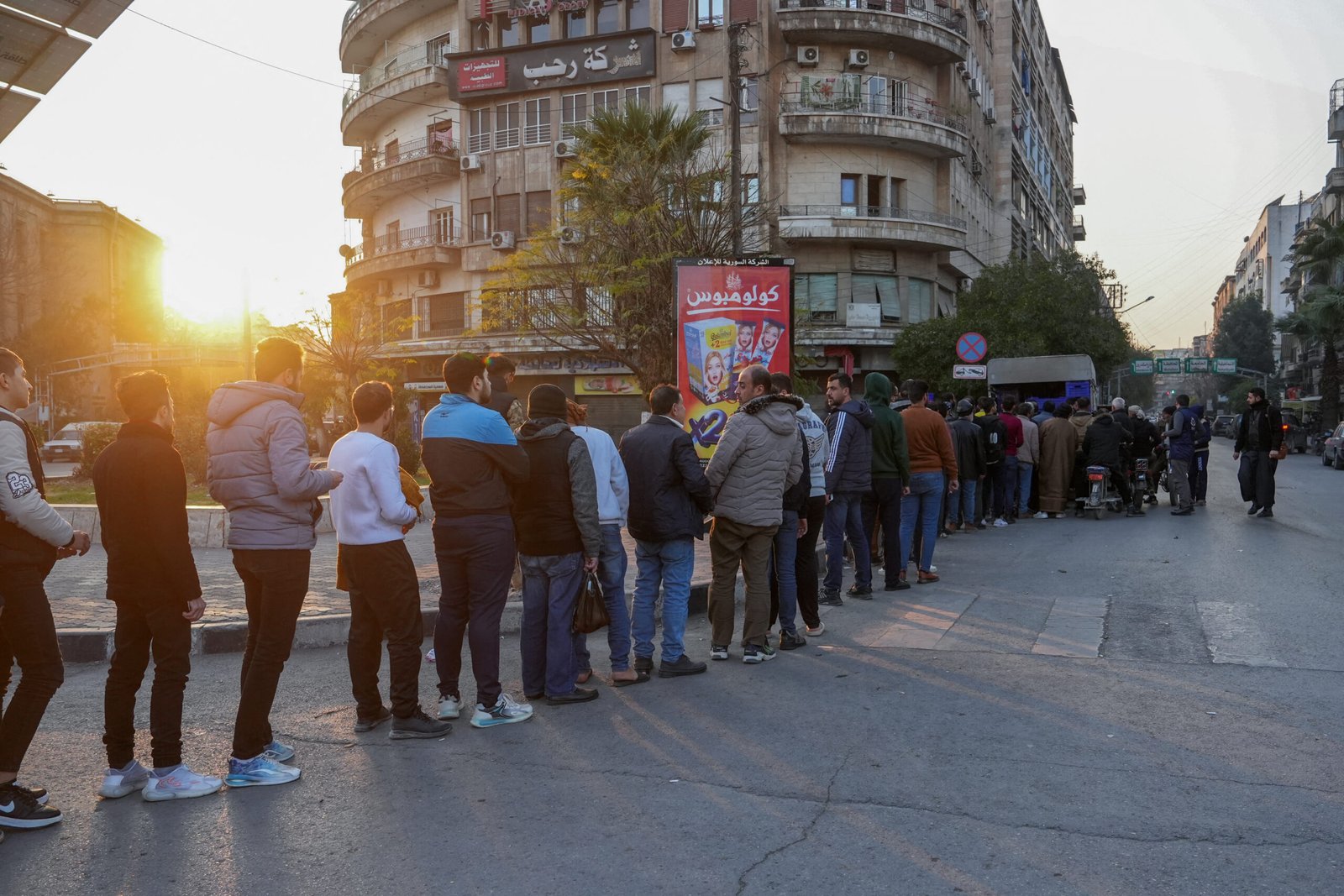
Between 2019 and 2021, the price of basic foods in Syria increased by 800 percent, according to the U.N. World Food Program. The United Nations estimates that 16.7 million people in Syria need humanitarian assistance, more than 70 percent of the population. Nearly half of those in need are children.
“The argument that the secondary sanctions had no impact on Syrian civilians is not proven.”
Despite licenses and carveouts for humanitarian aid, the restrictive economic measures have made it difficult for organizations to deliver aid. Because Syria is so heavily sanctioned, said Simon, the Crisis Group expert, there is a “chilling effect” where most entities are reluctant to do business in Syria due to the potential legal and reputational risks.
Even if firms and international organizations were willing to avail themselves of the exemptions for humanitarian aid, however, Simon said more was needed.
“Humanitarian aid can’t generate an entire economy on itself,” Simon said. “We saw this in Afghanistan, where there were humanitarian licenses and their humanitarians present on the ground. But you can’t sustain an entire country’s GDP on some aid shipments, even if donors were willing to give all the aid that would be required for that. That’s no way to set up an independent country that’s like eventually able to stand on its own two feet.”
Simon believes the U.S. and other sanctioning governments should develop a plan for the eventual repeal of the measures. Now, though, the U.S. could take the immediate step of issuing a general license that allows for commercial activity, not just humanitarian aid, in Syria.