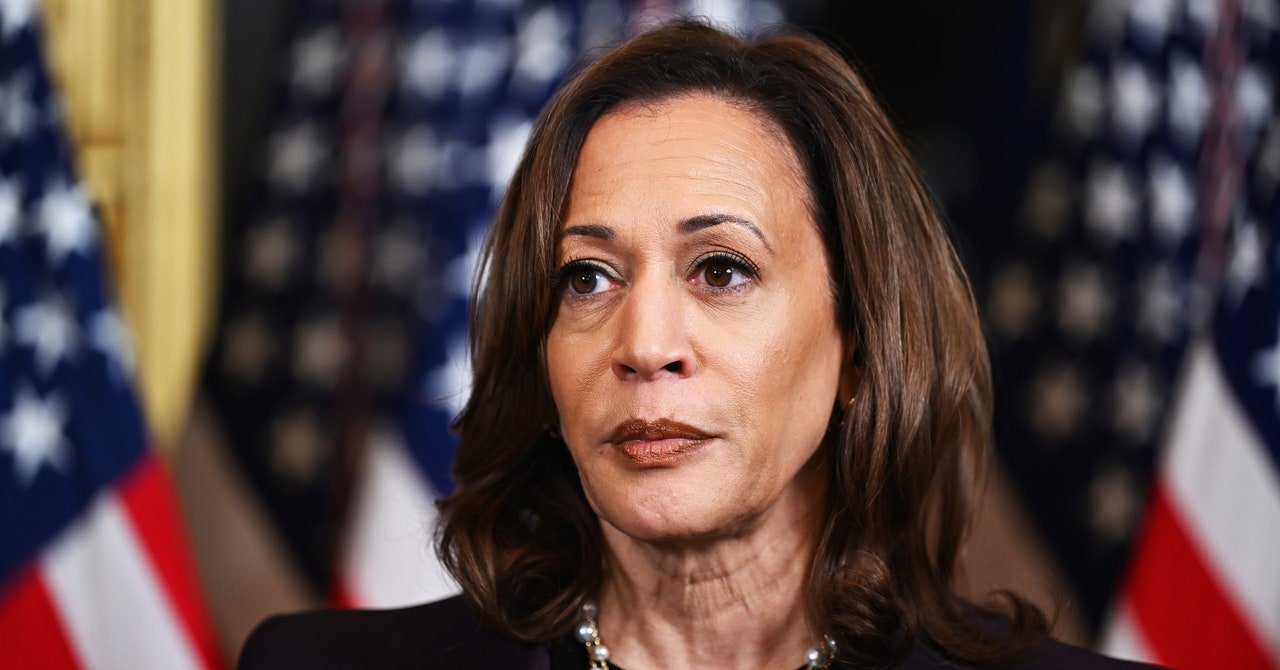
“Kamala finally has an online presence,” says Marlon Twyman, a professor of quantitative social science at USC Annenberg who specializes in social network analysis. “For years, her political activity and contributions have not been broadly shared through online platforms. Now we are paying attention, but how much time are people spending researching her impact?”
It is the legitimacy of Harris’ impact that is at stake—especially among Black Dems, a bloc she cannot win without. “Are we critically examining what we’re seeing online,” Twyman continued, “or do we just passively accept these narratives about her candidacy?”
In the united States, binaries are a convenient framing in political warfare. Good versus bad. The elite versus the underclass. Black versus white. Operating the old way as opposed to demanding new frameworks.
In reality, it’s never that simple. In the case of Harris, despite a wave of early momentum, there are noticeable fissures among Black progressives playing out online. In one camp, there are those who believe they don’t have the benefit of “virtue voting,” as actor Nicholas Ashe said in one Zoom fundraiser meeting, and that Black voters must support Harris no matter what. In the other, voters have been more critical of Harris and slower to pledge support, calling for a more imaginative political future.
“I hate hearing the lesser of two evils because we are threatened with fascism on the other side,” Ashe said on that video call, hosted by Black Gay and Queer Men for Harris. He was careful not to fully excuse the vice president’s record or overlook the difficulty in untangling major issues like reproductive justice, Palestine, immigration, and the economy that are on the ballot. “It is a tall order, but it is one Kamala will have to accept if she wants our nomination,” he said.
Others have been less enthusiastic about Harris. In the warped panorama of American politics, many believe a two-party system is antithetical to actual progress and tangible change. “If you lack political imagination, then just say that. If you can’t envision a different way of living, if you can’t imagine another way of organizing society, then just say that,” visual artist Ja’Tovia Gary said in an Instagram post, noting how she was exhausted by the “cyclical nature of the browbeating and vote shaming” that takes place every presidential cycle.
When Harris released a statement following a DC protest, on July 24, over objections to Israeli prime minister Benjamin Netanyahu’s visit to Congress and what protestors believe is a genocidal war being enacted on Palestinians, she drew ire from every side. “[Y’all] didn’t do enough on them Zooms,” @ashtoncrawley posted on X, alluding to the performative allyship that has been called out by critics of the presumptive nominee. Others have said understanding the matter requires more nuance.
The online reactions surrounding the vice president are not surprising, says James Pratt Jr., a professor of criminal justice at Fisk University. Coalition-building among identity and affinity groups is to be expected, he says, all the more so given past failures to show up for Hillary Clinton or, more generally, speak up in support of Black women. Particularly in US politics, there is often a desire to contribute to the weaving of our shared history. It is natural to want to be part of something bigger than yourself. It is also “profitable, at least on the left, to be the ‘first’ and to be seen as supportive of ‘the first,’ as history uses those cases as the basis for our collective memory,” Pratt says. “Folks want to be remembered. Being critical can cause distance from that history.”