Troubled Democratic Republic of Congo (DRC), which has had a peacekeeping presence in one form or another since 1999, needs years of dialogue and consultation if it is to become a nation state in the fullest sense of the concept.
This was among many points put to an Institute for Security Studies seminar on Wednesday 7 May on geopolitics and conflict in the central African country by one of three panellists. Thirty years of conflict to date was raised by Dr Claude Kabembe, Southern Africa Resource Watch Executive Director, who said it reflected “deep statelessness, not just war”.
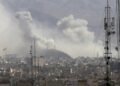
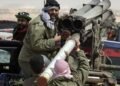
Wrapping up his presentation “Reversing statelessness in the DRC” he told the 80 plus in-person and online attendees of the Pretoria seminar that three decades of conflict and war was responsible for creating “a quasi-state that survives through external support.” He added that the DRC lacks internal legitimacy and is incapable of independently building sustainable peace or development.
The 30 year reference goes back to MONUC (United Nations Organisation Mission in the DRC) being established in 1999 before morphing into the current MONUSCO (UN Stabilisation Mission in the DRC) in 2010.
Two African regional economic blocs – the East African Community (EAC) and the Southern African Development Community (SADC) – committed to peacekeeping missions in the DRC at times.
Kabembe would like to see a new national dialogue in the DRC to, among others, define the structure of the state and its leadership values and principles while excluding “external actors such as the United States (US) and UN”. They, according to him, should support – not impose – solutions, respecting Congolese ownership of the dialogue and its processes.
“The DRC needs democracy, peace and institutions, not foreign-backed mineral-for-security deals or private military interventions,” were his final words on reversing statelessness in President Félix Tshisekedi’s country.
The SADC mission (SAMIRC), terminated in March this year, nine months ahead of its scheduled mandate ending, had especially its South African component criticised by retired South African Brigadier General Peter Sereko. He told attendees “a dwindling SA National Defence Force (SANDF) budget and the burden of a high-tech force design impacted negatively” on the South African contribution to the mission adding there is “a political mismatch between political expectations and SANDF obligations in accordance with the [South African] Constitution”.
Budgetary constraints and the resulting austerity means the SANDF fails when it comes to projecting the South African military as an instrument of foreign policy.
“In a domestic context, the government is also increasingly expecting the SANDF to render support to SAPS and to play an active role in supporting them. There is a mismatch between the political masters’ expectation and SANDF obligations as mandated by the Constitution,” Sereko said.
With regard to the DRC, he said it would need to reflect and engage in dialogue to find a resolution to its endless civil wars. “The DRC is rich in natural resources and it has huge water resources and fertile soil. It is the top producer of cobalt ore, copper, and industrial diamonds. The ordinary Congolese has little to show for this great mineral wealth.”
Sereko added that the DRC was vulnerable to security challenges and widespread corruption, which weakened its ability to protect itself from militia groups.
Third speaker, ISS Researcher Michael Mugua based in Nairobi, offered a potential solution involving EAC and SADC. This, he opined, should be by way of an interventionist non-offensive two-year mandate, with subsequent annual extensions, to oversee and assist with, among others, suspension of all other bilateral military agreements in their respective areas of responsibility (AoRs). The partnership would also be part of building and rebuilding critical road infrastructure to open trade corridors