


Nineteen African countries were part of an Interpol-led continental cybercrime law enforcement operation that saw 574 arrests and $3 million recovered.
Operation Sentinel, which ran from 27 October to 27 November, focussed on three specific crime types – business email compromise (BEC), digital extortion and ransomware. All are identified as growing threats in Interpol’s 2025 Africa Cyber Threat Assessment Report. The Report, released in June last year, showed cyber related offences making up a medium to high proportion of all crimes in 60% of surveyed African member countries.
More than six thousand malicious links were taken down and six distinct ransomware variants decrypted. Cases investigated during Sentinel were, according to Interpol, linked to financial losses in excess of $21 million.
As an example, Interpol said a major petroleum company operating in Senegal detected a sophisticated BEC scheme with fraudsters infiltrating internal email systems and impersonating executives to authorise a fraudulent wire transfer of $7.9 million. By urgently freezing destination accounts, Senegalese authorities successfully halted the transfer before funds could be withdrawn.
In Ghana, a financial institution was hit by a ransomware attack that encrypted 100 terabytes of data and stole approximately $120 000, disrupting critical services. Ghanaian authorities conducted advanced malware analysis, allowing them to identify the ransomware strain and develop a decryption tool that recovered nearly 30 terabytes of data. Multiple suspects were arrested.
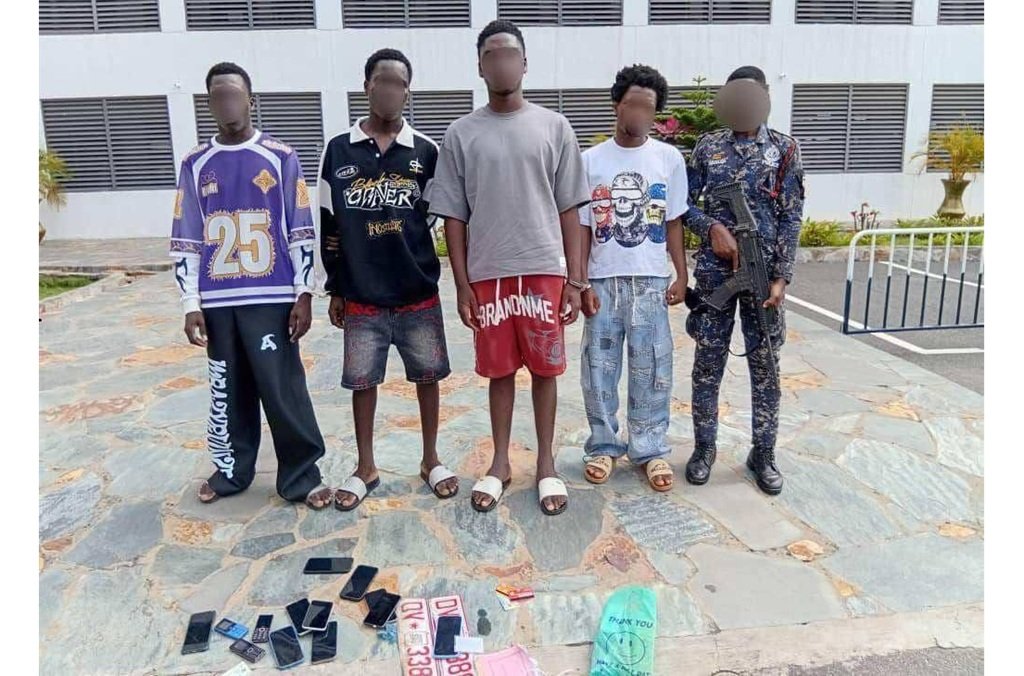
Ghanaian authorities were also part of dismantling a major cyber fraud network operating across their country and Nigeria that defrauded more than 200 victims of over $400 000. Using professionally designed websites and mobile apps, the scammers mimicked well-known fast-food brands, collecting payments but never delivering orders. Ten suspects were arrested in Ghana, with over 100 digital devices seized and 30 fraudulent servers taken offline.
In Benin, 43 malicious domains were taken down and 4 318 social media accounts linked to extortion schemes and scams were shut down, leading to 106 arrests.
Cameroonian law enforcement reacted after two victims reported a scam involving an online vehicle sales platform. The phishing campaign was traced to a compromised server and an emergency bank freeze was issued within hours.
“The scale and sophistication of cyberattacks across Africa are accelerating, especially against critical sectors like finance and energy. The outcomes from Operation Sentinel reflects the commitment of African law enforcement agencies, working in co-ordination with international partners. Their actions protected livelihoods, secured sensitive personal data and preserved critical infrastructure,” Interpol Director of Cybercrime, Neal Jetton, is quoted as saying on conclusion of operation.
Operation Sentinel was held under the umbrella of the African Joint Operation against Cybercrime (AFJOC), funded by the United Kingdom’s Foreign, Commonwealth and Development Office, and through the Global Action on Cybercrime Enhanced project (GLACY-e), a joint project of the European Union and the Council of Europe.
Participating countries were Benin, Botswana, Burkina Faso, Cameroon, Chad, Congo, Djibouti, Democratic Republic of the Congo, Gabon, Ghana, Kenya, Malawi, Nigeria, Senega, South Africa, South Sudan, Uganda, Zambia, and Zimbabwe.


