

(Bloomberg) — India’s swap markets are signaling a more aggressive shift toward interest-rate increases as oil prices surge, pointing to prospects for further gains in bond yields.
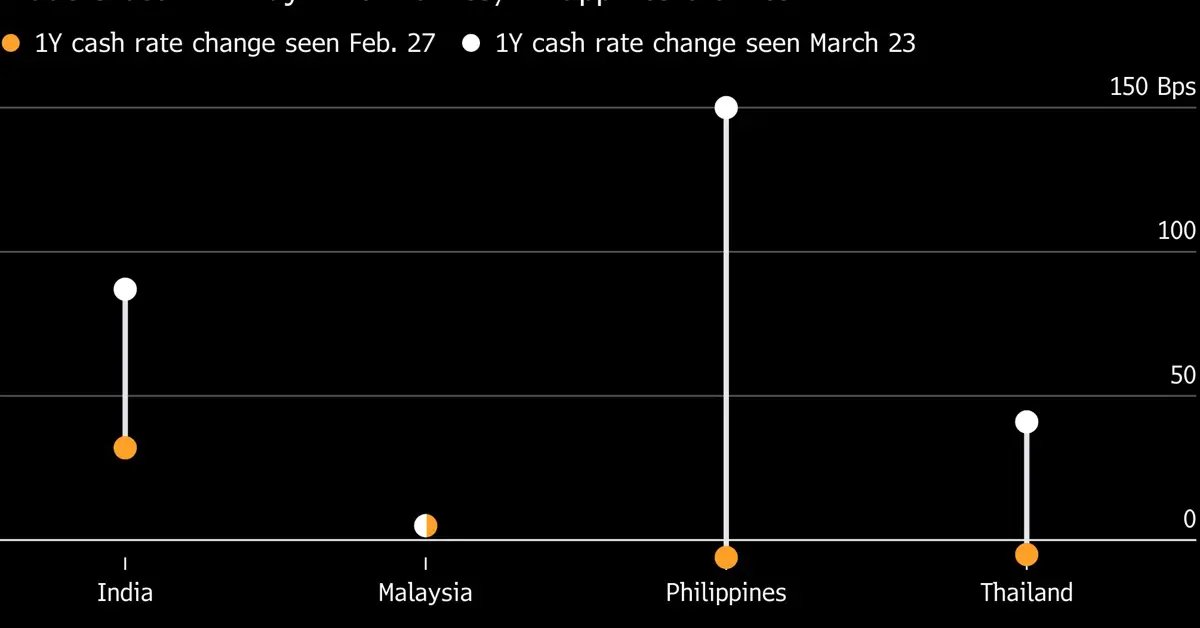
Traders are currently pricing in about 100 basis points of rate hikes over the next year, up from less than half a percentage point just before the Iran war broke out, according to Nomura Holdings Inc.
The shift undercuts the Reserve Bank of India’s view published early March that rates would stay lower for longer. It also reflects a broader global trend, as energy supply shocks from the conflict push traders to price in the likelihood of higher borrowing costs, lifting bond yields around the world.
“The war is very inflationary globally and for India, and can spread beyond energy into all aspects of the CPI basket,” said Nathan Sribalasundaram, a rates strategist at Nomura. “Currency risks are building and we can’t fade the swap pricing. We have a paid OIS view.”
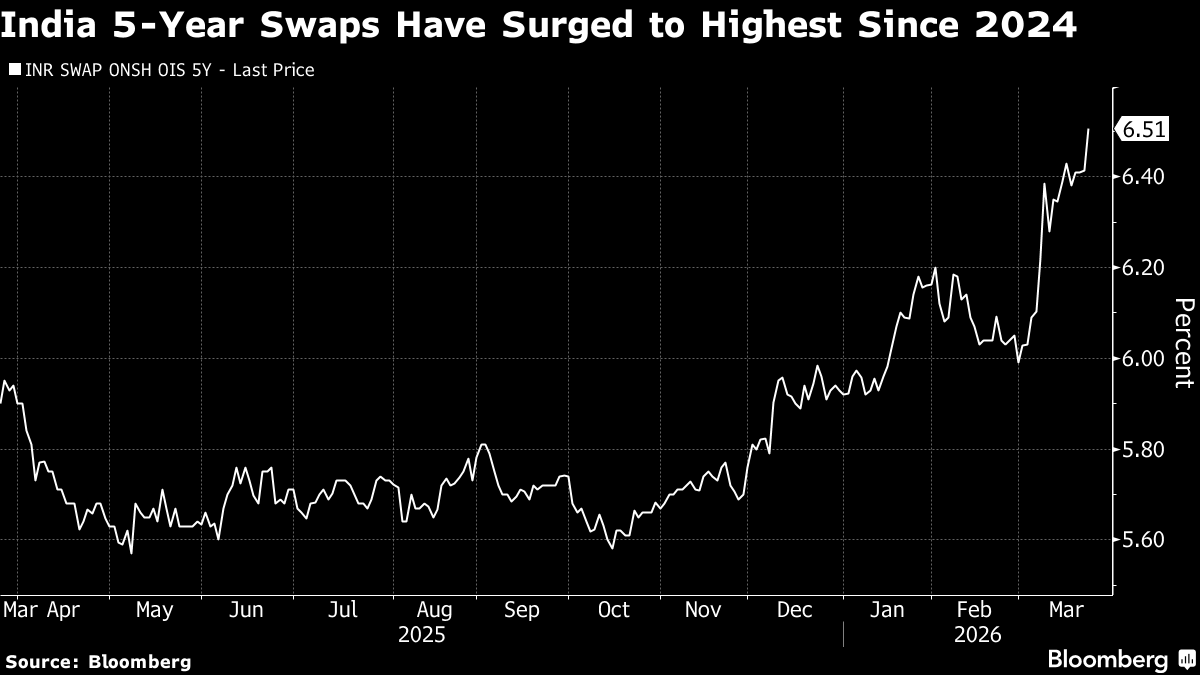
Overnight indexed swaps have surged, with the five-year up over 50 basis points this month to the highest since 2024, according to data compiled by Bloomberg. Bond yields have risen less as the central bank supported the market through secondary market buying. India’s 10-year yield rose as much as 10 basis points to 6.84% Monday, the highest since January last year.
As recently as March 2, RBI Governor Sanjay Malhotra told The Economic Times in an interview conducted before the joint US-Israel strikes on Iran that India’s policy rates would likely remain around current levels for an extended period and could even trend lower. The RBI’s next rate decision is due on April 8.
“The lower-for-longer narrative was contingent upon the absence of any major shocks,” said Suyash Choudhary, chief investment officer for fixed income at Bandhan AMC Ltd. The longer the commodity shock persists, the greater the pressure on inflation and the current account. “Given that context, the market seems right to price in rate hikes over the next one year.”
India is particularly exposed to the impact of the war as it imports more than 80% of its energy, much of it from the Middle East. The RBI had assumed crude at $70 a barrel in its October review, but prices have since surged above $100.
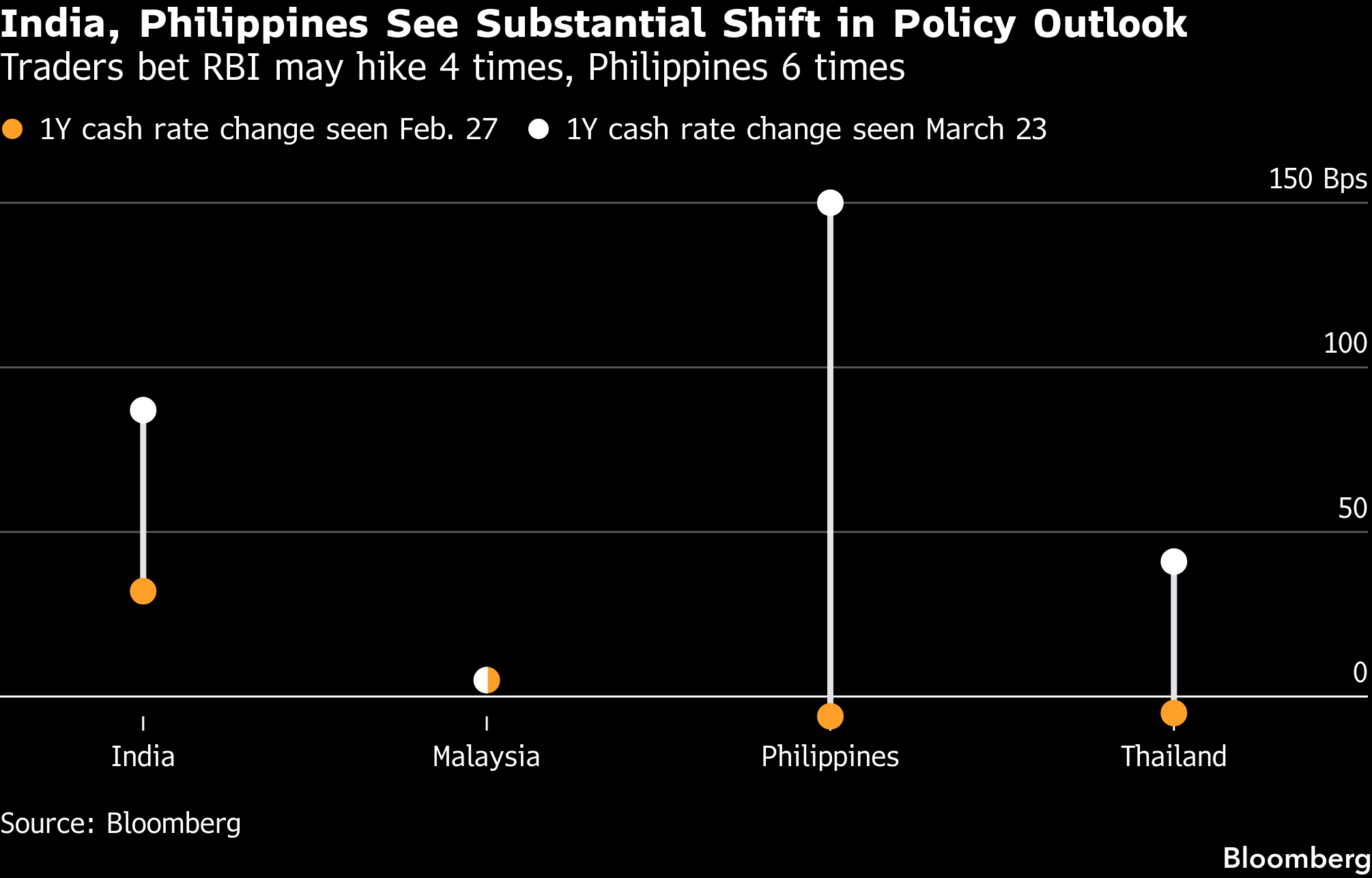
Central banks elsewhere are also grappling with a rapid shift in their policy outlook. Across Asia, the turnaround in swap pricing is most pronounced in India and the Philippines. In developed economies, the Bank of England and the European Central Bank have both signaled that further tightening may be warranted. Global bond yields have risen, with US yields at their highest in months.
Yet despite the signals from India’s swap markets, many economists remain in wait-and-watch mode, even as they acknowledge growing risks to the RBI’s rate outlook.
Kotak Mahindra Bank kept its rate view unchanged, though it sees a higher likelihood of hikes if inflation worsens. HSBC Holdings Plc does not expect rate hikes in the near term, saying the RBI will focus on one-year-ahead inflation, which may appear softer than near-term price pressures.
“Inflation should rise only modestly under our base case of $100 oil, as state-owned firms absorb most of the shock,” Abhishek Gupta, an economist with Bloomberg Economics, wrote in a note Monday. “The growth hit will be larger and hinges on who absorbs higher crude costs.”
©2026 Bloomberg L.P.


