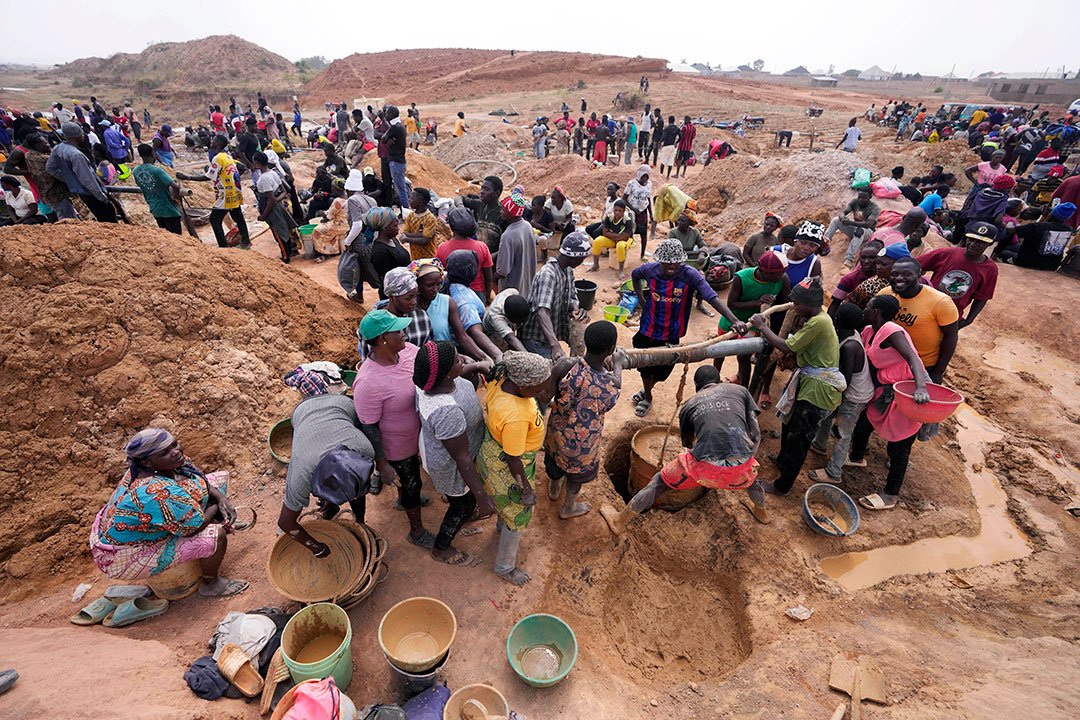
Illegal mining in Nigeria has gained momentum and is fueling violence, especially in areas with high unemployment. Chinese nationals and corporations that collaborate with local criminal networks drive the scourge, which costs the country an estimated $9 billion annually.
Entering through Nigeria’s porous borders, foreign miners make deals with criminals who offer protection in exchange for weapons and cash. This has fueled kidnappings for ransom, banditry, recruitment into criminal organizations and ongoing communal clashes.
“Once criminal control of a mining site is established, it becomes a mini-fiefdom,” Kabir Adamu, a security analyst in Abuja, said in a report on Nigeria’s Albarka 89.9 FM radio station website. “The proceeds don’t just fund AK-47s; they pay for informants, bribes, and logistics networks that can outlast military operations.”
Similar conditions exist in the Central African Republic, the Democratic Republic of Congo and Mali, where armed actors sustain insurgencies through illegal mining of gold, granite, lithium, titanium ore and other minerals.
Last year, the Nigerian government made dozens of arrests of unlicensed miners on charges of stealing lithium, a critical mineral used in batteries for electric vehicles, smartphones and power systems. In May 2024, a joint team of Soldiers and police raided a remote market in Kishi in southwestern Oyo State. Over three days, the authorities arrested 32 people, including two Chinese nationals. Locals said the market, once known for selling produce, had become a center for illicit trade in lithium mined in hard-to-reach areas.
Jimoh Bioku, a Kishi community leader, said Chinese nationals searched for lithium at remote sites in the bush before “they engaged people to dig for them and turned the market into a transit point.” The community was “particularly worried about the insecurity that usually follows illegal mining and that was why we reported to the state government,” Bioku told The Associated Press.
In Nigeria and other parts of the continent, Chinese nationals and companies are frequently accused of engaging in environmentally damaging mining practices and exploitative labor.
In February, a waste dam collapsed at a Chinese-owned copper processing plant in Chambishi, Zambia. It forced an estimated 50 million liters of corrosive, metal-laden sludge into a Zambezi River tributary, decimating fish populations, damaged farming along the riverbanks and poisoning crucial water sources, according to Business Insider Africa. The water, soil and air around Chambishi was polluted with unsafe levels of acid and heavy metals. It is considered one of the biggest environmental crises in Zambia, with long-term consequences expected to last for decades.
In Nigeria, children mine lithium in illegal Chinese mines for less than $1 per day. Six-year-old Juliet Samaniya is among them. Her days are spent toiling under the scorching sun to chip at jagged rock with a stone tool. Abigail Samaniya, her mother, acknowledged that Juliet should be in school, but the family needs the money. Mining “is the only option,” she told The Associated Press.
Last year, Nigeria established a Mining Marshals unit with more than 2,200 officers tasked with monitoring illegal miners in 10 states. By July 2025, the unit had grown to 2,670 officers. The unit has arrested more than 327 illegal miners, including Chinese nationals, some of whom have been convicted and sentenced to prison, The Guardian reported.
The unit also has recovered 98 mining sites previously under illegal occupation. In Kogi State, more than 3,000 illegal miners were evacuated. The marshals’ efforts in Abia State, the Federal Capital Territory and Kogi States have enabled legitimate operators to resume business. However, regulatory weaknesses in the mining sector persist, according to Oluwaseun Victoria Fatoye, a lecturer at Anchor University, Lagos.
“There is poor documentation, corruption-tainted enforcement, and occasional community resistance,” Fatoye told The Guardian. “So, there is a need for stronger collaboration between mining stakeholders and host communities, as well as improvements in Nigeria’s mining database. The adoption of advanced tailings treatment, recycling, and land reclamation procedures and policies is therefore essential.”
Fatoye also called for enhancements in satellite imagery for mining oversight and the enforcement of “more robust regulatory policies.”
In late July, officials arrested seven Chinese nationals and four Nigerians and charged them with illegal mining in Akwa Ibom State.