
• Business
  • Markets
  • Politics
  • Crypto
  • Finance
  • Intelligence
    • Policy Intelligence
    • Security Intelligence
    • Economic Intelligence
    • Fashion Intelligence
  • Energy
  • Technology
  • Taxes
  • Creator Economy
  • Wealth Management
  • LBNN Blueprints
  • Business
  • Markets
  • Politics
  • Crypto
  • Finance
  • Intelligence
    • Policy Intelligence
    • Security Intelligence
    • Economic Intelligence
    • Fashion Intelligence
  • Energy
  • Technology
  • Taxes
  • Creator Economy
  • Wealth Management
  • LBNN Blueprints

If Betelgeuse Explodes, Just How Bright Will It Get?

Simon Osuji by Simon Osuji
June 28, 2024
in Artificial Intelligence
0
If Betelgeuse Explodes, Just How Bright Will It Get?
0
SHARES
0
VIEWS
Share on FacebookShare on Twitter


Theres a famous star that I’m sure you’ve seen in the sky. Its name is Betelgeuse, and you can find it in the Orion constellation, where it marks Orion’s right shoulder. If you want to call it “Beetlejuice,” I’m fine with that so long as you don’t say it three times.

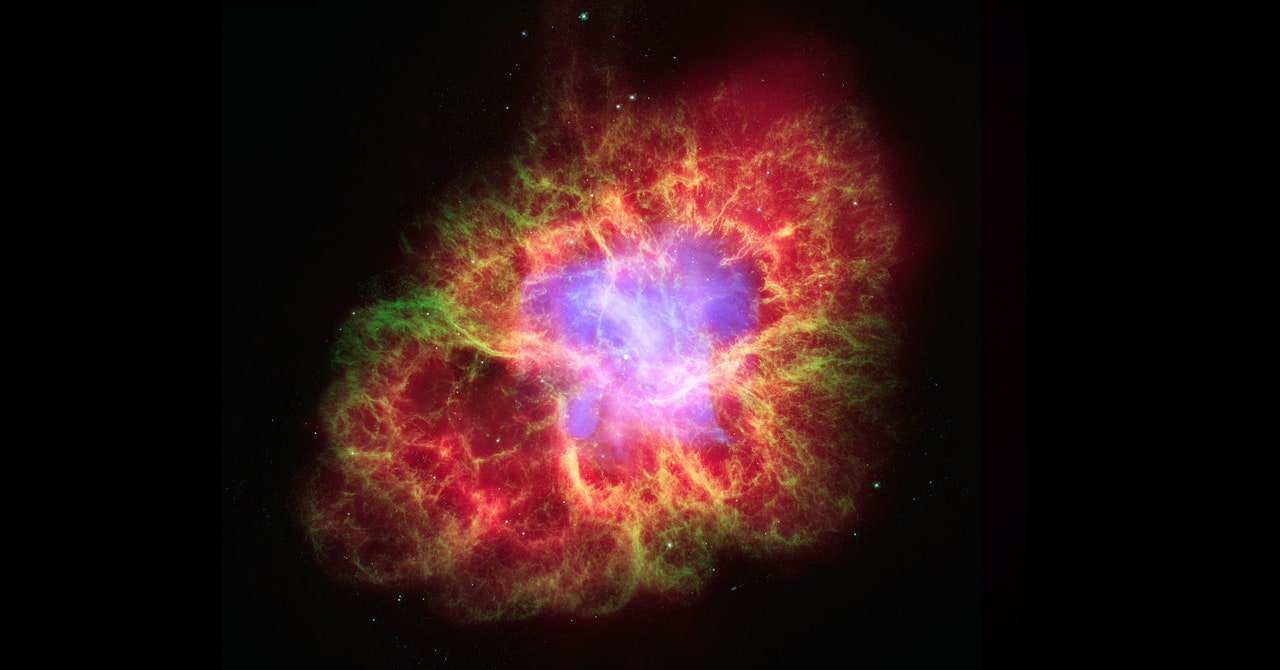
But something is going on up there. This red supergiant has dimmed repeatedly in the past few years, which could mean that it’s ready to go full supernova quite soon—and by “soon” we mean within the next 10,000 years. Actually, since it’s some 500 light-years away, it’s possible that it already exploded and we just don’t know it yet. It could show up tomorrow.

One thing’s for sure: If Betelgeuse does blow, it will be the brightest supernova ever witnessed by humans. Just how bright are we talking? Could you see it during the day? Would it be dangerous? I’m going to show you how to figure all this out with just some very basic physics.

What Is a Supernova?

In most stars, the core is composed of hydrogen and helium, the two lightest elements—but only the positively charged nuclei of those atoms, since it’s too hot for the electrons to stay put. Under immense gravity and temperatures, these nuclei can fuse into heavier elements, releasing massive amounts of energy in the process. (This nuclear fusion is where our sun gets its energy.)

For a stable star like our sun, there’s a balance between two opposing forces. The mass of all the matter in the star produces a gravitational force that tends to collapse the star. However, this is countered by the outward-pushing force from the core, so the star remains fairly constant in size, even though it’s not a solid object like a planet.

But as a star ages, it gradually uses up its hydrogen and helium and starts producing heavier elements like carbon, oxygen, silicon, and finally iron. And that’s as far as it goes—fusing elements heavier than iron takes energy instead of creating it, so the star essentially runs out of fuel and collapses in on itself.

In some cases, this collapse can be very severe—so severe that it rapidly increases the pressure and temperature in the core of the star. The star then goes boom. Big boom. Well, big silent boom, since explosions make no sound in the vacuum of space.

But this produces A LOT of light energy. For comparison, our sun has a luminosity, or power output, of 3.8 x 1026 watts. A supernova that was observed in 2015 (ASASSN-15h) had a peak luminosity of around 2 x 1038 watts. That’s more power output than 500 billion suns. It’s crazy. Oh, you didn’t see that one? Yeah, because it was in a different galaxy. Betelgeuse is in our back yard, astronomically speaking.

Brightness and Luminosity

A long time ago, a Greek philosopher named Hipparchus categorized the stars into six groups, based on how bright they appeared in the night sky. From that, we have developed a classification scheme for “apparent magnitude,” such that a star of magnitude 1 looks very bright, while you probably can’t even see a magnitude 6 star through light pollution. Betelgeuse is in the first group.

To be clear, this isn’t the actual luminosity of a star—it’s how bright it appears from Earth, which depends on (1) how much light it produces and (2) how far away it is. Oh, also (3), magnitude is based on how the human eye sees objects, and it’s not linear. A magnitude 1 object has a light intensity (in watts per square meter) that is 100 times greater than a magnitude 6 object.


Source link

Related posts

College Campuses Are in Upheaval Over Faculty Ties to Epstein

College Campuses Are in Upheaval Over Faculty Ties to Epstein

February 25, 2026
The Righteous EV Owners Who Won’t Let Their Broken Cars Die

The Righteous EV Owners Who Won’t Let Their Broken Cars Die

February 25, 2026
Previous Post

Sweden Orders Third GlobalEye Surveillance Aircraft from Saab

Next Post

Voters from both parties want enduring public lands protection

Next Post
Voters from both parties want enduring public lands protection

Voters from both parties want enduring public lands protection

Leave a Reply Cancel reply

Your email address will not be published. Required fields are marked *

RECOMMENDED NEWS

The Islamic Corporation for the Insurance of Investment and Export Credit (ICIEC) Boosts Agri-Commodity Exports in Member States with US$75 Million Insurance Coverage

The Islamic Corporation for the Insurance of Investment and Export Credit (ICIEC) Boosts Agri-Commodity Exports in Member States with US$75 Million Insurance Coverage

2 years ago
What is the prevalence of current alcohol consumption and of risky alcohol consumption among cancer survivors in the US?

What is the prevalence of current alcohol consumption and of risky alcohol consumption among cancer survivors in the US?

3 years ago
EnfraGen Awarded Acquisition Deal of the Year by Project Finance International

EnfraGen Awarded Acquisition Deal of the Year by Project Finance International

2 years ago
A Call to Action on International Women’s Day 2024

A Call to Action on International Women’s Day 2024

2 years ago

POPULAR NEWS

  • Ghana to build three oil refineries, five petrochemical plants in energy sector overhaul

    Ghana to build three oil refineries, five petrochemical plants in energy sector overhaul

    0 shares
    Share 0 Tweet 0
  • The world’s top 10 most valuable car brands in 2025

    0 shares
    Share 0 Tweet 0
  • Top 10 African countries with the highest GDP per capita in 2025

    0 shares
    Share 0 Tweet 0
  • Global ranking of Top 5 smartphone brands in Q3, 2024

    0 shares
    Share 0 Tweet 0
  • When Will SHIB Reach $1? Here’s What ChatGPT Says

    0 shares
    Share 0 Tweet 0

Get strategic intelligence you won’t find anywhere else. Subscribe to the Limitless Beliefs Newsletter for monthly insights on overlooked business opportunities across Africa.

Subscription Form

© 2026 LBNN – All rights reserved.

Privacy Policy | About Us | Contact

Tiktok Youtube Telegram Instagram Linkedin X-twitter
No Result
View All Result
  • Home
  • Business
  • Politics
  • Markets
  • Crypto
  • Economics
    • Manufacturing
    • Real Estate
    • Infrastructure
  • Finance
  • Energy
  • Creator Economy
  • Wealth Management
  • Taxes
  • Telecoms
  • Military & Defense
  • Careers
  • Technology
  • Artificial Intelligence
  • Investigative journalism
  • Art & Culture
  • LBNN Blueprints
  • Quizzes
    • Enneagram quiz
  • Fashion Intelligence

© 2023 LBNN - All rights reserved.