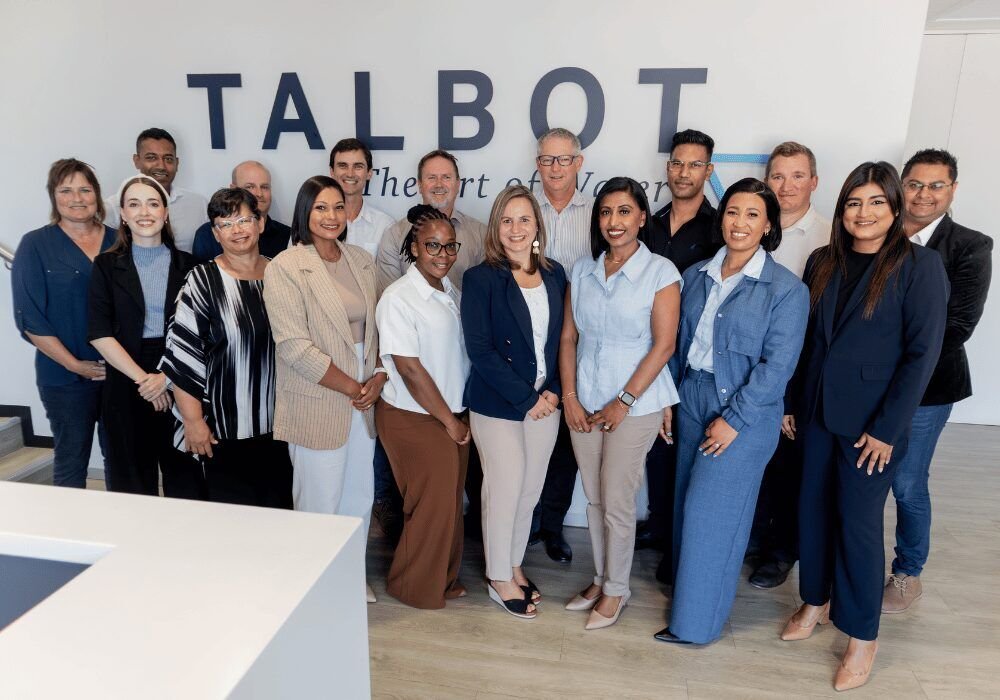
As water security rises to the top of South Africa’s industrial risk agenda, companies are being forced to rethink how they source, treat and reuse water, a shift that has shaped Talbot’s evolution. Kirsten Kelly speaks to Talbot’s CEO, Carl Haycock, about water security, African operations and the company’s latest developments.
Talbot was founded in 1989. How has the water sector changed over these years? And how has Talbot adapted to these changes?
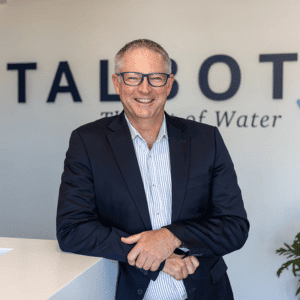
Carl Haycock, CEO, Talbot
While the business has its origins in wastewater treatment, there has been a clear shift towards water security. Most of our recent projects focus on recovering water from highly challenging wastewater streams, reflecting a broader transition from treating effluent purely for discharge compliance to recovering and reusing water as a critical production input. Treating water to potable or high-quality industrial reuse standards is significantly more complex than treating for discharge, requiring advanced process design, rigorous quality control and deep operational expertise — capabilities Talbot has developed and applied across its project portfolio. We were one of the first companies in South Africa to implement an industrial water recovery plant that fed treated water back into the production process. Globally, the water sector is working towards incremental improvements in water discharge quality. However, in South Africa, water security is a far bigger focus. This is, to a large extent (particularly in Gauteng) is a self-inflicted challenge driven by ageing infrastructure, poor maintenance and operational failures. Corporates want a reliable supply of water for their industrial processes at the correct quality, while mitigating exposure to rapid and often unpredictable increases in water costs. For example, bulk water tariffs from Rand Water have increased by more than 170% since 2014. Talbot has largely positioned our offering around these needs. While Talbot’s origins lie in heavy industry, our work during the 2000s was concentrated in the fast-moving consumer goods (FMCG) sector. We have subsequently successfully diversified into other industries like the pulp and paper, energy, agriculture, automotive and mining sectors.


What should organisations be doing today to prepare for a more uncertain water future?
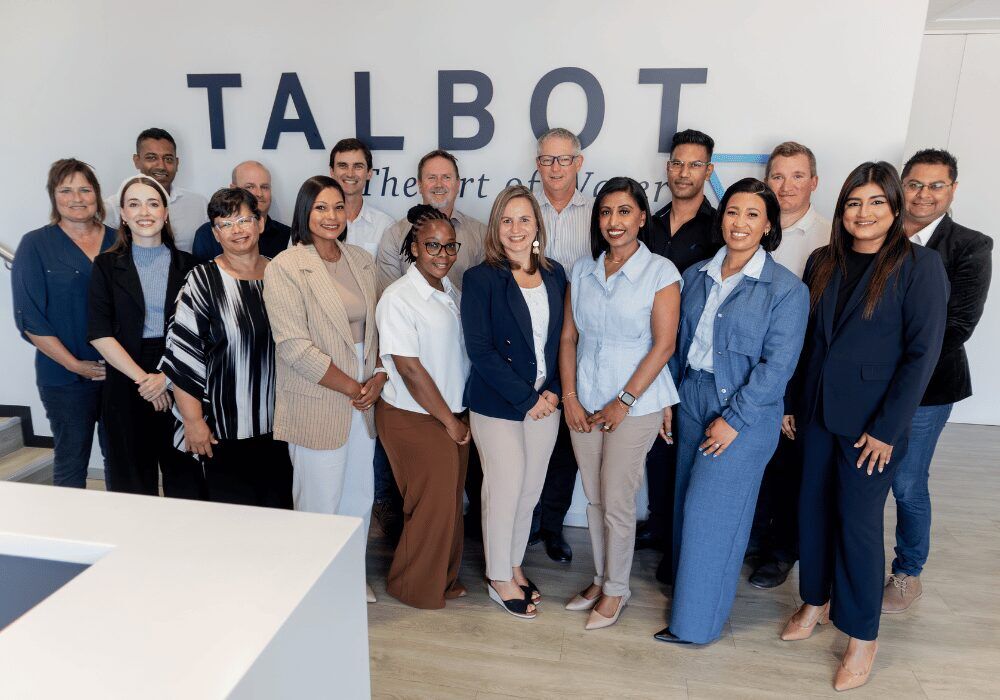
As an intellectual property-driven business, Talbot places strong emphasis on skills development, continuous learning and retaining deep knowledge across chemical, mechanical and process engineering field
Organisations should first understand how water risk and security directly affect their business operations. Water security is aligned with business continuity. When there are interruptions in water supply, some businesses stand to lose millions of rands in lost production. Businesses need to develop a plan, assess their own water use, and optimise it accordingly. Talbot encourages our industrial clients to look beyond end-of-pipe treatment and focus on both intraprocess and interprocess opportunities for savings and reuse. Intraprocess optimisation means reducing water use within a specific unit of operation – for example, cutting the volume needed in a digester or wash step. Interprocess optimisation looks at the flows between process steps, identifying where relatively clean or recoverable streams (such as from a bleach plant or rinsing stage) can be treated and looped back into earlier stages of production instead of being discharged. Targeting these smaller, higher value streams is often more cost effective than treating the entire effluent in a single large plant, and it frequently unlocks product recovery as well as water savings, since wastewater almost always contains some lost raw materials or product. Intra‑process optimisation means reducing water use within a specific unit inter‑process optimisation looks at the flows between process steps, identifying where relatively clean or recoverable streams (such as from a bleach plant or rinsing stage) can be treated and looped back into earlier stages of production instead of being discharged. Targeting these smaller, higher‑value streams is often more cost‑effective than treating the entire effluent in a single large plant, and it frequently unlocks product recovery as well as water savings, since wastewater
If you could shift one mindset in the South African water sector, what would it be?
The idea that the past is a window to the future is particularly relevant in the context of South Africa’s water crisis. Repeated droughts, infrastructure failures and near-misses like Cape Town’s Day Zero have shown how quickly water security can unravel — yet these lessons are often forgotten as soon as supply is restored. People and businesses revert back to old habits. When the tap starts running again, urgency fades, restrictions are relaxed and long-term planning is deferred, even though the underlying risks remain unchanged. This cycle of crisis, response and complacency leaves the country perpetually unprepared for the next shock. Unless past water shortages are treated as warnings rather than isolated events, South Africa will continue to repeat the same mistakes, facing increasingly severe and costly water disruptions in the future.
South Africans should not forget about Cape Town’s ‘Day Zero’, or Gqeberha’s drought or when parts of Gauteng had no water for days on end. These events will continue to reoccur.
Already this year, Cape Town is experiencing water supply stress again, there are continued water cuts in Gauteng while Knysna and Plettenburg Bay have critically low dam levels. Our country needs to proactively solve ahead of time for problems that we know will reoccur. With continuously growing demand, water scarcity will not disappear.
What role does cross-border work play in Talbot’s business?

Talbot offers flexible finance options like build–own–operate or build–operate–transfer arrangements, phased investments, or performance-linked commercial models that tie repayment to plant output or water recovery performance
Even in its early years, Talbot was already operating beyond South Africa’s borders, delivering projects in countries such as Uganda, Tanzania, Swaziland and Mozambique. In fact, by 2015, the majority of Talbot’s work was coming from outside South Africa.
Experience in managing logistics, handling samples, navigating regulatory requirements and building strong local partnerships has been critical to successfully delivering cross-border projects.
Talbot’s success in Africa is rooted in its industrial focus and practical understanding of risk. Working in markets in the last year alone including Nigeria, Tanzania, Uganda, Botswana, Mozambique, Ethiopia and Eswatini amongst others, we have learned that technical capability alone is not enough. By combining consulting, design, build, laboratory services and long-term operational support, we are able to back our solutions with data, diagnostics and on-the-ground expertise. This is particularly valuable in jurisdictions where access to accredited testing, specialist skills or replacement components can be limited. Rather than chasing opportunistic projects, we have always focused on long-term partnerships with blue-chip multinational and regional clients. Operating across borders has also shaped Talbot’s approach at home. Exposure to diverse regulatory regimes, water qualities and operational constraints has strengthened our ability to design resilient, fit-for-purpose solutions for South African industry.
Talbot works across municipalities, industries and consulting firms. What makes partnerships successful, and where do collaborations tend to break down?
Three words – communication, transparency and commitment.
Over-promising and under-delivering is a real problem in the water sector. Talbot won’t commit to performance targets that aren’t achievable in practice.
What are some of the standout developments at Talbot right now?
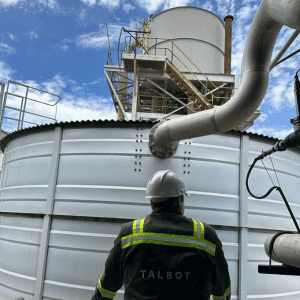
Most of Talbot’s recent projects focus on recovering water from highly challenging wastewater streams
A massive highlight has been the formation of our new headquarters in La Mercy, KwaZulu-Natal, to meet growing client demand, while maintaining uninterrupted operations across our various service lines. This location has also allowed us to establish an Industrial Water Security Hub, which takes a holistic approach to water security. Talbot operates one of South Africa’s most advanced accredited water laboratories, a broad range of accredited tests and direct access to markets across the continent. Our 17025 SANAS accreditation provides confidence that test results are accurate, traceable and internationally recognised, allowing clients to rely on the data for regulatory compliance, operational decisions and risk management. As part of Talbot’s expansion, we are opening a new laboratory at Dube Trade Port while continuing full operations at our existing facility. This ensures our complete suite of accredited tests remains fully available while the new laboratory obtains accreditation and safeguards reliable testing for our clients throughout the transition. We have always maintained a strong presence in KwaZulu-Natal and wanted to stay close to our regional base while serving clients across South Africa, the wider African continent and Europe. Close proximity to major air-freight routes was therefore essential, with samples routinely flown in from across the continent. Our new location supports good sample turnaround times, traceability and chain of custody, which are critical for accredited testing. This expansion represents a significant investment, with Talbot’s new 3 500 m² facility enabling the business to hold critical spare parts – including membranes, cartridge filters and chemicals – in stock for customers. This substantially reduces the lead times many clients typically face when sourcing essential components. Beyond infrastructure and equipment, investment in people remains central. As an intellectual property-driven business, Talbot places strong emphasis on skills development, continuous learning and retaining deep knowledge across chemical, mechanical and process engineering fields. This, together with growing use of data analytics and AI-enabled optimisation tools, allows the company to move beyond plant delivery to ensure continuous performance support and efficiency in industrial operations. The same long-term mindset underpins Talbot’s finance solutions. Talbot offers flexible funding models that can be tailored to a customer’s operational needs and risk profile. These may include build–own–operate or build–operate–transfer arrangements, phased investments, or performance-linked commercial models that tie repayment to plant output or water recovery performance, providing clients with options alongside traditional upfront capital investment approaches.
What do you value most about Talbot’s culture and way of working?
At its core, Talbot is driven by a positive growth and solutions-orientated mindset.
Rather than stopping at problem identification, the business actively shifts engineering thinking towards delivering practical, implementable solutions that address real operational challenges. This approach goes beyond the design and delivery of infrastructure alone, placing strong emphasis on long-term customer relationships and ongoing support. By investing in its clients’ success and business continuity, Talbot moves past a transactional model into a partnership-led approach that ensures solutions continue to perform and deliver value well beyond commissioning.