

Earlier this month, Saudi Arabia achieved a global milestone in digital real estate by completing its first blockchain-based property title transfer – a transaction executed directly through infrastructure integrated with the Kingdom’s national Real Estate Registry (RER).
The transaction, between the state-owned developer National Housing Company (NHC) and the Real Estate Development Fund (REDF), was executed on blockchain infrastructure developed by droppRWA, a sovereign-grade technology company specialising in tokenisation of Real World Assets (RWA). The transaction involved the creation of a digital property deed, transfer of ownership, and the title settled and recorded on a sovereign ledger within 66 seconds.
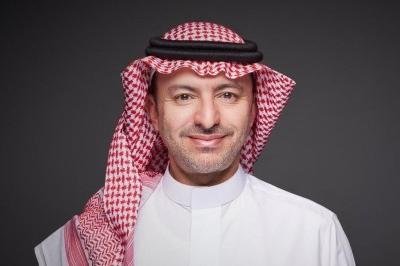
“Not a simulated environment. Not a sandbox. A production transaction, with government entities as live participants on the system and RER as the source of truth,” droppRWA CEO Faisal Al Monai’s told Zawya Projects.
At the heart of the breakthrough is what the company calls a “Registry-as-Truth” model, where national property law and registry regulation are embedded directly inside the settlement infrastructure itself.
Globally, most tokenised real estate models issue digital representations (tokens) of ownership that sit outside the official land registry, and rely on parallel legal structures to establish ownership. These tokens typically represent shares in a special purpose vehicle (SPV) that owns the property, rather than direct title to the property itself. The official land registry lists the SPV, not the token holder, as the legal owner.
Saudi Arabia’s model eliminates this layer by linking tokens directly to the official land registry.
“In Saudi Arabia’s model, the registry serves as the legal source of truth, eliminating any separation between digital ownership and statutory title,” said the droppRWA CEO. “When the token moves, the legal title moves. There is no gap between the digital record and the legal reality.”
The implications are significant for the Saudi real estate market, which boasts of a development pipeline exceeding $1 trillion, according to Deloitte.
Al Monai said the Kingdom is in the midst of one of the largest real estate build-outs in modern history, driven by projects such as NEOM, The Red Sea, Diriyah Gate, The Rise Tower and the Riyadh metro expansion.
“We work closely with the government and expect a substantial portion of the national real estate pipeline to move on-chain,” he said. “The infrastructure we’ve delivered gives the Kingdom the ability to make that entire pipeline accessible to global capital in a way that’s never existed before – compliant, liquid and programmable from day one, while keeping sovereignty, regulatory control and legal enforceability exactly where the Kingdom wants it, in its own hands.”
Beyond real estate, the company has signed a Memorandum of Understanding (MOU) with French uilitiy giant EDF to explore tokenisation opportunities in the energy sector using the same infrastructure.
“The same rails we built for property can service any asset class that holds value or generates income, from energy, commodities, infrastructure, carbon credits,” said the droppRWA CEO. “As Saudi Arabia progresses toward Vision 2030, we will be the infrastructure layer that helps the Kingdom channel global capital into its most important economic programmes.”
Excerpts from the interview:
From your perspective, what market issues is the government trying to address by directly connecting the land registry to blockchain?
Most of what the market calls ‘tokenised real estate’ doesn’t actually solve the problem. You see platforms wrapping an asset with a digital token, listing it for retail investors. But those tokens exist in isolation from the national legal system. The registry doesn’t know about them. The courts don’t recognise them. The regulator isn’t inside the transaction. It’s a representation of ownership, not ownership itself.
Saudi took a fundamentally different approach. The Kingdom’s regulator didn’t just write rules for how private companies should tokenize assets, it authored the actual technical standard that governs how property tokens are created, transferred and settled. That’s never been done before, anywhere.
We examined every major digital asset jurisdiction globally, from Dubai, the EU, Singapore, Liechtenstein, Switzerland, the US and in every case, the government regulates the platforms. None of them authored the technical token standard itself. Saudi did.
That’s the structural difference investors need to understand. When you buy a tokenised property through this infrastructure, you’re not holding a digital receipt from a private company. You’re holding a legally recognised, regulator defined digital title. The government wrote the rulebook, translated it into executable code and embedded it at the protocol level. That’s what makes this an institutional-grade proposition”
What were the hurdles overcome in developing institutional / sovereign tokenisation?
The biggest hurdle was one that nobody had solved before, because nobody had attempted it, there was no blockchain infrastructure built specifically for sovereign government use.
You had public chains designed for open, permissionless crypto markets. You had private enterprise chains built for corporate workflows. But there was nothing in the middle, nothing purpose-built for a government that needs to enforce its own laws, maintain its own identity framework and exercise legal remedy natively within the system.
So we had to build it. droppChain exists because the alternative was asking a sovereign nation to place its property registry on infrastructure designed for a fundamentally different purpose. Governments need enforceability, where identity, compliance and legal rectification are native to the system, not bolted on after the fact. That’s a different engineering challenge to anything the industry had tackled before and one our CTO, Gurps Rai, built the solution for from ‘first principles.’
Then there was the legal architecture itself. We had to take Saudi Arabia’s property law, the actual regulatory rulebook and translate it into smart contract logic that executes automatically. Every transfer, every compliance check, every audit event had to mirror real legal procedures in real time.
Getting that right meant working backwards from how the regulator, the registry and the government housing entities actually operate. Most platforms skip this entirely. We built a system where the regulator is a participant in the infrastructure, not a bystander watching from the outside.
The final challenge was trust. Governments and large institutions are rightly cautious about engaging with volatile, token linked ecosystems. Approaching this required building the next generation of capital market plumbing with the maturity and discipline that sovereign adoption demands.”
From a property developer’s standpoint, how will tokenisation benefit the financing of projects?
If you’re a developer in the Kingdom today, your capital stack is constrained by legacy processes. Raising money is slow, expensive and limited to a narrow set of institutional relationships. You might have a world-class project, but the friction between having the asset and accessing the capital to build it is enormous. That’s the problem tokenisation solves and it delivers two things immediately, speed and access.
Through droppRWA’s infrastructure, a developer can segment a project into digital units and access a much wider global pool of investors, far more efficiently than traditional channels allow. Because everything is programmable, capital can be raised in stages aligned to actual project milestones.
Funds are deployed when work is done, not locked up waiting for manual approvals. The administrative overhead drops significantly and the investor base expands dramatically.
For the Kingdom’s real estate market specifically, this changes the dynamics of how major developments get financed. It means a developer in Riyadh can tap into institutional capital from London, Singapore or New York through infrastructure that’s compliant, auditable and connected to the national registry. That’s a structural advantage no other market can offer right now.
For example, for a large-scale mixed-use project, what might a fully tokenised funding model look like in the future?
Our CFO, Tunij Abiloa, always says to think of it as a living digital ecosystem around the project, rather than a single ownership structure. A series of investors could hold digital tokens representing ownership of residential units in an apartment complex, while another investor holds a token representing the income stream from the retail space on the ground floor. A third might hold tokens tied to the car park revenue. Each component of the development becomes an independently investable, tradeable unit.
The funding model itself becomes completely programmable. As the project hits milestones, foundation complete, structure topped out, commercial spaces handed over, funds are automatically released to the developer or distributed as returns to investors through smart contracts. There’s no waiting for quarterly reports. No manual reconciliation. Each riyal is accounted for in real time, visible to every stakeholder.
This also fundamentally changes the risk profile for investors. In the traditional off-plan model, you’re placing capital with limited visibility into how it’s being deployed. In a tokenised model, the transparency is native to the infrastructure. Counterparty risk drops because the rules are enforced by code and validated by the regulator, not by trust in a single intermediary. That’s a material improvement for institutional capital.
How does droppRWA ensure legal enforceability from a global investors’ standpoint?
Most tokenisation projects layer their technology on top of existing legal frameworks. The token sits in one system, the legal title sits in another and the investor has to trust that the two stay connected. That’s fragile and sophisticated investors know it.
Our infrastructure, on the other hand, is integrated directly with the Real Estate Registry, the government’s official source of truth for property ownership. When a digital token representing a property moves on our system, the legal deed moves within the parameters set by the Kingdom’s own regulatory framework. There is no abstraction layer. So your token is your title.
For global investors, this actually simplifies the cross-border question rather than complicating it. Because the asset’s legal status is unambiguous at source, defined by the sovereign regulator, enforced at the protocol level and recorded in the national registry, the foundation for international legal recognition is as strong as it can possibly be.
We’ve designed the infrastructure so that an investor in London or Singapore has the same level of legal certainty as a domestic buyer, because the source of that certainty is the government itself, not a private intermediary’s promise.
How are you extending this RWA tokenisation model beyond property into other areas like infrastructure?
Our COO, Sebastien Douville, is already leading an expansion into energy with EDF, which tells you how quickly this infrastructure is being pulled into new sectors in Saudi Arabia.
The reason this extends naturally is architectural. Our infrastructure doesn’t tokenise the physical asset, it tokenises the legal ownership rights and income entitlements associated with that asset.
That logic is asset-agnostic. The same system that manages a property deed can manage a stake in a solar farm, a position in a power plant or a claim on carbon credits. The compliance, audit and regulatory enforcement capabilities don’t change, only the asset class does.
Energy is the gateway that sets the tempo of geopolitics and global capital flow. If our infrastructure can meet the compliance, auditability and risk discipline demanded of energy-grade settlement, it can work for virtually anything – from commodities and civil engineering to mining and trade finance.
(Reporting by Anoop Menon; Editing by SA Kader)
(anoop.menon@lseg.com)
Subscribe to our Projects’ PULSE newsletter that brings you trustworthy news, updates and insights on project activities, developments, and partnerships across sectors in the Middle East and Africa.


