In a striking shift that signals the office market’s adaptation to post-pandemic realities, nearly one in five office property purchases in South Africa is now intended for residential or mixed-use conversion.



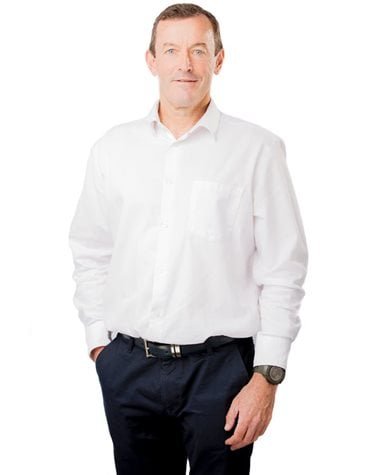
Source: Supplied. John Loos, Senior Property Economist at FNB.
In Johannesburg, that number soars to 38.1%, according to FNB’s latest Property Broker Survey. These conversions are not only breathing new life into outdated office blocks—they’re becoming a pivotal tool in correcting years of oversupply and reshaping urban landscapes to meet evolving live-work needs.
Oversupply wasn’t just a Covid story: The challenges facing the office market are often associated with the pandemic—but they began long before 2020. The rise of remote and hybrid work during the Covid-19 lockdowns certainly prompted many companies to reduce their office footprints. But well before that, advances in technology had already enabled more flexible work arrangements.
While the hype around working from home (WFH) may have been overstated, a lasting shift occurred: not all employees returned to the office, and not at the same scale as before. Combined with tech-driven productivity gains and the digitisation of records—which slashed the need for physical storage space—this led to a structural softening in office-space demand.
Added to this, South Africa’s sluggish economic growth since the early 2010s has limited formal employment growth, further suppressing long-term demand for office space.
Vacancy rates tell the story: These factors translated into a significant rise in vacancies. From a low of 9.2% in 2014 (post-global financial crisis), the national office vacancy rate climbed to a peak of 18.2% in 2021/22 following hard lockdowns.
There are, however, signs of improvement. By 2024, the national office vacancy rate had declined to 15.8%—still high, but a notable shift in the right direction. Rode data reflects a similar trend: average A+, A, and B-grade vacancies dropped from nearly 18% in early 2022 to 12.8% by Q1 2025.
But this recovery is uneven. Coastal decentralised markets—like Cape Town and Durban—are faring far better, with vacancy rates just above 8%, possibly boosted by growing call-centre demand. In contrast, Gauteng metros remain under pressure, with Q1 2025 vacancies at 14.1% in Johannesburg and 13.4% in Pretoria.
Brokers agree there’s still a way to go: 57% surveyed in Q2 2025 believe supply still exceeds demand. Yet, that figure is significantly down from a record 98.4% in Q2 2021, signalling a slow but steady “right-sizing” of the market.
Slowing supply, rising affordability: One of the clearest signs of market correction is the dramatic drop in new developments. In 2024, just 82,942 square metres of new office space were completed—a staggering 86% drop from 2019 levels, and 90% lower than the 2013 peak.
At the same time, affordability has improved. Real (inflation-adjusted) office rentals have fallen 16.5% from the 2020 peak to 2024, while real capital values per square metre have declined 25.9% since the 2016 high (according to MSCI data adjusted for GDP inflation). This has made office space more attractive for both tenants and investors.

Source: Supplied.
Conversions are reshaping the market: In Q1 2025, the FNB Property Broker Survey began probing why buyers were acquiring office properties. The data revealed that 43% were buying for their own business use, 36.4% for investment to lease, and a notable 19.3% for conversion to residential or mixed use.
This trend is particularly pronounced in Johannesburg, where 38.1% of transactions are now estimated to involve conversions. Nelson Mandela Bay (17.1%) and Tshwane (14.9%) follow, while Cape Town (4.6%) and eThekwini (1.3%) show minimal conversion activity—likely due to healthier fundamentals and lower vacancy rates in those cities.
However, this disparity also highlights missed opportunities in high-demand metros. In Cape Town, for instance, residential pressure in areas like the City Bowl could be alleviated if more underused office space were available for conversion.
Loos notes: “An important mechanism for absorbing excess office space is unlikely to be needed in the future.”

Source: Supplied.
A market adapting to its new reality: The South African office property sector is in transition. Structural shifts in work habits, slower economic growth, and technological change have collectively reduced the need for traditional office space. In response, the market is adapting—through reduced new developments, affordability adjustments, and now, the strategic repurposing of space.
Residential and mixed-use conversions, especially in Gauteng, are proving to be one of the most effective tools for restoring balance. The success of this shift may well determine the long-term resilience and relevance of office property in South Africa’s evolving urban landscape.