

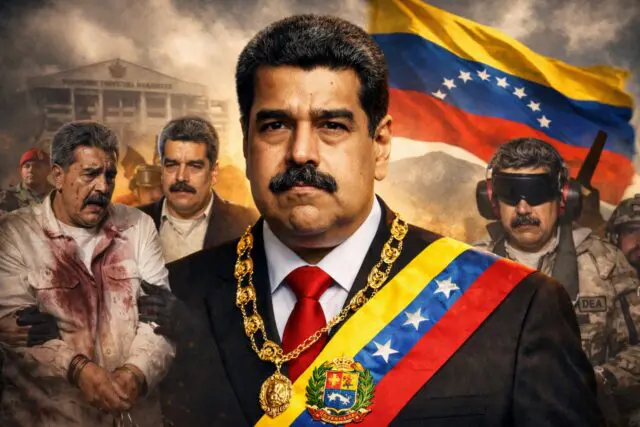
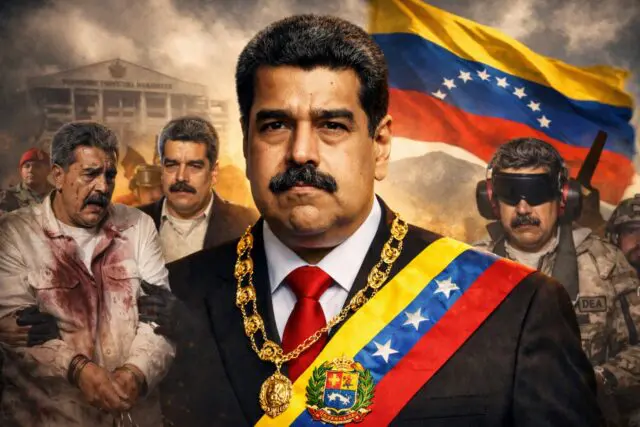
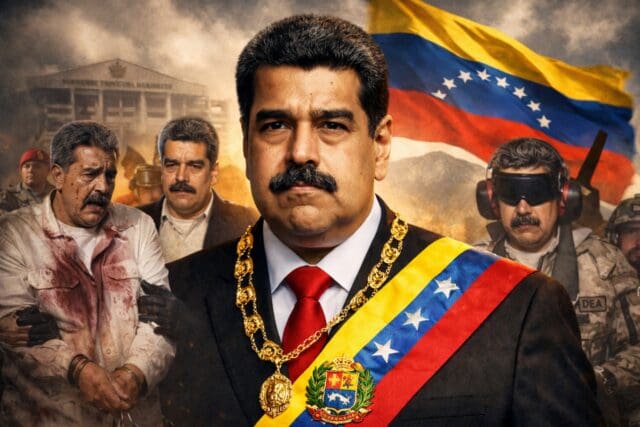
Nicolás Maduro’s rise to the presidency of Venezuela is one of the most dramatic political transformations in modern Latin American history — from a former bus driver and labor activist to one of the world’s most controversial political strongmen.
Maduro became President of Venezuela in 2013 after being publicly named as successor by longtime leader Hugo Chávez shortly before Chávez’s death. Since then, Maduro has not only remained in power through repeated political crises, protests, and international pressure, but has also steadily centralized authority, dismantled democratic institutions, and entrenched himself as Venezuela’s dominant ruler.
From Bus Driver to Chávez’s Trusted Ally
Born in 1962 in Caracas, Nicolás Maduro Moros grew up in a working-class family and worked as a bus driver and union organizer in his early adulthood. His political awakening came during the rise of Hugo Chávez, particularly after Chávez’s failed 1992 coup attempt against the Venezuelan government.
Maduro became active within Chávez’s socialist movement and developed a reputation as a loyal and disciplined organizer. When Chávez won the presidency in 1998, Maduro entered government, rising steadily through the political ranks:
– Advertisement –
- Member of the National Assembly
- President of the National Assembly
- Minister of Foreign Affairs (2006–2013)
As foreign minister, Maduro built close relationships with Venezuela’s allies, including Cuba, Russia, Iran, and China, while benefiting from massive oil revenues that strengthened the Chávez government.
Hand-Picked Successor and Narrow Election Victory
In March 2013, shortly before his death from cancer, Hugo Chávez publicly named Maduro as his political successor, urging Venezuelans to support him.
Following Chávez’s death, a snap election was held in April 2013. Maduro narrowly defeated opposition candidate Henrique Capriles by just 1.5 percent of the vote, one of the closest elections in Venezuelan history. Capriles contested the results, alleging fraud, but Venezuela’s electoral authority (CNE) upheld Maduro’s victory.
Maduro was sworn in as president, inheriting not only Chávez’s political machinery but also a deeply fragile economy dependent almost entirely on oil exports.
From President to Strongman
After the opposition won control of the National Assembly in 2015, Maduro began systematically dismantling democratic checks on his power.
He used:
- The Supreme Court to invalidate opposition laws
- The ruling party to create a parallel pro-government legislature
- Emergency decrees to rule without parliamentary approval
The National Assembly was effectively stripped of authority, leaving Maduro to govern largely by decree.
Control of Institutions and the Military
Maduro consolidated power by securing loyalty from three key pillars of the state:
1. The Military
Top military officers were given control over ministries, industries, and businesses, tying their personal wealth and survival to Maduro’s rule.
2. The Judiciary
Courts consistently ruled in Maduro’s favor, blocking opposition candidates, dissolving institutions, and criminalizing dissent.
3. The Electoral Authority (CNE)
The electoral council repeatedly approved elections boycotted by the opposition and rejected allegations of fraud, allowing Maduro to claim legitimacy while suppressing competition.
Economic Collapse and Public Unrest
Under Maduro’s rule, Venezuela experienced:
- Hyperinflation reaching millions of percent
- Severe food and medicine shortages
- Mass emigration of over 7 million Venezuelans
- Widespread poverty and humanitarian crisis
Despite this, Maduro survived multiple waves of protests, including massive demonstrations in 2014, 2017, and 2019, by deploying security forces, arresting opposition leaders, censoring media, and criminalizing protest movements.
Accusations of Election Rigging and Human Rights Abuses
International organizations and Western governments have accused Maduro’s government of:
- Rigging elections
- Arbitrary arrests and torture
- Suppression of free speech and press
- Use of lethal force against protesters
The United Nations and human rights groups have documented patterns of abuse, while the U.S., EU, and several Latin American countries imposed sanctions on Maduro and his officials.
How Trump took Nicolas Maduro out
On January 3, 2026, U.S. President Donald Trump announced that United States military forces successfully captured Venezuelan President Nicolás Maduro and his wife, Cilia Flores, during a massive overnight operation in Caracas.
The Capture Operation
- The Strike: A large-scale military strike involving over 150 aircraft from 20 different land and sea bases targeted military infrastructure in Caracas starting around 1:00 AM ET on Saturday. Explosions were reported at the Miraflores presidential palace and several military bases, including Fort Tiuna and La Carlota airport.
- Elite Forces: The capture was executed by the U.S. Army’s Delta Force. Elite troops raided Maduro’s fortified compound at the Fort Tiuna military complex, reportedly dragging the couple from their bedroom as they slept.
- Extraction: After being “bum rushed” before he could reach a safe room, Maduro and his wife were flown by helicopter to the USS Iwo Jima, a U.S. warship stationed off the coast. They are currently being transported to New York to face trial.
Conclusion: How Maduro Became Venezuela’s Strongman
Nicolás Maduro became president by inheriting Hugo Chávez’s political movement and narrowly winning the 2013 election. He became a strongman by systematically eliminating democratic competition, capturing state institutions, and using coercion to silence opposition.
His story reflects how political succession, institutional capture, and economic crisis can combine to transform an unlikely figure into one of the most powerful — and controversial leaders in the world.




