


– Advertisement –
The African Civil Society convened at the sidelines of the Africa Heads of State Energy Summit to deliberate on reforms, investments, and innovations necessary to achieve universal access to sustainable energy by 2030. This dialogue, which focused on aligning the Dar es Salaam Energy Declaration with the principles of justice, equity, and sustainability, was co-hosted by, among others, the Pan African Climate Justice Alliance (PACJA), African Coalition for Sustainable Energy and Access (ACSEA), Shine Collab, and Forum CC.

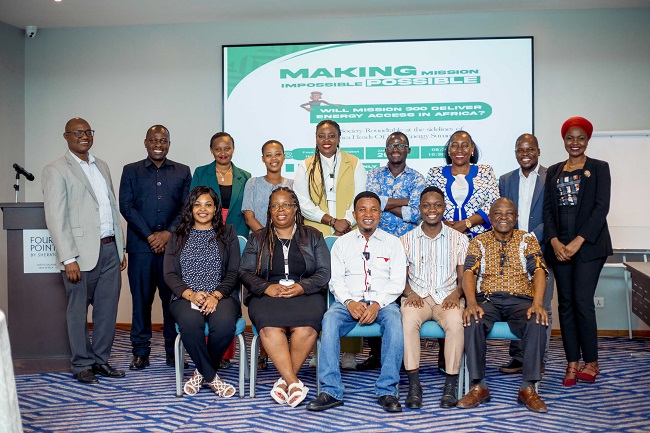
The Summit headlined “Mission 300”, a World Bank and African Development Bank initiative to provide electricity to 300 million people in Africa by 2030 through a combination of grid extension, off- and mini-grid solutions, and innovative financing. Both the Summit and Mission 300 aim to address a stark energy reality in Africa: 630 million people remain without electricity, and 800 million rely on traditional biomass for cooking, exacerbating health risks, environmental degradation, and gender inequities.
Participants expressed diverse views regarding the first Summit of the Initiative, among them the role of the last-mile communities, as well as the civil society traditional role of monitoring commitments and holding governments and Private Sector accountable.
There was consensus that in its current form, the Mission 300 lacks inclusivity, and may fall in the trap of other exciting energy initiatives which came with lofty promises but ended in the catalogue of “promising but failed Projects”.
They particularly underscored the important role of the civil society, and urged the African Development Bank, which feels closer to the African people, to ensure that the World Bank opens up for broader stakeholder engagement in the Mission 300 architecture.
Participants also took cognisance of the Six30 Campaign launched in April 2024, which, like Mission 300, offers a Pan-African Framework for addressing Africa’s energy access deficit. The Campaign is a rallying cry for global solidarity, urging public and private donors to
substantially increase funding and investments in renewable energy projects across the continent to $630 billion and prioritise access for 630 million people by 2030.
The Six30 Campaign frames energy access as an issue of justice, recognising that systemic inequities in governance and global financial flows, rather than technical or financial limitations, are the primary barriers. By prioritising renewable energy, decentralisation, and community ownership, the Six30 Campaign provides a clear framework for Mission 300 to align its objectives with Africa’s broader socio-economic and climate resilience goals.
While Mission 300’s ambition is laudable, its success hinges on addressing systemic challenges that have long hindered Africa’s access to energy. Consequently, African civil society organisations offer the following recommendations to ensure Mission 300 becomes a catalyst for equitable, sustainable, and transformative change:
Ensure Transparency, Accountability, and Debt Sustainability
African governments must secure financing for energy projects through transparent and accountable processes. The World Bank and African Development Bank must prioritise debt sustainability and adopt safeguards to prevent odious debt and corruption. Energy financing should serve long-term development rather than saddling countries with unsustainable financial burdens.
Leverage Africa’s Critical Minerals for Value Addition
Investments must prioritise value-addition within Africa’s critical minerals sector. The continent’s vast cobalt, lithium, coltan, and rare earth metals reserves, among other critical minerals, should drive local manufacturing of renewable energy technologies, enabling Africa to capture greater economic and social value. Strengthening local supply chains will also reduce dependence on imported technologies.
Adopt Decentralized, Community-Cantered Energy Solutions
Mission 300 must prioritise off-grid and decentralised renewable energy systems. Such models are faster to deploy and empower local communities to control and benefit from energy projects. Adequate funding must be allocated to decentralised solutions to avoid tokenistic support.
Cap Energy Tariffs and Address Connection Costs
Rising energy tariffs remain a barrier to access for many low-income households. Governments and financial institutions must establish tariff caps and subsidise connection costs to ensure electricity is both accessible and affordable. Electricity must be treated as a human right, not a commodity subject solely to market forces.
Place Communities at the Heart of Energy Projects
Structured community participation must guide all phases of energy project planning and implementation. This will ensure inclusive decision-making, reduce risks of human rights violations, and maximise local benefits. Platforms like the African Development Bank’s CSO Coalition on Energy and climate change should be leveraged to enhance civic engagement.
Commit to Renewable Energy and Youth Employment
Renewable energy must anchor Africa’s energy transition. By prioritising decentralisation and renewables, Mission 300 can create millions of jobs for Africa’s youth and foster a generation of clean energy entrepreneurs and professionals. Scaling solar, wind, and hydro projects will also ensure Africa aligns with global climate goals while meeting local energy needs.
Champion African Leadership and Ownership
African governments must assert leadership in the design and implementation of Mission 300. Greater local ownership, technical expertise, and governance structures ensure that energy initiatives reflect Africa’s priorities and serve its long-term development aspirations.
Safeguard Equity in Energy Access
Energy access initiatives must centre vulnerable populations, particularly women, pastoralists, and rural communities, who are disproportionately affected by energy poverty. Programmes must aim to close energy inequities rather than reinforce them.
Integrate Sustainable Development and Gender Principles
Mission 300 must prioritise energy access with other development sectors, such as gender, health, education, and agriculture. Electrifying health clinics, schools, and irrigation systems can catalyse broader socio-economic, gender-sensitive transformation.
The African civil society reaffirms its commitment to supporting African governments and international partners in achieving Mission 300’s goals. However, the initiative must be guided by equity, justice, and sustainability principles to truly transform Africa’s energy future. By aligning with frameworks like the Six30 Campaign, Mission 300 can become a cornerstone of Africa’s just transition, ensuring no community is left behind.


