

- The success of Africa’s LNG sector hinges on strategic infrastructure development, inclusive local participation, and access to capital.
- In a Paris forum, captains of industry agree that building infrastructure for domestic gas use must come first.
- Beyond capital and infrastructure, the long-term viability of Africa’s LNG sector rests on developing local talent and operational capacity.
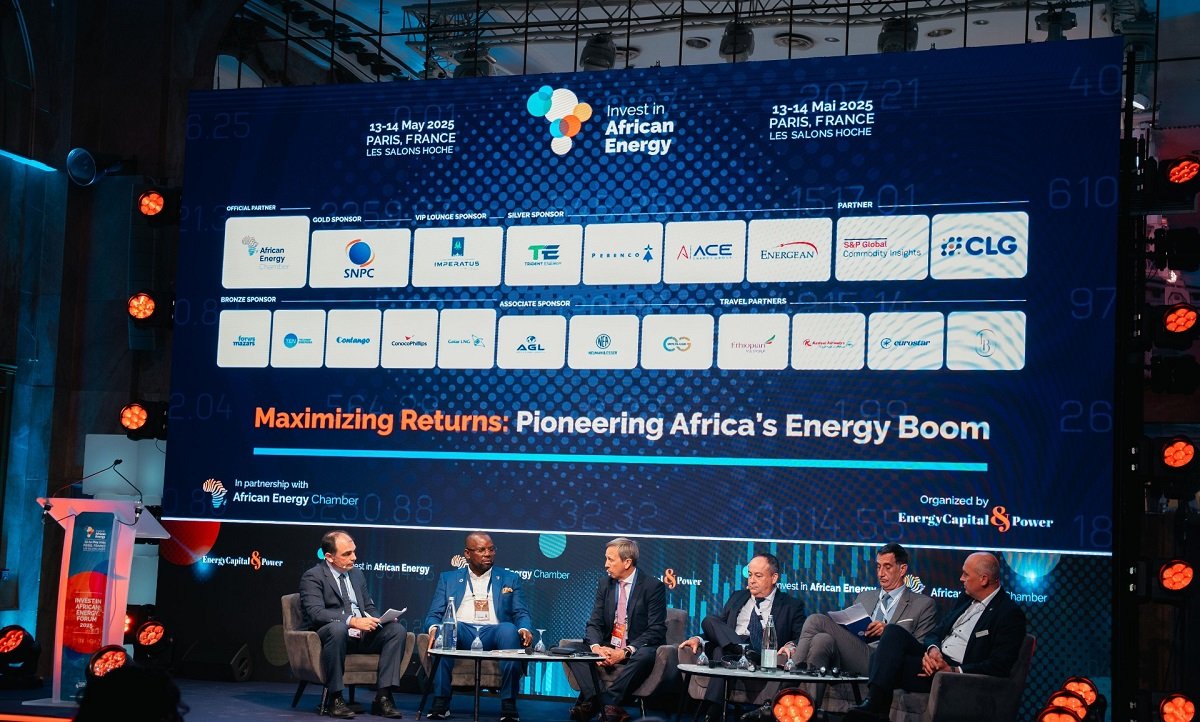
At the Invest in African Energy (IAE) Forum held in Paris, global energy leaders noted that Africa’s liquefied natural gas (LNG) sector hinges on strategic infrastructure development, inclusive local participation, and access to risk-tolerant capital. With global demand for natural gas on the rise, African nations are being called upon to unlock their gas potential by overcoming key structural and economic challenges.
Mobilizing investment to monetize Africa’s LNG sector
In a panel discussion focused on monetizing African gas—sponsored by energy firm Perenco—industry voices cited the need for robust financing mechanisms to bridge the gap between resource availability and project implementation.
Julius Rone, Managing Director of UTM Offshore, underlined the urgency of attracting investors to support Africa’s LNG trajectory. “Investment is required. The market is there. LNG is not going anywhere—global gas demand is increasing every year,” said Rone. He spotlighted the company’s $5 billion Floating LNG (FLNG) project off Nigeria’s coast, currently in pre-construction, as a symbol of indigenous capacity and ambition.
With a Final Investment Decision (FID) expected soon, Rone stated that UTM Offshore aims not just to develop its home market but also to replicate its FLNG model across the continent. “Indigenous players like us can form the right partnerships to drive development,” he noted.
Competitive edge starts at the source
While Africa boasts rich gas reserves and geographical proximity to major markets in Europe and Asia, its competitiveness must be established from the ground up. Federico Petersen, Chief Commercial Officer of Golar LNG, pointed out that project economics must begin at the wellhead.
“In the U.S., both liquefaction and transport costs are rising. If Africa can beat the U.S. at the wellhead, then it has a real competitive advantage,” said Petersen. He added that attractive gas assets, legal stability, and strong contractual frameworks are essential for ensuring investor confidence.
“We look at the asset, the contract, and the partner,” he said. “On the contract side, the legal framework and the stability need to be there, both for upstream operators and for us.”
Infrastructure is the bedrock of Africa’s LNG sector growth
Despite the excitement around LNG exports, speakers agreed that building infrastructure for domestic gas use must come first. Denis Chatelan, Head of Business Development at Perenco, advocated for a phased approach: start with domestic applications, then move into liquefaction and export.
“In Gabon and Cameroon, we didn’t start with liquefaction. We developed the gas resources for domestic power and industry use,” said Chatelan. He emphasized the importance of taking calculated risks. “We have taken the risk of infrastructure, which is a very important first step to develop the gas resources of a country.”
This approach, he noted, not only yields solid returns on investment but also lays the groundwork for longer-term LNG export readiness.
Local talent: The missing link to sustainability
Beyond capital and infrastructure, the long-term viability of Africa’s LNG sector rests on developing local talent and operational capacity. Jiří Rus, Sales and Business Development Director at Neuman and Esser, highlighted the role of original equipment manufacturers in supporting in-country operations.
“Within our partnerships, we focus on operation. We need to support projects not from Germany, but through local service centers. We have one in Port Harcourt, Nigeria, and are expanding to Mozambique,” said Rus.
This sentiment was echoed by Dominique Gadelle, VP of Upstream & LNG at Technip Energies. He stressed the need to tie large-scale projects to tangible local benefits, from job creation to skills development. “Boosting local economies, power generation… This is a must before going to international exports,” said Gadelle.
He also encouraged stakeholders to explore alternative monetization pathways, such as gas-based fertilizers and regional trade cooperation. “We cannot forget local skills, employment, and education and training programs,” he explained.
As African nations look to become significant players in the global LNG market, industry captains note that success will require a bold and balanced approach. Governments, developers, and international partners must come together to mobilize financing, deploy scalable infrastructure, and invest in human capital.
From Nigeria’s floating LNG projects to gas-to-power innovations in Gabon and Cameroon, Africa is brimming with potential. But only by aligning investment with inclusive development can the continent realize its LNG ambitions and position itself as a key supplier in the global energy transition.
Read also: Why Ghana’s oil and gas sector is beckoning foreign investors


