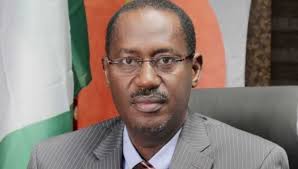

The Esteemed Minister of Housing and Urban Development, Arc. Ahmed Musa Dangiwa, has made a compelling appeal for State Governments to earmark between 1 and 3 percent of their annual financial plans towards land governance and systematic titling, asserting that reliable land management stands as the nation’s most formidable tool for constructing a trillion-dollar economy.
Dangiwa delivered this passionate address in Kano during the inaugural session of the 30th Conference of Directors of Lands within the Federal and State Ministries, Departments, and Agencies on Tuesday, November 25, 2025.
“I fervently advocate and implore that Nigerian State Governments secure between 1 and 3 percent of their yearly budgets for land administration and systematic titling amidst this transformative phase,” he emphasized.
The focal theme for the 30th Conference is the Nigeria Land Titling, Registration, and Documentation Programme (NLTRDP): Implementation Mission.
Dangiwa elucidated that international evidence clearly indicates that Ministries responsible for land governance globally operate on an average of approximately 1 percent of the total public budget.
He stated, “In light of these global benchmarks, coupled with our domestic circumstances… a sustainable allocation of 0.5 to 1 percent will suffice to sustain digital registries, carry on with systematic documentation, and keep the cadastre current.”
Moreover, the minister asserted that half of the allocated funds must be channeled directly into tangible service delivery encompassing systematic titling, digitization, modern registries, surveys, and dispute resolution—not on vehicles, furniture, or administrative overheads.
“If we channel our resources toward impactful outcomes rather than overheads, every State will unlock revenue, citizens will secure property rights, and land will evolve into a genuine economic asset, transcending the bounds of dead capital. And let me assure you confidently: the triumph of the Land4Growth Programme represents Nigeria’s most assured pathway to achieving a One Trillion Dollar Economy,” he remarked.
Dangiwa expounded that land becomes an asset that can generate wealth when citizens can utilize it for credit, when investors have faith in the registry, and when States harvest sustainable income from property markets, asserting that we will ignite growth at a magnitude capable of transforming our national economy. This is how land cultivates wealth, and how this sector can energize Nigeria’s economic future.”
The Minister further revealed that in the recent World Bank Doing Business ranking regarding Property Registration, Nigeria received dismal marks due to excessive procedural delays, prolonged timelines, and inflated costs, which aggravates uncertainty for investors and inflicts undue hardship on citizens.
He pinpointed the same systemic challenges faced across the states: convoluted manual workflows, fragmented and antiquated paper records, corruption risks, tenure instability for vulnerable populations, and exceedingly low revenue generation despite substantial potential.
He encouraged the attendees under President Bola Ahmed Tinubu’s Renewed Hope Agenda to approach land administration not merely as routine bureaucracy, but as a pivotal economic reform endeavor and emphasized that the government has begun to convert this commitment into tangible action.
“I have instructed the Director of Lands to ensure that every Director possesses a copy of the Concept Note and Framework, to embrace it wholeheartedly and competently guide your State Governments to adopt it, collaborating with us at the Federal level for its effective implementation,” Dangiwa stated.
“We have not yet reached our desired destination, but certainly, we are far from where we stood last year. We are progressing—with intention. During this period, we have inaugurated the Nigeria Land Titling, Registration, and Documentation Programme (Land4Growth) aimed at releasing approximately $300 billion in dormant capital, and we are finalizing a partnership with the World Bank and state governments to register, document, and title land across the nation,” he concluded.