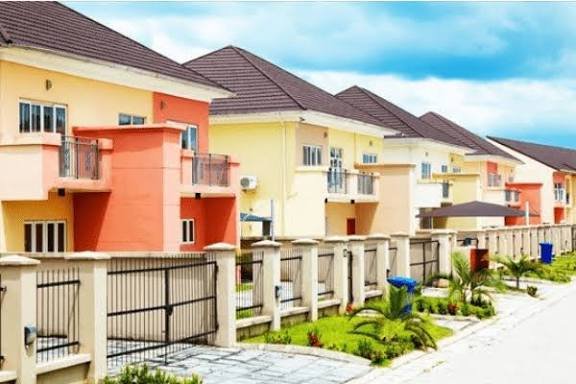


A newly released report projects that Nigeria’s residential housing market will continue to experience significant demand exceeding available supply well into 2026 and beyond, fueled by rapid population expansion, ongoing urbanization, and a persistent, substantial housing deficit.
The “Nigeria Residential Real Estate Report” indicates that while early indicators suggest improving macroeconomic conditions, challenges related to affordability, elevated construction expenses, and restricted access to long-term housing finance will remain critical issues for the sector.
The study, conducted by Nigeria Housing Market, anticipates sustained increases in residential property values and rental costs throughout 2026. Performance, however, is expected to vary considerably based on geographic location, access to essential infrastructure, and income levels within specific communities. Lagos and Abuja are identified as primary hubs of growth, while developing suburban and commuter areas present the most promising opportunities for increased value.
The report underscores the structural undersupply within Nigeria’s residential market, estimating a deficit of over 20 million units. The current rate of housing construction remains significantly below the levels needed to bridge this substantial gap.
Key factors driving housing demand in 2026 include continued population growth and subsequent household formation, migration from rural areas to urban centers, concentration of employment opportunities in cities, increasing need to replace aging housing stock, and a strong cultural preference for homeownership as a means of storing wealth.
However, limitations on the supply side persist, including high costs associated with construction and financing, low rates of mortgage adoption, inefficiencies in land administration processes, and a lack of large-scale affordable housing projects.
“Demand is inherently greater than supply, creating consistent upward pressure on both prices and rents. Nigeria’s demographic trends and its ongoing shift toward urbanization are foundational to the long-term outlook for residential real estate. Urban population growth is outpacing national averages, concentrating demand in major metropolitan areas and their surrounding, expanding regions,” the report states.
Nationwide, residential property values are forecast to increase by 5 to 15 percent during 2026, with substantial variation based on market segment. Prime urban areas are projected to see moderate but stable appreciation in the range of 5 to 8 percent. Middle-income urban areas are expected to exceed national averages, with growth between 8 and 12 percent. Emerging suburban zones and areas benefiting from infrastructure improvements are anticipated to experience the most significant gains, ranging from 10 to 15 percent.
The report highlights the continued pressure on rental markets, noting that rental rates have increased substantially in recent years and are unlikely to decline in 2026. Key drivers of this trend include persistent housing shortages, rapid household formation, income growth lagging behind population expansion, and strong investor interest in assets that generate rental income.
The report also noted, “Rental inflation continues to be structurally independent of headline inflation. Lagos remains Nigeria’s most active and constrained residential market, with extreme demand pressures created by population density, economic activity and scarce land resources.”
Specific market characteristics in Lagos include a severe undersupply of housing, significant participation from the diaspora, high costs of land acquisition, and expansion driven by infrastructure development. Identified growth corridors include the Lekki–Epe axis, mainland rail and transport corridors, and developing waterfront and peri-urban areas.
Abuja, the Federal Capital Territory, presents a more stable and less volatile residential market, supported by government, diplomatic, and institutional demand. Market characteristics include a planned urban layout, larger plot sizes, and a demand base anchored by governmental bodies. Growth is expected in expansion districts bordering prime zones, middle-income satellite towns, and long-term land banking corridors.
The report emphasizes infrastructure investment as the single most critical factor determining residential property value in Nigeria, citing reduced commuting times, expansion of viable residential areas, increased investor confidence, and higher rental occupancy rates as key benefits.
The report provides three potential pricing scenarios for 2026: a base case of gradual macroeconomic stability alongside continued urban demand; an optimistic case driven by greater currency stability and improved policy implementation; and a pessimistic case triggered by macroeconomic or political instability.
In conclusion, the report suggests that residential investment opportunities in 2026 will vary depending on risk tolerance and desired returns, ranging from high-yield opportunities in infrastructure-linked suburbs, middle-income rental housing, and developing commuter zones, to stable-yield opportunities in established urban rental properties, build-to-rent projects, and short-term rental apartments. Long-term strategies include land banking in expansion corridors and mixed-use residential developments.
Babatunde Akinpelu, Chief Executive Officer and Lead Housing Analyst at Nigeria Housing Market, commented on the outlook, stating that the sector is shifting from broad-based appreciation to performance driven by specific, infrastructure-related factors.
“The residential real estate market in 2026 will be characterized by selective growth, alignment with infrastructure development, and tension related to affordability. Structural demand remains strong, but performance will increasingly concentrate in areas where infrastructure, access to employment, and income levels align effectively,” he said.
Akinpelu added that success for investors, developers, and policymakers in 2026 will depend on careful market segmentation, risk management, and long-term strategic positioning rather than speculative activities. While opportunities remain significant, they will increasingly reward strategic planning over reactive sentiment.