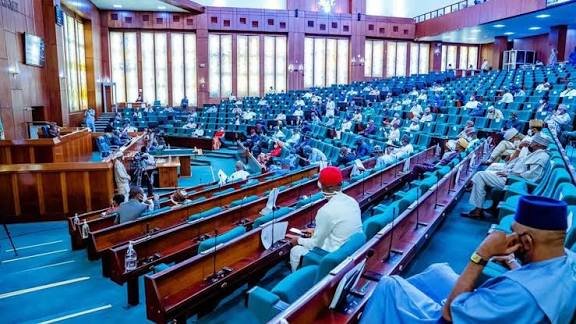


The House of Representatives Ad-Hoc Committee scrutinizing the colossal multi-billion-naira reforms in the power sector confronted the officials of the Transmission Company of Nigeria (TCN), revealing alarming discrepancies between Nigeria’s installed power capacity and the actual electricity supplied to residences and industries.
In a session presided over by Hon. Ibrahim Aliyu, TCN’s Managing Director, Dr. Sule Ahmad Abdulaziz, refuted the rampant assertions that Nigeria generates 13,000 megawatts of electricity at present. He emphasized that this statistic pertains to installed capacity rather than actual production on the national grid.
“The pinnacle of electricity generated this year was 5,801MW,” Abdulaziz remarked. “Nigeria has never achieved 13,000MW on the national grid. That figure merely represents installed capacity, not the actual generated output.”
He elaborated that until April 2024, the National Control Centre, accountable for daily generation and dispatch records, was under the direct purview of TCN, granting the company access to accurate and verifiable data.
In response to inquiries from committee member Hon. Abubakar Fulata, who queried why merely around 6,000MW is typically transmitted despite ostensibly higher available generation, Abdulaziz maintained that TCN has consistently succeeded in transmission. “Our current transmission capability stands at 8,600MW,” he asserted. “At no point has power been generated that TCN could not convey. Those who allege otherwise should provide corresponding evidence.”
Addressing the company’s fiscal condition, TCN’s Executive Director of Finance illuminated that the organization is encumbered by substantial debts owed by electricity distribution companies (DisCos), disclosing an outstanding N217 billion in electricity subsidy debt (from January 2015 to December 2020) assumed by the Federal Government. The committee demanded documented proof supporting these figures.
Clarifying disputes surrounding grid instability, a senior official from TCN’s system operations department disclosed that the company has recorded 11 instances of grid collapses, countering the widely cited figure of 22–23.
Detailing the origins of these collapses, he explained that six were attributed to generation issues, including gas shortages, four were linked to the vandalism of transmission towers, resulting in a sudden loss of load, and one was caused by failures within the distribution network, often exacerbated by rainfall-induced feeder trips.
He underscored that all three components—generation, transmission, and distribution—can provoke system collapse, and noted that the Nigerian Electricity Regulatory Commission (NERC), with support from the Central Bank, has enacted Service Level Agreement (SLA) measures to alleviate systemic obstacles.
TCN officials further revealed that the company boasts over 100 ongoing transmission projects, many of which stand at 65%–90% completion but are stalled due to a lack of financing. “Power infrastructure cannot be energized at 99%. It requires full completion at 100%,” one official highlighted.
“If pending debts are settled, we can complete priority projects and fortify the grid,” he added. TCN aspires to enhance transmission capacity to 10,000MW by March of the upcoming year through network upgrades and simulation-driven grid optimization.
Committee chairman Hon. Ibrahim Aliyu stated that the presentations had elucidated prior misconceptions regarding TCN’s role in the sector’s shortcomings but expressed apprehension regarding the sluggish expansion of essential infrastructure, vowing that the parliament would intervene to rectify this anomaly in the near future.